
Many women in their 40s start noticing unexpected changes in their bodies, from unpredictable cycles to sudden waves of heat that leave them feeling unsettled. These shifts can feel confusing and disruptive, especially when you’re balancing work, family, and daily life, making you wonder if it’s just stress or something more. The good news is that recognizing these early indicators of perimenopause—the transition leading up to menopause—can help you feel more in control and prepared.
But here’s the surprising part most people overlook: simple daily habits can make a real difference in how you experience this phase. Keep reading to discover what they are.
What Is Perimenopause and Why Does It Matter?
Perimenopause is the natural transition phase before menopause, when hormone levels like estrogen begin to fluctuate. It often starts in the mid-40s (though it can begin earlier) and lasts several years on average. During this time, your ovaries produce less consistent hormones, leading to various changes.
Research from sources like the Cleveland Clinic and Mayo Clinic shows that these hormonal shifts affect many women, with symptoms varying widely. Understanding this phase early allows you to make informed choices about your well-being.
Early menopause (before age 45) affects about 5% of women, while premature menopause (before 40) occurs in around 1%. If changes appear sooner, consulting a healthcare provider is especially important.
The Most Common Early Signs to Watch For
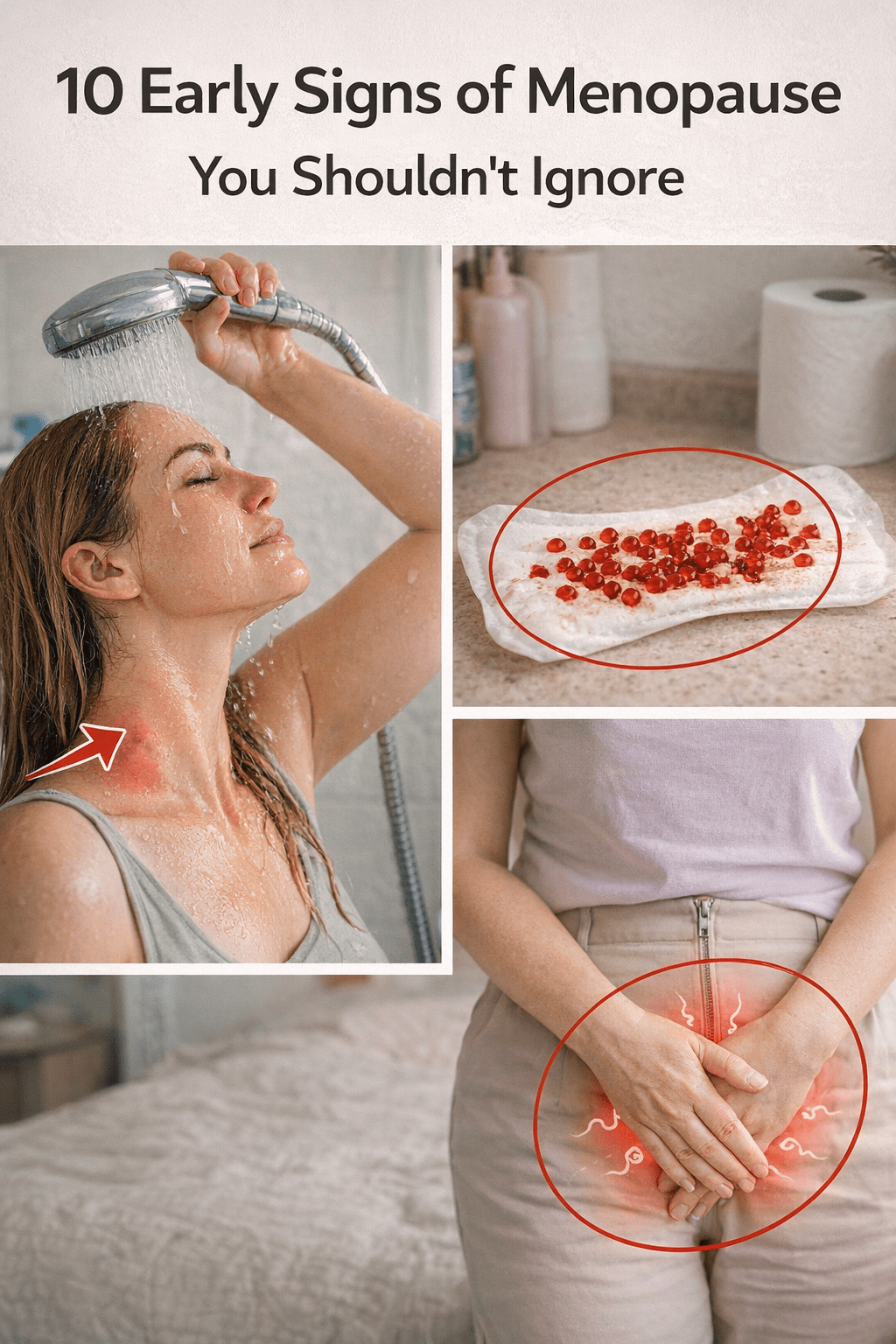
Here are 10 key signs that often appear during perimenopause. Many overlap with natural menopause symptoms, but noticing them early can help you take proactive steps.
- Irregular Periods This is usually the first noticeable change. Cycles may become shorter, longer, heavier, lighter, or include spotting. Periods might skip months or arrive unexpectedly.
- Hot Flashes and Night Sweats Sudden feelings of intense heat, often spreading from the chest to the face, followed by sweating. Night sweats can disrupt sleep and leave you feeling drained.
- Vaginal Dryness and Discomfort Reduced lubrication can lead to irritation or discomfort during intimacy, due to declining estrogen levels.
- Mood Changes Fluctuating hormones may contribute to irritability, anxiety, or mood swings. These can feel more intense than usual stress.
- Sleep Problems Trouble falling asleep, staying asleep, or waking frequently—often worsened by night sweats.
- Fatigue and Low Energy Feeling tired even after rest, as hormonal changes affect metabolism and sleep quality.
- Brain Fog Difficulty concentrating, forgetfulness, or mental fuzziness—often described as temporary and common during this transition.
- Weight Changes Some women notice gradual shifts in body composition, especially around the midsection, even without major diet changes.
- Joint and Muscle Discomfort Aches or stiffness that feel similar to early wear-and-tear.
- Changes in Libido Reduced interest or comfort during intimacy, influenced by both physical and emotional factors.
But that’s not all—other signs like headaches, dry skin, or heart palpitations can appear too. Tracking these over a few months helps spot patterns.
Why These Changes Happen
Estrogen and progesterone levels fluctuate irregularly during perimenopause, affecting everything from your menstrual cycle to mood and sleep. Studies indicate that these shifts are a normal part of aging for most women, though factors like family history, smoking, or certain medical treatments can influence timing.
The key? Awareness empowers you to respond thoughtfully rather than feel caught off guard.

Simple Lifestyle Habits to Help Manage Symptoms
You don’t have to wait for things to worsen. Many women find relief through everyday adjustments. Here are practical, evidence-based steps:
- Stay Active Regularly Aim for 30 minutes most days—walking, yoga, or strength training can ease mood changes, improve sleep, and support energy levels.
- Focus on Balanced Nutrition Include calcium-rich foods (like dairy or leafy greens) and vitamin D sources for bone health. Foods with phytoestrogens (soy, flaxseeds, beans) may offer gentle support.
- Prioritize Sleep Hygiene Keep your bedroom cool, limit caffeine after noon, and create a relaxing bedtime routine to reduce night sweats’ impact.
- Manage Stress Try deep breathing, mindfulness, or short walks to help with mood and overall calm.
- Avoid Common Triggers Cut back on spicy foods, alcohol, or hot environments if they worsen hot flashes.
Here’s a quick comparison of habits that help vs. those that might make things harder:
- Helpful Habits: Regular exercise, layered clothing for temperature control, staying hydrated
- Habits to Limit: Smoking (accelerates changes), excessive caffeine/alcohol, poor sleep routine
Start small—one change at a time—and notice how your body responds.
When to Talk to Your Healthcare Provider
If symptoms interfere with daily life, or if you’re under 45 and noticing irregular periods, hot flashes, or other changes, reach out to a doctor. They can help rule out other causes, discuss your options, and provide personalized guidance.
Tracking symptoms in a journal (dates, intensity, triggers) makes conversations more productive.
Key Takeaways
Perimenopause brings changes, but knowledge and small habits can help you navigate them with greater ease. Many women feel more empowered once they understand what’s happening and take simple steps to support their well-being.

Frequently Asked Questions (FAQ)
What is the difference between perimenopause and menopause? Perimenopause is the transition phase with fluctuating hormones and symptoms, while menopause is confirmed after 12 months without a period.
Can lifestyle changes really make a difference? Yes—regular activity, better sleep habits, and stress management often help ease symptoms like hot flashes and mood changes, according to health experts.
How long does perimenopause usually last? It varies, but often 4–8 years, starting in the 40s for most women.
This article is for informational purposes only and is not a substitute for professional medical advice. Always consult your healthcare provider for personalized guidance regarding your health.


