
Staying hydrated is something we all know is important, but many people unknowingly follow habits that reduce how effectively their body uses the water they drink. This can leave you feeling tired, bloated, or less energized throughout the day, even when you’re sipping water regularly. The good news is that small adjustments to your daily routine can make a real difference in how you feel.
In this guide, we’ll explore five common hydration habits that research suggests may not be as helpful as we think. Stick around until the end, because the last one surprises most people and could change how you approach drinking water forever.
Why Proper Hydration Habits Matter More Than Just Drinking More Water
Water makes up about 60% of your body and plays a key role in digestion, temperature regulation, joint health, and energy levels. Studies from organizations like the National Academies of Sciences, Engineering, and Medicine show that adequate hydration supports overall well-being.
However, it’s not just about quantity. How and when you drink water influences how well your body absorbs and uses it. Let’s look at the most common pitfalls.
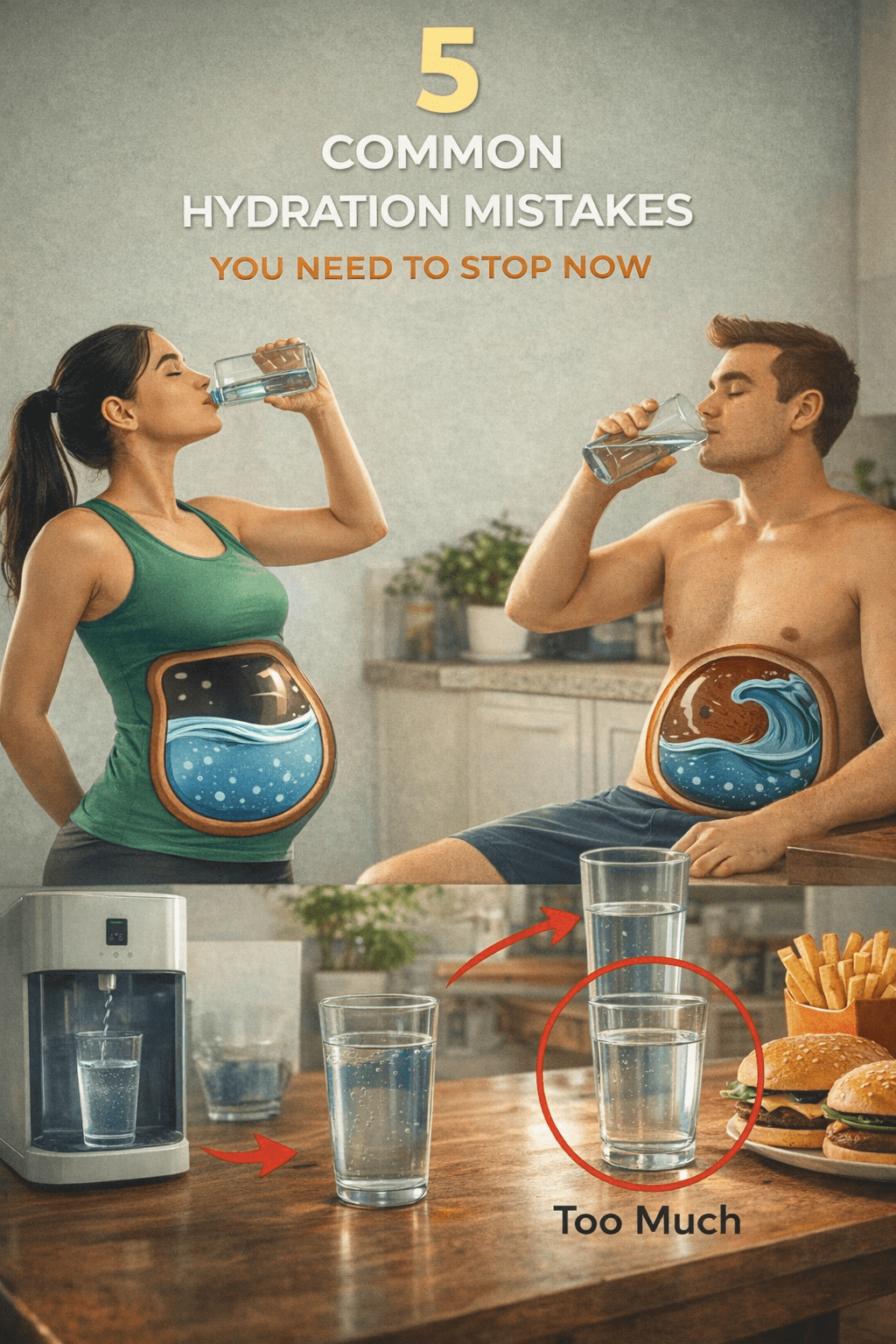
Mistake 1: Chugging Large Amounts of Water All at Once
Many people wait until they’re thirsty and then drink a full bottle in one go. While this feels satisfying, it can overwhelm your system.
Research indicates that drinking too much water too quickly may cause your body to flush it out rapidly through urine rather than absorbing it fully. This is especially noticeable during meals or intense activity.
Instead, try sipping smaller amounts consistently throughout the day. Here’s a simple approach:
- Keep a reusable bottle nearby and take small sips every 20-30 minutes.
- Aim for steady intake rather than big gulps.
- Notice how your energy feels more stable with this pattern.
This small shift helps your cells absorb water more gradually and effectively.
Mistake 2: Drinking Ice-Cold Water Right After Meals or Exercise
A glass of ice-cold water sounds refreshing, especially after a workout or spicy meal. But traditional and modern observations suggest it might not always be ideal.
Some studies on digestion note that very cold water can temporarily slow gastric emptying, making you feel fuller or bloated longer than necessary.
A gentler option is room-temperature or slightly cool water. Many people report feeling less discomfort in their stomach when they make this switch.
Try this:
- Let tap water sit for a few minutes before drinking.
- Add a slice of lemon or cucumber for natural flavor without extreme cold.
You’ll likely notice improved comfort during and after meals.

Mistake 3: Relying Only on Plain Water and Ignoring Electrolyte Balance
Plain water is excellent, but if you’re active, live in a hot climate, or eat processed foods regularly, you might be missing key minerals.
Research from the Journal of the International Society of Sports Nutrition highlights that sodium, potassium, and magnesium help your body retain water. Without them, even high water intake can lead to frequent bathroom trips.
Natural ways to support balance include:
- Eating water-rich fruits and vegetables like watermelon, oranges, cucumbers, and spinach.
- Adding a pinch of sea salt to water occasionally (consult your preferences).
- Including foods like bananas, avocados, or leafy greens in meals.
These habits provide gentle support without needing supplements for most people.
But that’s not all. There’s another everyday habit that affects hydration more than most realize…
Mistake 4: Drinking Water Straight from the Fridge First Thing in the Morning
Starting the day with a cold glass from the fridge is common, but some health experts suggest warming up your system first.
Ayurvedic practices and limited modern studies propose that room-temperature or warm water in the morning supports gentle wake-up of digestive processes.
A simple morning routine:
- Boil water the night before and let it cool to room temperature.
- Drink 1-2 glasses slowly upon waking.
- Wait 30 minutes before coffee or breakfast.
Many readers who’ve tried this report feeling more alert and less sluggish in the mornings.
Mistake 5: Overlooking Hidden Dehydration Triggers in Daily Foods
This is the one that surprises most people. Certain popular foods and drinks can quietly work against your hydration efforts.
For example:
- High-sodium processed meals (like fast food burgers and fries) can make your body hold water unevenly.
- Excessive caffeine or alcohol acts as a mild diuretic.
- Very spicy foods may increase thirst signals later.
A 2020 review in Nutrients journal noted that diet composition significantly influences hydration status beyond just water intake.
To counter this:
- Balance salty meals with extra water-rich produce.
- Alternate caffeinated drinks with plain water.
- Listen to your body’s subtle signals rather than waiting for strong thirst.
Making these connections often leads to the biggest improvements in how hydrated you feel day-to-day.

Simple Daily Habits to Support Better Hydration
Now that we’ve covered what to avoid, here are practical steps you can start today:
- Set gentle reminders on your phone to sip water every hour.
- Carry a marked bottle that shows hourly goals.
- Pair water intake with daily routines (after brushing teeth, before meetings, etc.).
- Track how you feel after a week of consistent small changes.
- Include herbal teas or infused water for variety without added sugar.
These habits take minimal effort but compound over time.
Comparing Hydration Approaches: Quick Reference Table
| Approach | Potential Drawback | Better Alternative |
|---|---|---|
| Chugging large amounts | Rapid flushing, less absorption | Steady sipping throughout the day |
| Ice-cold water often | May slow digestion temporarily | Room temperature or lightly cool |
| Plain water only | Missing mineral support | Include electrolyte-rich foods |
| Cold water first morning | Possible digestive shock | Room temperature upon waking |
| Ignoring diet impact | Hidden dehydration from foods/drinks | Balance meals with water-rich produce |
Final Thoughts
Small, consistent changes to how you drink water can support better energy, digestion, and overall comfort in daily life. Start with one or two adjustments that feel easiest for you, and build from there.
Remember, everyone’s needs vary based on activity, climate, and age. Pay attention to how your body responds and adjust accordingly.
Frequently Asked Questions
How much water should I drink daily?
General guidelines suggest about 8-10 cups (2-2.5 liters) for adults, but this varies by body size, activity, and weather. Listen to your thirst and urine color (pale yellow is a good indicator).
Is it possible to drink too much water?
Yes, though rare for most people. Spread intake evenly and include minerals from food to help balance.
Can flavored water help with hydration?
Natural infusions like lemon, mint, or berries can make water more enjoyable without added sugars, encouraging consistent intake.
Disclaimer: This article is for informational purposes only and is not medical advice. Please consult your healthcare provider for personalized guidance on hydration or any health concerns.


