
Many adults over 50 manage ongoing health concerns like pain, heartburn, cholesterol levels, sleep issues, or blood sugar with daily medications. These can provide meaningful relief in the short term. Yet research shows that extended use of certain classes may come with potential concerns that prompt careful monitoring. Keep reading to discover key insights into these medications, supported by studies, along with practical lifestyle approaches that may help support your health.

Why Long-Term Medication Use Deserves Attention
Over half of adults aged 50 and older take at least one prescription medication regularly, and many use multiple ones for chronic conditions. While these drugs help manage symptoms effectively, studies indicate that prolonged exposure to some classes can be associated with certain risks.
The good news? Many people find that combining medications with healthy habits—like better eating, movement, and sleep routines—can enhance overall well-being. Let’s explore five commonly prescribed classes and what the evidence suggests.
Medication Class 1: NSAIDs (e.g., Ibuprofen, Naproxen)
Nonsteroidal anti-inflammatory drugs (NSAIDs) are popular for easing everyday aches and stiffness.
Research from sources like the Mayo Clinic and Harvard Health notes that long-term NSAID use may be linked to higher chances of gastrointestinal issues, kidney strain, and cardiovascular events. These concerns tend to rise with extended daily use.
Practical Habits to Support Comfort
Many find relief through gentle movement and posture improvements.
- Try low-impact activities like walking or yoga to ease stiffness.
- Focus on ergonomic adjustments at work or home.
- Incorporate anti-inflammatory foods, such as turmeric in meals or tea.
These steps, paired with guidance from your doctor, may reduce reliance on daily doses.
Medication Class 2: Statins
Statins help many people maintain healthy cholesterol levels.
Large trials show clear benefits for heart health in certain groups, but some studies mention possible associations with muscle discomfort or a slight increase in blood sugar concerns for specific individuals.
Everyday Approaches for Heart Health
Lifestyle plays a big role in supporting cholesterol balance.
- Choose whole foods rich in fiber, like oats, beans, and vegetables.
- Add regular moderate exercise, such as brisk walks.
- Include healthy fats from sources like avocados and nuts.
Research highlights that diet and activity can meaningfully contribute to cardiovascular wellness.
Medication Class 3: Sleep Aids (e.g., Zolpidem)
Prescription sleep aids can help with occasional restless nights.
Guidelines emphasize short-term use, as longer durations may be associated with risks like daytime drowsiness, falls, or dependence, according to reviews from the FDA and Mayo Clinic.
Building Better Sleep Habits
Consistent routines often improve rest naturally.
- Establish a calming bedtime wind-down, like reading or dim lights.
- Aim for a cool, dark sleep environment.
- Limit screens and caffeine in the evening.
Many report deeper, more refreshing sleep with these changes over time.
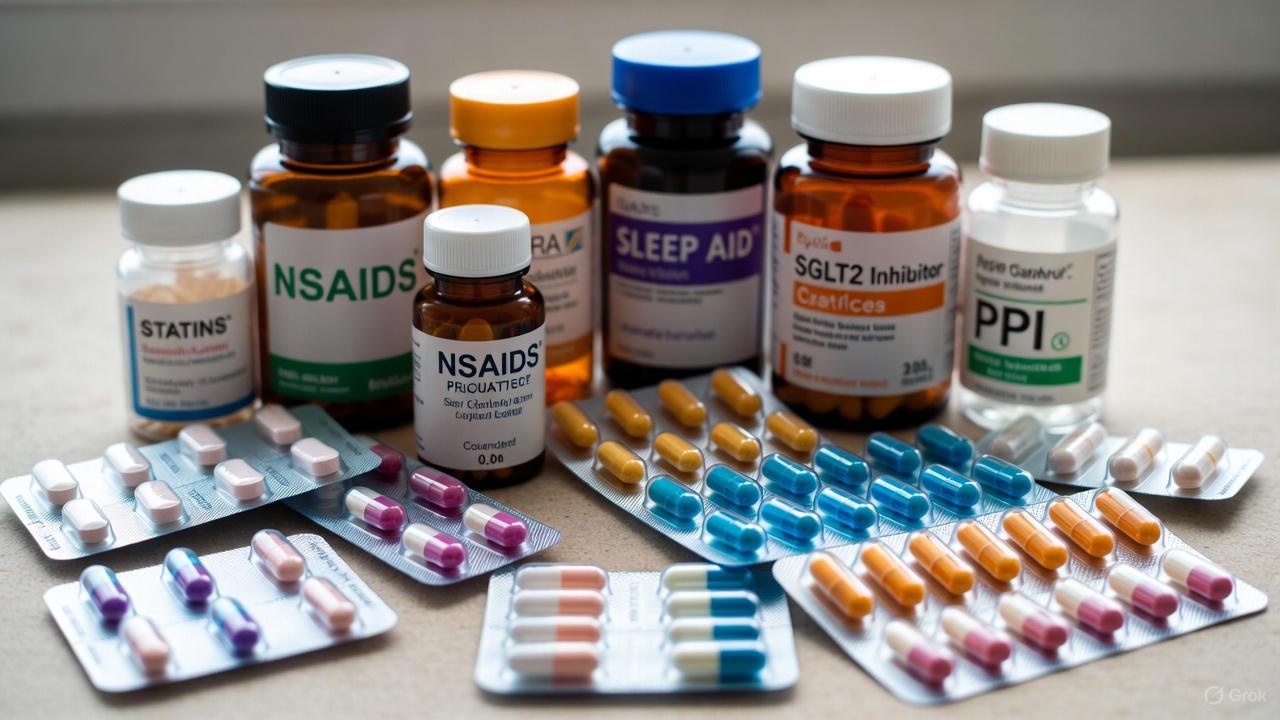
Medication Class 4: SGLT2 Inhibitors
These medications support blood sugar management in type 2 diabetes.
They offer benefits like weight loss and heart protection, but warnings note potential risks such as urinary infections or rare ketoacidosis events.
Daily Strategies for Blood Sugar Support
Balanced habits are foundational for diabetes management.
- Focus on portion-controlled meals with vegetables and lean proteins.
- Incorporate daily movement, like walking after meals.
- Stay hydrated and monitor how foods affect your levels.
Studies reinforce that exercise and diet are key pillars alongside any medication.
Medication Class 5: Proton Pump Inhibitors (PPIs, e.g., Omeprazole)
PPIs effectively reduce acid for heartburn and reflux.
Extended use has been linked in research to possible nutrient absorption issues, infections, or kidney concerns, per reviews from Harvard Health and NIH sources.
Simple Ways to Ease Reflux
Lifestyle tweaks often make a noticeable difference.
- Eat smaller meals and avoid lying down right after eating.
- Raise the head of your bed slightly.
- Identify triggers like spicy foods and reduce them.
These adjustments can help manage symptoms comfortably.

Comparison of Medication Classes and Lifestyle Focus
| Medication Class | Potential Long-Term Concerns Noted in Studies | Lifestyle Support Ideas |
|---|---|---|
| NSAIDs | GI, kidney, heart | Movement, posture, anti-inflammatory foods |
| Statins | Muscle, blood sugar | Fiber-rich diet, regular exercise |
| Sleep Aids | Falls, dependence | Consistent bedtime routines |
| SGLT2 Inhibitors | Infections, ketoacidosis | Balanced meals, hydration |
| PPIs | Nutrient deficiencies, infections | Meal timing, trigger avoidance |
Steps to Explore Changes Safely
If you’re considering adjustments:
- Track your symptoms and habits for a week.
- Discuss observations with your healthcare provider.
- Start small, like adding one new routine.
- Monitor progress and follow up regularly.
Gradual shifts, with professional input, often lead to sustainable improvements.
Frequently Asked Questions
How common is long-term medication use in adults over 50?
Studies show over 50% of adults in this age group take at least one chronic prescription, with many using multiple.
Can lifestyle changes really make a difference?
Yes—research consistently links healthy eating, movement, and routines to better management of pain, reflux, cholesterol, sleep, and blood sugar.
When should I talk to my doctor about my medications?
Any time you have questions about ongoing use, side effects, or exploring complementary habits. Regular reviews help ensure the best approach for you.
This article is for informational purposes only and is not a substitute for professional medical advice. Always consult your healthcare provider before making changes to medications or habits, as they can provide personalized guidance based on your health needs.


