
Many adults over 40 quietly worry about their kidney health when routine blood tests show higher-than-normal creatinine levels. That small number on the lab report can trigger anxiety about fatigue that won’t go away, mild swelling in the ankles, or simply feeling “off” more days than not. While diet and lifestyle changes are often recommended by healthcare providers, certain everyday kitchen spices have caught the attention of researchers because of their antioxidant and anti-inflammatory properties. In this article we’ll look at five popular spices that show promise in supporting kidney health in preliminary studies — and practical ways you can start using them today.

Why Focus on Everyday Spices for Kidney Support?
Your kidneys work hard every day to filter waste products — including creatinine — from the blood. When inflammation or oxidative stress builds up over time, some people notice their creatinine levels creep upward. Certain plant compounds found in common spices may help the body manage inflammation and oxidative stress, which is why researchers have started studying them more closely.
But that’s only part of the story. Here are five spices that appear most often in the scientific literature related to kidney health.
1. Turmeric – The Golden Spice Everyone Talks About
Turmeric gets the most attention thanks to its bright yellow compound called curcumin.
What studies suggest Research published in journals such as Nutrients and Molecules indicates that curcumin may help reduce markers of inflammation and oxidative stress in animal models and some small human studies.
How people use it
- Add ½–1 tsp ground turmeric to soups, rice, scrambled eggs or roasted vegetables
- Stir into warm milk or plant-based milk with a pinch of black pepper (piperine improves curcumin absorption)
- Blend into smoothies (the taste is quite mild when combined with fruit)
Quick tip Always pair turmeric with a small amount of black pepper — it can increase curcumin bioavailability by up to 2000% according to some studies.
2. Ginger – Warmth That Goes Beyond Flavor
Fresh or dried ginger has been used in traditional systems of medicine for centuries.
What studies suggest Several animal studies and a few human trials (for example in Phytotherapy Research) have explored ginger’s gingerol and shogaol compounds for their potential to lower inflammatory markers and support antioxidant defenses.
Easy ways to use it
- Grate fresh ginger (about 1–2 tsp) into hot water for a simple tea
- Add chopped ginger to stir-fries, marinades or vegetable soups
- Blend a small piece into fruit smoothies
Pro tip Fresh ginger tends to be more pungent. If the flavor feels too strong, start with a smaller amount and increase gradually.
3. Cinnamon – Sweet Support for Daily Meals
Most people think of cinnamon as a dessert spice, but it contains several polyphenols that researchers find interesting.
What studies suggest Some laboratory and small clinical studies (including work published in Journal of Ethnopharmacology) have looked at cinnamon’s possible role in supporting healthy blood sugar regulation and reducing oxidative stress — two factors that can indirectly affect kidney workload.
Practical ways to enjoy it
- Sprinkle ½–1 tsp on oatmeal, yogurt or overnight oats
- Stir into coffee, tea or chai
- Add to roasted sweet potatoes, carrots or squash
Helpful reminder Choose Ceylon cinnamon (“true cinnamon”) when possible, especially if you plan to use larger amounts regularly, as it contains much lower levels of coumarin than Cassia cinnamon.
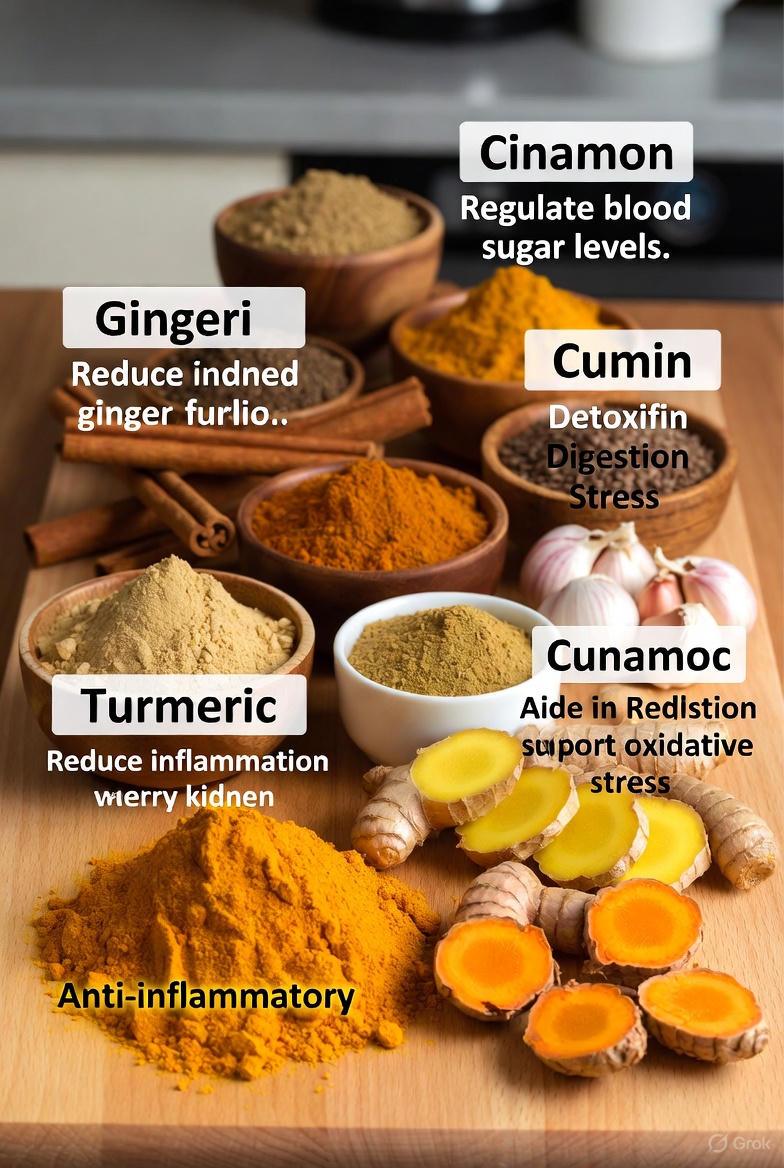
4. Garlic – More Than Just Flavor Protection
Garlic is prized for its sulfur-containing compounds, especially allicin, which forms when a clove is chopped or crushed.
What studies suggest Research in journals such as Food & Function and Biomedicine & Pharmacotherapy has examined garlic’s potential antioxidant and anti-inflammatory effects in various tissues, including the kidneys in animal models.
Simple ways to add more
- Mince or crush 1–2 fresh cloves and let sit 10 minutes before cooking (maximizes allicin)
- Add to salad dressings, hummus, soups or pasta sauces
- Roast whole bulbs in the oven for a milder, sweeter flavor
Quick hack If raw garlic feels too strong for your stomach, cooked garlic still offers benefits — just a different mix of compounds.
5. Cumin – The Underrated Everyday Seed
Cumin seeds (or ground cumin) contain cuminaldehyde and other antioxidants that are gaining research interest.
What studies suggest Preliminary animal studies and a few in-vitro papers (for example in Journal of Functional Foods) suggest cumin may help reduce oxidative stress and support normal kidney function markers.
How to use it
- Toast whole cumin seeds lightly in a dry pan to intensify flavor, then add to rice, lentils or curries
- Stir ½–1 tsp ground cumin into chili, taco meat, roasted vegetables or hummus
- Add to homemade spice blends for grilled chicken or fish
Quick Comparison Table: How People Choose These Spices
| Spice | Main Plant Compound(s) | Typical Daily Amount | Best Matches For | Flavor Profile |
|---|---|---|---|---|
| Turmeric | Curcumin | ½–2 tsp | Warm dishes, teas, smoothies | Earthy, slightly bitter |
| Ginger | Gingerol, shogaol | 1–3 g fresh / ½ tsp dried | Teas, stir-fries, soups | Spicy, warming |
| Cinnamon | Polyphenols (cinnamaldehyde) | ½–2 tsp | Breakfast foods, drinks | Sweet, woody |
| Garlic | Allicin & other sulfur compounds | 1–2 cloves | Savory dishes, dressings | Pungent, savory |
| Cumin | Cuminaldehyde, terpenes | ½–2 tsp | Beans, rice, roasted vegetables | Nutty, warm |

Simple 7-Day Starter Plan
Days 1–3 Goal: Get comfortable with one or two spices
- Morning: Cinnamon + fruit / oatmeal
- Evening: Turmeric + black pepper in soup or rice
Days 4–5 Add ginger
- Mid-morning or afternoon: Ginger tea (fresh or tea bag)
- Dinner: Ginger + garlic in a stir-fry or roasted vegetables
Days 6–7 Introduce cumin
- Lunch or dinner: Cumin in beans, lentils or roasted root vegetables
- Continue the first four spices at comfortable amounts
Bonus: Easy “Kidney-Friendly” Spice Blend You Can Make Once
Mix in a small jar:
- 2 Tbsp ground turmeric
- 1 Tbsp ground ginger
- 1 Tbsp ground cinnamon
- 1 Tbsp ground cumin
- 1 tsp black pepper
Use 1–2 tsp of the blend in soups, stews, roasted vegetables or marinades.
Frequently Asked Questions
Can I use these spices if I’m already taking medication? Many people use these spices in normal culinary amounts without issue, but some herbs can interact with medications (especially blood thinners, diabetes medicines or blood pressure drugs). Always check with your healthcare provider first.
How much is “too much” of these spices? Culinary amounts (1–3 tsp per day per spice) are generally considered safe for most healthy adults. Very high supplemental doses (several grams of curcumin or ginger extract daily) are more likely to cause stomach upset or interact with medicines.
Do I need to buy expensive organic spices? Regular supermarket spices can be fine. If possible, choose brands that test for heavy metals and buy in smaller quantities so the flavor stays fresh.
Final Thoughts
Adding a few of these flavorful spices to your daily meals is one of the simplest ways to bring more antioxidant-rich plant compounds into your diet. While no food or spice is a magic bullet, small consistent changes can be a meaningful part of supporting overall wellness — including kidney health.
Start with the one spice you already like best and build from there. Your kidneys will thank you for the extra care.
Disclaimer: This article is for informational purposes only and is not intended to diagnose, treat, cure, or prevent any disease. The spices discussed here are not a substitute for medical treatment. Always consult your healthcare provider before making significant dietary changes, especially if you have kidney issues, are taking medications, or have any other health conditions.


