
Imagine finishing a meal and feeling that familiar burning sensation in your chest, or noticing food seems to take a little longer to go down than it used to. You brush it off as indigestion from a heavy dinner or just part of getting older, reaching for an antacid and carrying on with your day. But these subtle changes can sometimes signal something more serious developing quietly in your esophagus, the tube that carries food from your throat to your stomach. And here’s the thing many people don’t realize until later: paying attention to these everyday hints early on could make all the difference. But there’s one simple step at the end of this article that might surprise you with how much it can help.
Esophageal cancer often develops without dramatic alerts in its early stages. According to the American Cancer Society, experts estimate about 22,070 new cases in the United States for 2025, with around 16,250 lives lost to the disease. Research shows that noticing changes sooner rather than later can lead to better outcomes, as the five-year survival rate improves significantly when the cancer is found localized.
The challenge? Many common signs mimic everyday issues like acid reflux or stress, so they’re easy to dismiss. That’s why understanding these signals matters. Let’s explore them together.
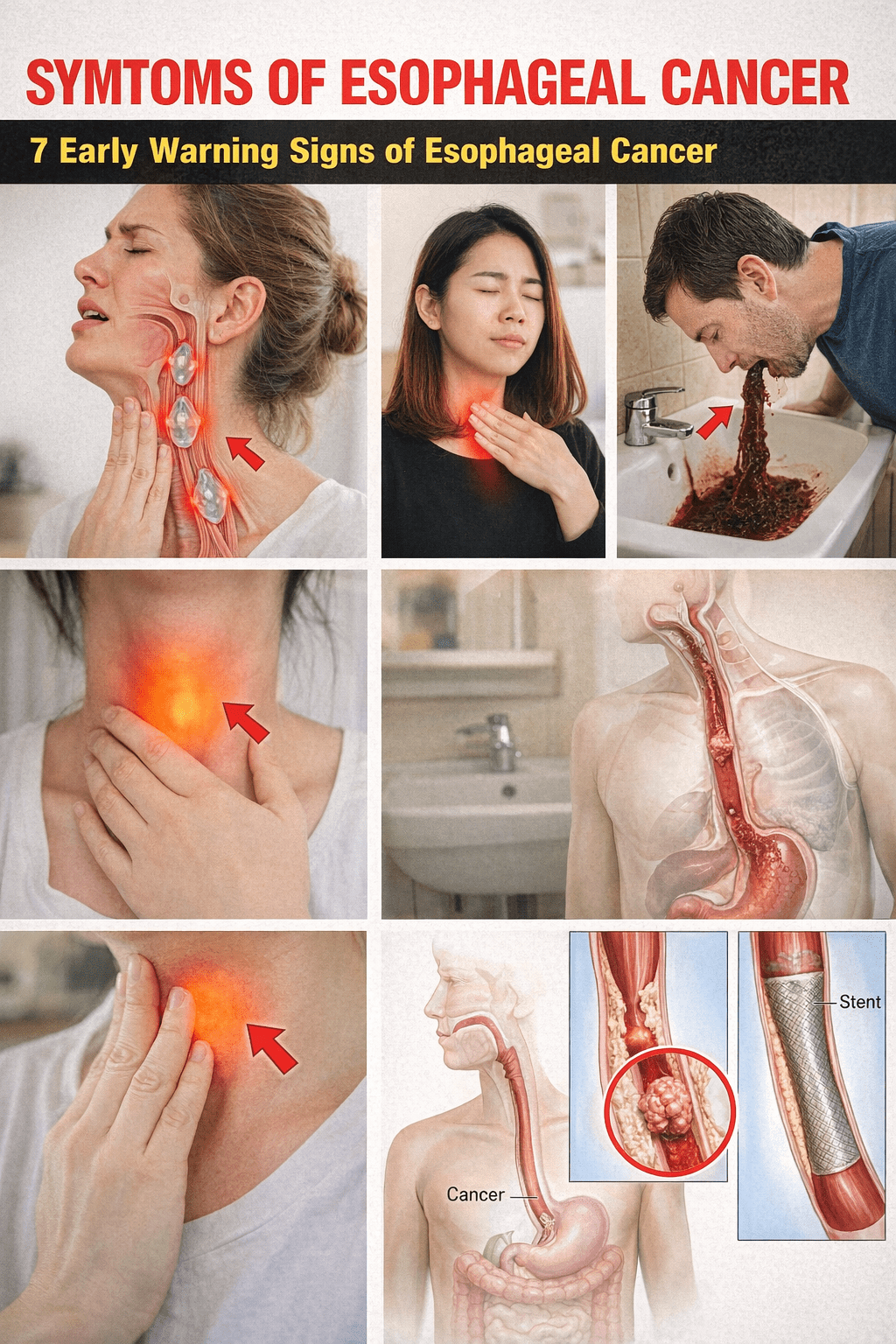
Why Esophageal Cancer Can Be Hard to Spot Early
Your esophagus works quietly behind the scenes, moving food smoothly to your stomach. When abnormal cells grow there, they can narrow the passage gradually, causing vague discomfort at first.
Studies from reliable sources like the Mayo Clinic and American Cancer Society note that most cases are found in later stages because early symptoms overlap with common conditions such as GERD (gastroesophageal reflux disease). By the time of diagnosis, many people have experienced unintended weight loss or other noticeable changes.
But that’s not the full story. Occasional heartburn after a spicy meal is usually nothing to worry about. When it becomes persistent, though, it deserves a closer look. Here’s where the warning signs come in.
The 7 Warning Signs People Often Ignore
These signs are backed by insights from organizations like the Mayo Clinic and American Cancer Society. Remember, having one doesn’t mean anything serious—many are caused by less concerning issues—but patterns over time are worth noting.
7. Persistent Heartburn or Indigestion
That rising burn in your chest after eating, or a sour taste in your mouth that lingers. It’s common to pop an antacid and move on.
Long-term acid reflux can irritate the esophageal lining over time. Research suggests ongoing heartburn, especially if it happens frequently, is something to discuss with your doctor.
But this is just the starting point. The next sign often sneaks in alongside it.
6. Hoarseness or a Chronic Cough
Your voice gets raspy for no clear reason, or you have a cough that hangs around without a cold or allergies.
This can happen if irritation affects nearby nerves or if small amounts of food or acid reach the throat. People often blame it on seasonal changes.
Interesting how something so subtle can connect to the esophagus. The following one adds a different layer.

5. Chest Discomfort or Pressure
A dull ache or burning feeling in the center of your chest, sometimes after meals.
It might feel like pressure rather than sharp pain. Many attribute it to gas, anxiety, or even heart-related issues (though it’s often not).
Experts point out this discomfort can stem from the esophagus itself. Does this sound familiar? Keep reading—the next signs tend to escalate.
4. Feeling Like Food Is Stuck in Your Throat
When swallowing solids, it seems to hesitate or get lodged behind your breastbone.
This sensation, called dysphagia, starts mildly. People often adapt by chewing more thoroughly without realizing why.
It’s one of the most reported issues, yet easy to overlook at first. But when pain joins in, it becomes harder to ignore.
3. Pain When Swallowing
Each swallow brings discomfort, sometimes sharp, radiating to the chest or back.
Known as odynophagia, this can worsen with certain foods like bread or meat. It’s often mistaken for a temporary sore throat.
Research highlights this as a key signal to watch. Shocking how long some wait before mentioning it. The next one ties into overall health changes.
2. Unexplained Weight Loss
Your clothes fit looser without trying, or appetite quietly fades.
This can result from eating less due to discomfort or the body’s response to changes. Up to half of people experience notable weight drop by diagnosis.
It might seem like a welcome side effect of stress or busyness. Combined with other signs, though? That’s when it stands out more.
1. Progressive Difficulty Swallowing
It begins with solids, then moves to softer foods, and eventually even liquids feel challenging.
This is the most common reason people finally seek help, as the narrowing progresses slowly. Many adjust their habits for months or years.
The truth is, this gradual shift is why it’s overlooked longest. Seeing the patterns together often reveals the bigger picture.
Here’s a quick overview in table form for clarity:
| Warning Sign | Why It Might Happen | Often Mistaken For |
|---|---|---|
| Persistent Heartburn | Acid irritating the lining | Occasional indigestion or diet |
| Hoarseness/Chronic Cough | Irritation of nearby areas | Allergies or a lingering cold |
| Chest Discomfort | Pressure on surrounding tissues | Gas or stress |
| Food Feeling Stuck | Narrowing of the passage | Needing to chew more |
| Painful Swallowing | Inflammation or obstruction | Sore throat |
| Unexplained Weight Loss | Reduced intake or body changes | Diet fluctuations or busyness |
| Progressive Difficulty Swallowing | Gradual blockage | Aging or temporary issue |

Real Experiences That Highlight the Importance of Awareness
Stories from others can make this feel more real. For instance, many people share how ignoring ongoing reflux for years led to a later discovery—but when addressed earlier, outcomes improved.
One common theme? Those who noticed multiple signs persisting and spoke up sooner often caught changes at a more manageable point.
You’re not alone if this resonates. The good news is knowledge like this empowers better choices.
Practical Steps If These Signs Sound Familiar
No need to worry unnecessarily—most people with these experiences have benign causes. But here’s what you can do right away:
- Track your symptoms: Note how often they occur, what triggers them, and how long they’ve lasted (e.g., in a simple journal or phone note).
- Lifestyle adjustments: Eat smaller meals, avoid lying down right after eating, and limit spicy or acidic foods to see if things improve.
- Know your risks: Factors like long-term reflux, smoking, heavy alcohol use, or obesity can play a role, per research.
- When to see a doctor: If symptoms last more than two weeks, worsen, or combine (especially difficulty swallowing), schedule a check-up.
Your healthcare provider can guide next steps, perhaps with tests if needed. Early conversations often bring peace of mind.
And that simple step I mentioned earlier? Keeping a symptom diary for just a week—it helps you and your doctor spot patterns clearly.
Frequently Asked Questions
What are the most common early warning signs of esophageal cancer?
The earliest often include persistent heartburn, mild difficulty swallowing solids, or unexplained hoarseness. These can be subtle and overlap with other conditions.
When should I see a doctor about swallowing issues?
If difficulty or pain with swallowing persists for more than a couple of weeks, or progresses from solids to softer foods, it’s worth discussing promptly.
Can lifestyle changes reduce risks related to esophageal concerns?
Yes—managing weight, reducing alcohol, quitting smoking, and elevating your head while sleeping can help with reflux, a known factor.
This article is for informational purposes only and is not a substitute for professional medical advice. Always consult your healthcare provider for personalized guidance if you have concerns about your health.


