
Many people over 50 experience occasional heartburn or a feeling that food is sticking when they swallow, and they brush it off as part of getting older or a minor digestive issue. These everyday discomforts can be frustrating and disrupt simple pleasures like enjoying a meal with family. But paying closer attention to them could make a real difference in catching potential problems early, when options are better. Keep reading to uncover some key insights that might surprise you.
Esophageal cancer is relatively uncommon, but it’s serious. According to estimates from the National Cancer Institute, there will be around 22,000 new cases in the United States in 2025, with about 16,000 deaths. Research shows that survival rates improve significantly when the cancer is found early—localized cases have a much better outlook compared to advanced stages.
The challenge is that early esophageal cancer often doesn’t cause obvious symptoms. Many signs mimic common issues like acid reflux or indigestion, so they’re easy to dismiss.
But here’s the thing: Noticing patterns in these subtle changes and discussing them with a doctor can lead to timely checks.
That’s why awareness matters. Let’s explore seven common signs that research from sources like the Mayo Clinic, American Cancer Society, and Johns Hopkins Medicine highlights as worth watching.
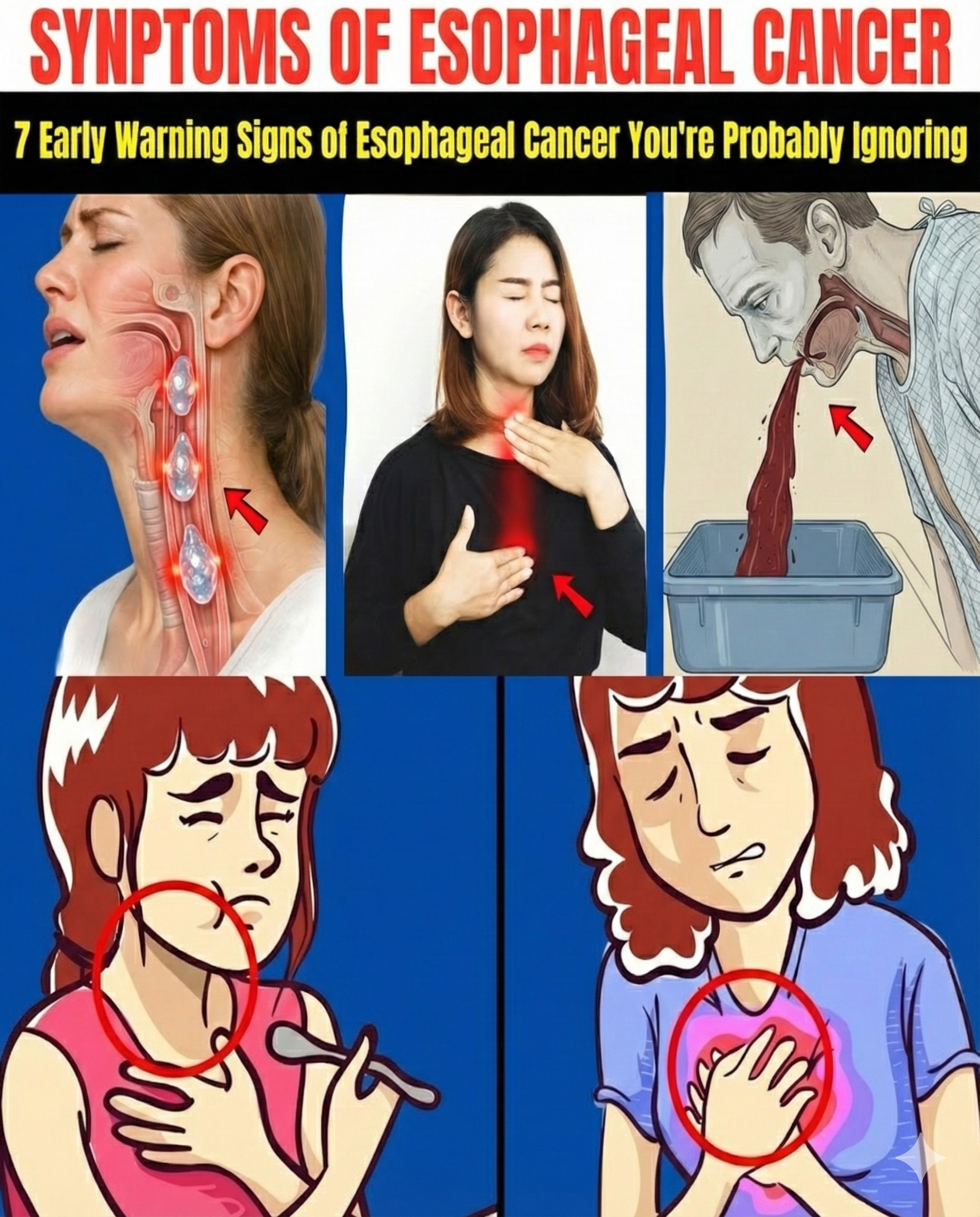
Why These Signs Are Often Missed After Age 50
As we age, digestive changes become more common. Things like slower metabolism or occasional reflux might seem normal.
Studies indicate that risk factors such as long-term acid reflux (GERD), smoking, or excess weight can play a role in esophageal changes over time.
The esophagus is the tube that carries food from your throat to your stomach. When something irritates or narrows it gradually, symptoms can build slowly.
Many people adapt without realizing—chewing more slowly or avoiding certain foods.
But that doesn’t mean it’s harmless. Here’s what to watch for.
Sign 1: Difficulty Swallowing That Gets Worse Over Time
Feeling like food is getting stuck in your throat or chest, especially with solids at first?
This is called dysphagia, and it’s one of the most reported early signs according to the American Cancer Society.
It might start with bread or meat, then progress to softer foods.
People often switch to soups or smaller bites without thinking much of it.
If this happens more than occasionally, it’s worth mentioning to your doctor.
Sign 2: Ongoing Heartburn or Indigestion That Doesn’t Improve
Frequent heartburn or a burning sensation in the chest that keeps coming back, even with over-the-counter help?
Chronic GERD is linked to changes in the esophagus lining, per Mayo Clinic resources.
It’s common, but when it’s persistent, it can signal the need for further evaluation.
Many manage it with antacids, but ongoing symptoms deserve a closer look.
Simple habits like eating smaller meals might help short-term, but don’t ignore the pattern.

Sign 3: Unexplained Weight Loss Without Trying
Losing pounds steadily without changing your diet or exercise routine?
This can happen if swallowing becomes uncomfortable, leading to eating less.
Or it might stem from other body changes.
Research notes this as a frequent sign in esophageal cases.
If clothes feel looser unexpectedly, track it and talk to a healthcare provider.
It’s one of those changes that’s easy to welcome at first but shouldn’t be overlooked.
Sign 4: Chest Pain, Pressure, or Discomfort During Meals
A feeling of pressure, burning, or pain in the chest, especially when eating or drinking?
It can mimic heartburn or even heart-related issues.
Johns Hopkins points out that this irritation can come from the esophagus itself.
Don’t assume it’s just indigestion—chest symptoms always warrant professional advice.
Better to rule out serious causes early.
Sign 5: Chronic Hoarseness or a Persistent Cough
A raspy voice that lingers for weeks, or constant throat clearing and coughing?
Sometimes, esophageal issues can affect nearby nerves or cause reflux into the throat.
This sign is often blamed on allergies or a cold.
But if it doesn’t clear up, it could be worth checking.
Many are surprised when evaluation reveals an esophageal connection.
Sign 6: Food or Liquid Coming Back Up Unexpectedly
Regurgitation—food returning to the mouth after swallowing—or frequent hiccups?
This can happen if the esophagus is narrowed or irritated.
It’s uncomfortable and disruptive.
Combined with other signs, it raises the importance of a medical review.
Occasional episodes are common, but frequent ones aren’t something to ignore.
Sign 7: Ongoing Fatigue or Weakness
Feeling unusually tired all the time, even with good rest?
This can tie to subtle nutrient issues or body stress from digestive challenges.
It’s nonspecific, but when paired with other signs, it adds to the picture.
Many attribute it purely to age, but patterns matter.
Now that we’ve covered these seven signs, here’s a quick comparison table for clarity:
| Common Dismissal | Why It Might Warrant Attention |
|---|---|
| Occasional food sticking | Progressive difficulty with solids then liquids |
| Frequent heartburn | Doesn’t improve with usual remedies |
| Unintended weight loss | No clear diet or activity change |
| Chest discomfort | Occurs with eating or swallowing |
| Hoarse voice or cough | Lasts weeks without infection |
| Regurgitation | Happens regularly, not just overeating |
| Persistent tiredness | Combined with digestive changes |
These are drawn from reliable sources like the American Cancer Society and Mayo Clinic.

Common Risk Factors to Understand
Certain habits and conditions can increase chances over time:
- Long-term GERD or acid reflux
- Smoking or tobacco use
- Heavy alcohol consumption
- Excess body weight, especially around the abdomen
- Diet low in fruits and vegetables
Knowing your risks helps guide conversations with your doctor.
For example, quitting smoking at any age brings benefits.
Practical Steps You Can Take Today
Start by tracking symptoms in a simple journal—what you eat, when issues occur, how often.
This makes discussions with your doctor more productive.
Consider these habits that research supports:
- Eat smaller, more frequent meals
- Avoid lying down right after eating
- Elevate the head of your bed if reflux is an issue
- Include more fruits and vegetables daily
- Maintain a healthy weight through balanced choices
- Limit alcohol and avoid tobacco
If you have multiple signs or known risks, ask about screening options like endoscopy.
Early checks can provide peace of mind.
Conclusion: Listening to Your Body Makes a Difference
These subtle signs are often overlooked, but recognizing them as potential signals empowers better health choices.
Many people live actively into later years by staying proactive about digestive health.
Discuss any ongoing concerns with a healthcare provider—they can guide next steps based on your history.
Small actions today can lead to bigger reassurance tomorrow.
Frequently Asked Questions
What is the most common first sign of esophageal cancer?
Difficulty swallowing is frequently reported as an early noticeable change, according to sources like the American Cancer Society.
Can heartburn alone mean esophageal cancer?
No, heartburn is very common and usually not serious, but persistent cases despite management should be evaluated, especially with other signs.
When should I see a doctor about swallowing issues?
If difficulty swallowing lasts more than a couple of weeks or worsens, it’s wise to seek medical advice promptly.
This article is for informational purposes only and is not a substitute for professional medical advice, diagnosis, or treatment. Always consult your healthcare provider if you have concerns about symptoms or health conditions. Early discussion with a doctor is key for personalized guidance.


