
You kick off your shoes after a long day, expecting sweet relief… but instead you get that weird fizzing, pins-and-needles feeling in your toes.
Or you step onto cold bathroom tiles and barely feel the chill.
Most of us shrug it off: “Just tired feet,” “Bad socks,” “I’ve been standing too long.”
But what if your toes are quietly trying to tell you something important?
Peripheral nerve problems affect millions of people, and they usually begin with the longest nerves first — the ones that reach all the way down to your toes. Diabetes, B12 deficiency, repetitive strain, old injuries, and even some medications can slowly damage these nerves… often for months or years before anyone connects the dots.
Here are the 8 subtle warning signs that frequently appear in the feet first — signs many people over 50 brush off as “normal aging” until the symptoms become impossible to ignore.
8. Intermittent Tingling or “Fizzy” Pins-and-Needles
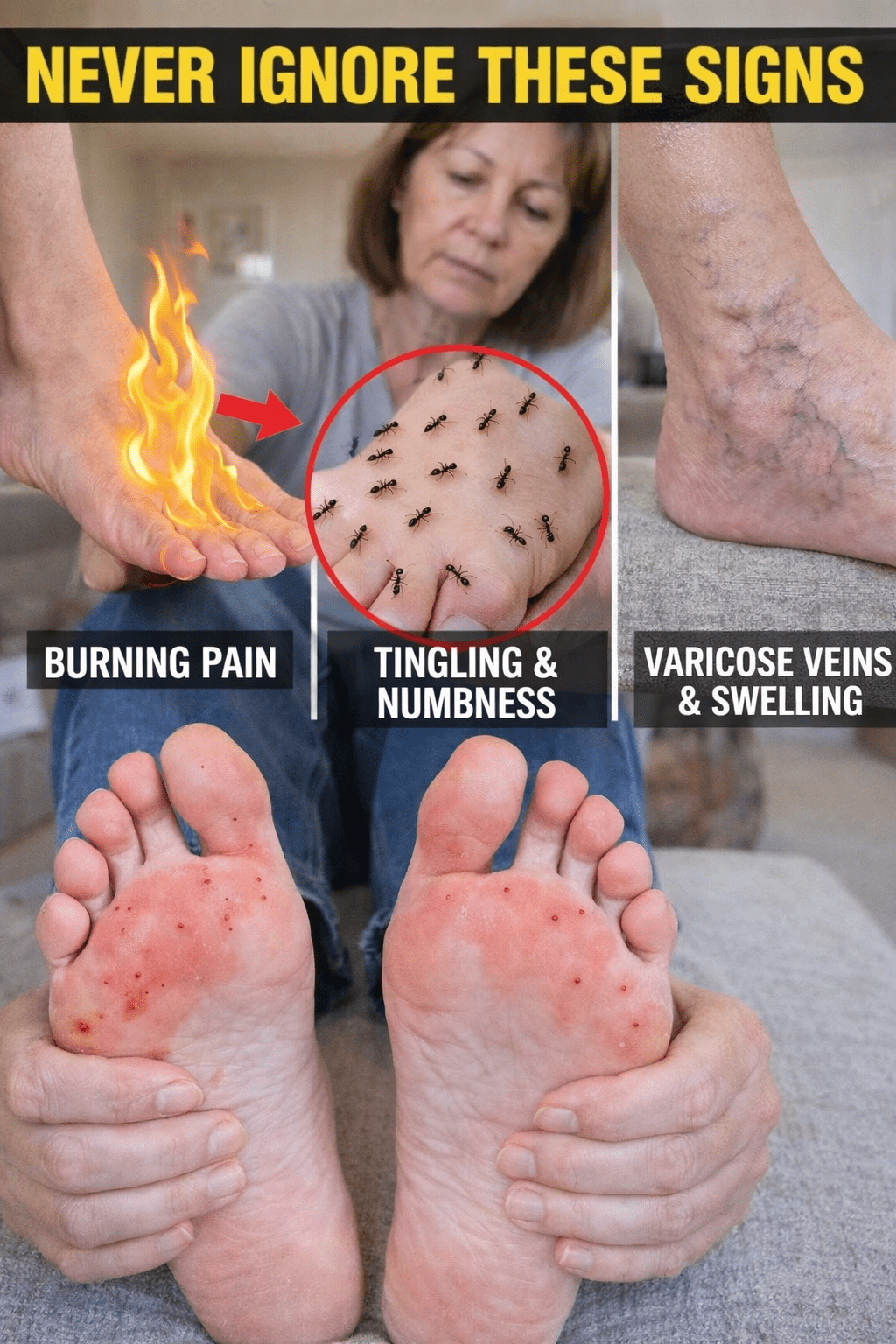
That strange buzzing or electric fizz in one or more toes — especially after sitting or lying down — is often the very first whisper of nerve irritation (paresthesia). It comes and goes, so most people ignore it… until it starts happening every day.
7. Toes That Feel “Asleep” or Numb
You can still walk, but your toes feel strangely distant. Sock seams disappear. The texture of the carpet feels dull. This creeping numbness is a classic early sign of sensory nerve damage — and it silently raises your risk of unnoticed cuts, blisters, or pressure sores.
6. Burning or Searing Heat (Especially at Night)
Sheets feel like they’re on fire. Your toes are burning even though they’re cool to the touch. Nighttime burning is very common in small-fiber neuropathy and frequently disrupts sleep — yet many people blame “poor circulation” or “hot feet.”
5. Paradoxical Cold Sensations
Your toes feel icy cold… but when you touch them with your hand they’re actually warm. This temperature confusion happens when the nerves that interpret temperature start misfiring — another early red flag.
4. Sudden, Sharp, Electric-Shock Pains
A quick, stabbing jolt shoots through one or two toes — gone in a second. These zaps can happen while resting, walking, or even in bed. Recurrent zaps usually mean the nerves are becoming irritable.
3. Extreme Sensitivity to Light Touch (Allodynia)
A light brush of the bedsheet, the seam of a sock, or even a loose shoe lace suddenly feels painful or intensely irritating. What used to be comfortable now hurts. This heightened sensitivity is a hallmark of nerve dysfunction.
2. Balance Problems — Especially in the Dark
You start feeling wobbly on stairs, hesitant in dim rooms, or slightly off-balance when turning quickly. The nerves in your feet provide constant position feedback (proprioception). When that feedback fades, balance suffers — and fall risk quietly climbs.
1. Skin, Nail & Healing Changes
The skin on your feet becomes dry and cracked even with lotion. Toenails grow thicker, brittle, or discolored. Small cuts or scrapes take forever to heal. These changes happen because damaged nerves also affect blood flow, sweat glands, and skin repair.
Quick Comparison: Normal vs. Nerve Warning Signs
| Aspect | Typical “Normal” Aging/Fatigue | Possible Nerve-Related Change |
|---|---|---|
| Duration | Temporary — goes away with rest | Persistent or slowly worsening |
| Pattern | Related to activity | Starts in toes, often spreads upward |
| Sensations | Dull ache, soreness | Tingling, burning, numbness, electric shocks |
| Impact | Minor inconvenience | Affects balance, sleep, safety, daily comfort |
Real People, Real Stories
Susan (63) laughed off the “fizzy toes” for almost two years — until numbness made her afraid to walk at night.
David (68) thought his nightly burning was just “old shoes.” When balance problems started, he finally paid attention. Both caught it early enough to make meaningful lifestyle and medical changes — and both say they wish they had listened to their toes sooner.
Bottom Line
Your toes contain some of the longest nerves in your body — they’re often the first to send the alarm.
Occasional odd feelings after sitting cross-legged or in cold weather? Usually harmless.
But when tingling, burning, numbness, or strange pains keep coming back — especially together — it’s worth paying attention.
Early awareness doesn’t mean panic.
It means you give yourself the best chance to protect your steps, your sleep, and your independence for years to come.
Have you noticed any of these quiet toe signals lately?
Don’t wait for them to get louder.
Your feet might be whispering something important — listen before they have to shout.
This post is for informational purposes only and is not a substitute for professional medical advice. If you recognize several of these signs, please consult a healthcare provider.


