That nagging cough that keeps you up at night, leaves your throat raw, and makes every breath feel uncomfortable is something many of us know all too well. It disrupts your sleep, drains your energy, and turns simple daily tasks into a challenge. The constant irritation and congestion can feel endless, especially during colder months when respiratory discomfort seems to linger.
But here’s the good news: there’s a simple, time-tested way to find some relief using ingredients you likely already have in your kitchen. And by the end of this guide, you’ll discover an easy homemade option that combines them for soothing support—keep reading to learn how.
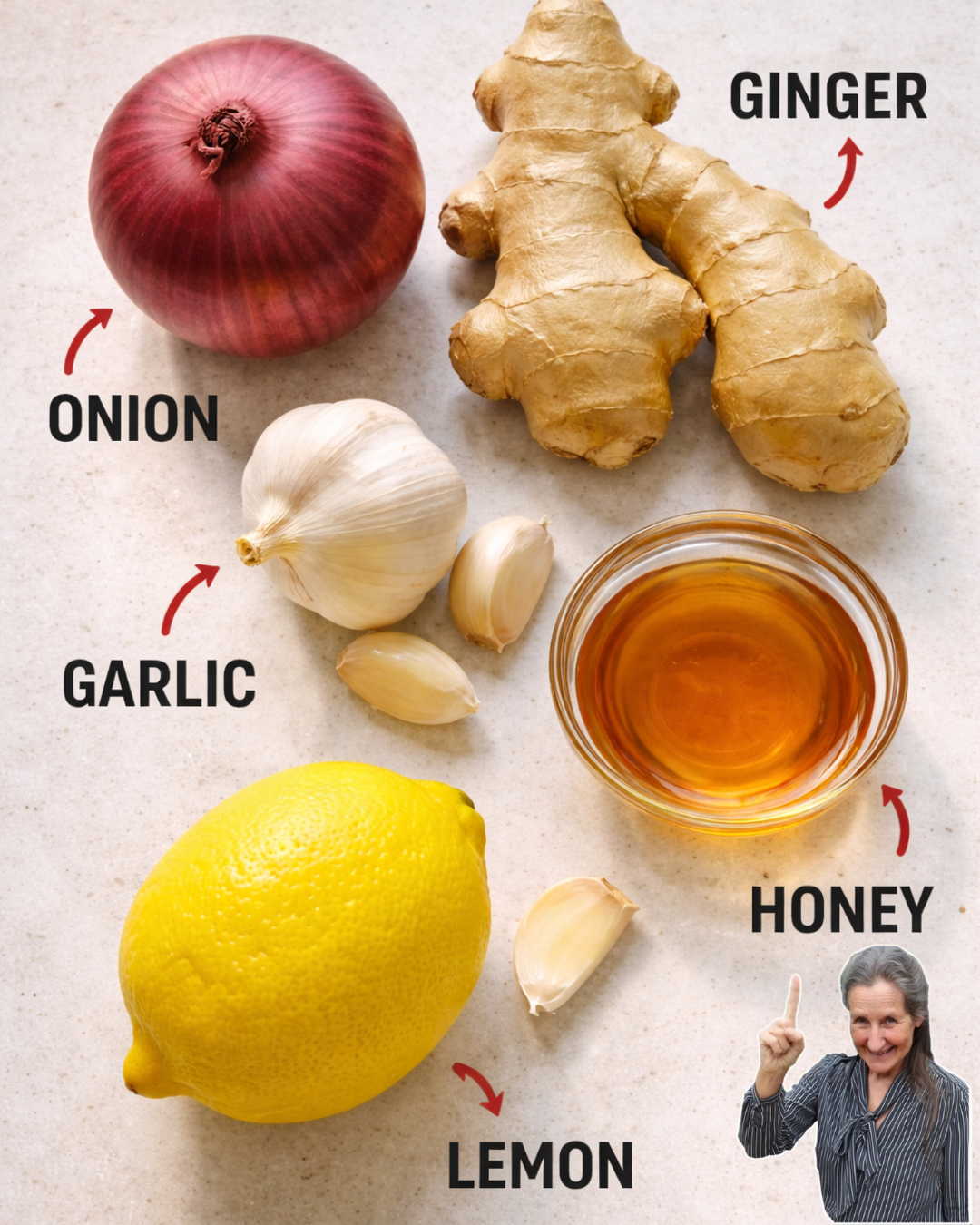
Why These Natural Ingredients Are Popular for Respiratory Comfort
People have turned to onion, ginger, garlic, honey, and lemon for generations when dealing with coughs and congestion. These pantry staples are gentle and accessible, making them a go-to for many seeking natural ways to ease discomfort.
Research shows that certain natural approaches can help support comfort during upper respiratory issues. For instance, studies, including a systematic review published in BMJ Evidence-Based Medicine, indicate that honey can improve symptoms like cough frequency and severity more effectively than usual care options in some cases.
But that’s not all—let’s break down what each ingredient brings to the table.
The Role of Each Ingredient in Supporting Throat and Respiratory Comfort
Honey: A Soothing Favorite Backed by Research
Honey has long been valued for its thick, coating texture that helps calm throat irritation. Multiple studies suggest it may provide better relief for nighttime coughs than some common alternatives.
One notable trial compared honey to dextromethorphan (a frequent ingredient in over-the-counter cough syrups) and found honey offered superior support for cough frequency, severity, and sleep quality in children. Similar findings appear in reviews of upper respiratory tract symptoms, where honey consistently ranked higher for easing discomfort.
- Coats and soothes the throat
- Supports better sleep during cough episodes
- Natural and widely available
Ginger: Warming Support for Congestion
Fresh ginger is known for its warming properties and has been studied for its potential to ease respiratory irritation. Research indicates ginger compounds can have anti-inflammatory effects and may help relax airways.
Studies on ginger for acute respiratory issues show promise in reducing symptoms, with some evidence of antiviral activity against certain respiratory viruses.

Garlic: Traditional Antimicrobial Ally
Garlic contains compounds like allicin, which have demonstrated antimicrobial properties in lab studies against a range of bacteria and viruses. It’s a staple in many traditional remedies for supporting immune response during discomfort.
Onion: An Old-Fashioned Expectorant Helper
Onions have been used in folk remedies for centuries, often in syrups or poultices to help loosen congestion. Their natural compounds may contribute to thinning mucus, making them a common choice for chesty coughs.
Lemon: A Bright Source of Vitamin C
Lemon adds a fresh boost of vitamin C, which supports overall immune function. While it doesn’t prevent colds, regular intake may slightly shorten duration in some people, and the acidity helps cut through mucus.
Here’s a quick comparison of their key supportive properties:
| Ingredient | Key Supportive Property | Backed By |
|---|---|---|
| Honey | Soothes throat, reduces cough frequency | Multiple clinical trials and reviews |
| Ginger | Anti-inflammatory, warms and clears | Studies on respiratory symptoms |
| Garlic | Antimicrobial compounds | Lab and traditional use evidence |
| Onion | Helps loosen mucus | Generational folk remedies |
| Lemon | Vitamin C for immune support | General nutritional research |
This isn’t everything—the real magic happens when you combine them wisely.
An Easy Homemade Remedy to Try at Home
One popular way to harness these ingredients is by making a simple infused syrup. It’s straightforward and uses natural infusion to draw out their properties.
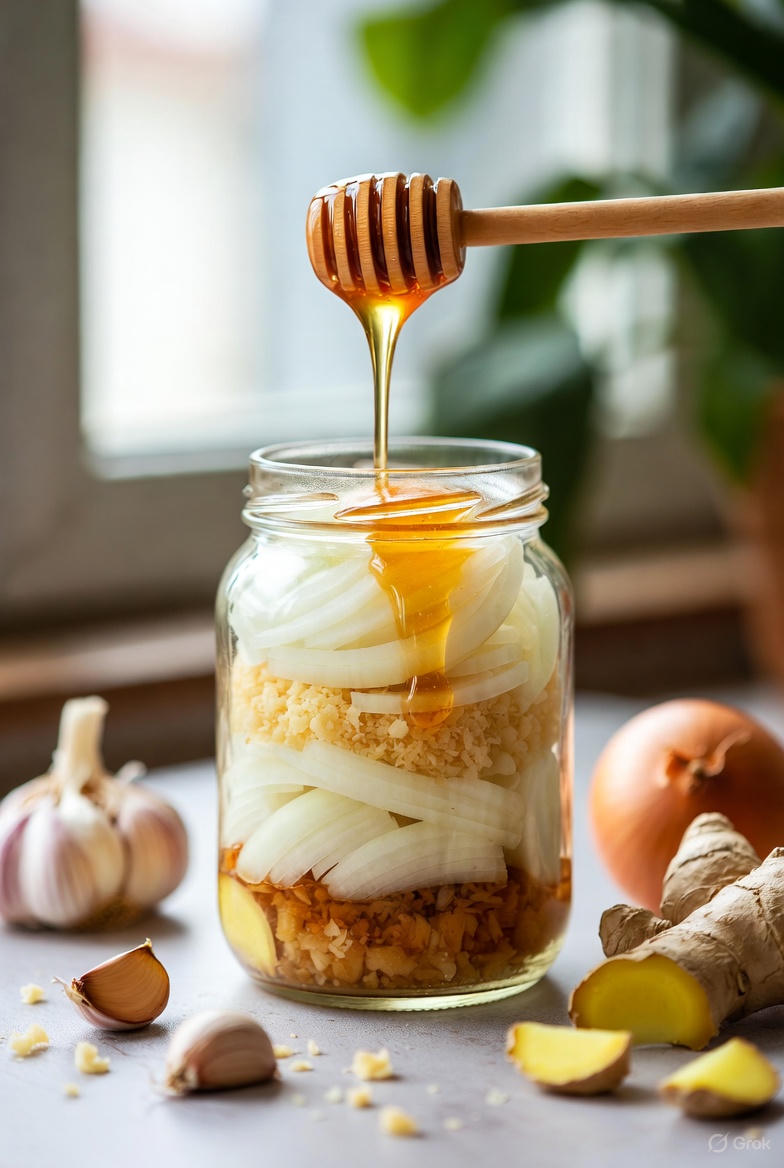
Step-by-Step Guide to Making a Soothing Onion-Honey Infusion (with Additions)
This recipe builds on traditional onion-honey syrups, enhanced with ginger, garlic, and lemon for extra support.
Ingredients (for about 1-2 weeks’ supply):
- 1 large red or yellow onion, thinly sliced
- 2-3 inches fresh ginger, grated or sliced
- 3-4 garlic cloves, crushed
- Raw honey (enough to cover the ingredients, about 1-1.5 cups)
- Juice of 1-2 lemons (added fresh when serving)
Instructions:
- Layer the sliced onion, grated ginger, and crushed garlic in a clean glass jar.
- Pour raw honey over the top until fully covered (honey acts as a natural preservative).
- Stir gently to combine, then seal the jar and let it sit at room temperature for 8-24 hours (or up to a few days in the fridge for stronger infusion).
- Strain the liquid into a clean jar (or keep the solids for a chunkier version).
- Store in the refrigerator for up to 2 weeks.
How to Use:
- Adults: Take 1-2 teaspoons as needed, up to 3-4 times a day.
- Add fresh lemon juice to each dose for a brighter flavor and vitamin C boost.
- Warm slightly if desired, but avoid boiling to preserve properties.
Many people report this helps soothe irritation and clear congestion naturally. The honey provides the base, while the other ingredients infuse their supportive qualities.
Safety notes: Use raw honey for best results. Do not give honey to children under 1 year due to botulism risk.
Additional Tips to Support Comfort During a Cough
While trying the remedy, these habits can help:
- Stay hydrated with warm fluids like herbal teas.
- Use a humidifier to add moisture to the air.
- Rest and elevate your head for better sleep.
- Gargle with warm salt water for throat relief.
Here’s a list of daily supportive actions:
- Drink plenty of fluids (aim for 8-10 glasses)
- Get extra rest to allow recovery
- Avoid irritants like smoke
- Try steam inhalation for congestion
The truth is, combining these simple steps often makes the biggest difference…
Frequently Asked Questions
1. How long does it take for natural remedies like this to provide relief?
Many notice soothing effects within a day or two, though it varies. Consistency is key—use as needed for ongoing support.
2. Can children use this homemade infusion?
Yes, for children over 1 year, but adjust doses (e.g., 1/2 teaspoon) and consult a pediatrician first. Honey is not safe for infants under 12 months.
3. Is this safe to use alongside other supportive measures?
Generally yes, as it’s food-based. However, check with a healthcare provider if you have allergies or take medications.
In summary, turning to kitchen staples like onion, ginger, garlic, honey, and lemon offers a gentle, traditional way to support comfort during a stubborn cough. The infused syrup is easy to make and draws on properties backed by both generational use and modern research, especially honey’s soothing effects.
Give it a try next time discomfort strikes—you might find it becomes your go-to natural helper.
Important Note: This information is for educational purposes and shares traditional and research-supported uses of natural ingredients. It is not medical advice and does not diagnose, treat, or prevent any condition. Always consult a healthcare professional for persistent symptoms or before starting new remedies, especially for children or if pregnant. Individual results vary.