Feeling tired after a long day, with tense muscles and skin that could use a little extra care? Many people experience that buildup of daily stress and fatigue, making it hard to unwind and feel truly refreshed. The good news is there’s a straightforward home ritual that countless individuals have turned to for generations to help soothe the body and promote a sense of calm.
But what makes this combination stand out, and how can you make it part of your routine? Keep reading to uncover the details—and a surprising tip at the end that ties it all together.

Why People Enjoy Adding Salt and Lemon to Bath Water
This simple practice involves dissolving salt in warm bath water and incorporating fresh lemon. It’s popular because it combines the soothing properties of a warm soak with natural ingredients readily available at home.
Many find it helps create a relaxing experience that leaves them feeling invigorated. Research on warm baths in general shows they can support relaxation and ease minor muscle tension, while the addition of salt and citrus adds an appealing sensory element.
Potential Benefits for Skin Care and Exfoliation
Salt, particularly sea salt or Epsom salt, acts as a gentle exfoliant when dissolved in water. It can help remove dead skin cells, leaving the skin feeling smoother.
Studies on sea salt baths, such as those using Dead Sea salts, suggest they may improve skin hydration and reduce roughness in some cases. A 2005 study found that bathing in a salt solution enhanced the skin barrier function.
Lemon adds a fresh citrus scent and contains vitamin C, which is known for its antioxidant properties. The aroma from lemon can make the bath more enjoyable, contributing to an overall refreshing feel.
Here’s a quick overview of what people commonly report:
- Smoother, softer skin after soaking
- A brighter, more radiant appearance
- Reduced dryness in some users
- Gentle cleansing sensation
Of course, individual results vary, and it’s always best to moisturize afterward.

How This Ritual May Support Relaxation and Mood
The invigorating scent of lemon plays a key role here. Aromatherapy studies indicate that citrus scents like lemon can have uplifting effects.
For instance, research on lemon essential oil shows it may help reduce feelings of anxiety and promote a sense of calm in certain settings, such as during stressful periods.
Combined with the warmth of the bath, which is known to relax muscles and ease tension, this duo creates a spa-like atmosphere at home.
Many people describe stepping out feeling lighter and more energized. While not everyone experiences the same, the ritual’s simplicity makes it worth trying.
But that’s not all—there’s growing interest in how regular warm baths might even support better sleep quality over time.
Soothing Sore Muscles and Promoting Comfort
Warm water alone can help relieve minor muscle soreness after a busy day or workout. Adding Epsom salt, which contains magnesium sulfate, is a common choice for this purpose.
Although scientific evidence on skin absorption of magnesium is mixed—some experts note limited proof—many users swear by the soothing effect.
Reviews from sources like the Cleveland Clinic highlight that warm baths can reduce stiffness, and salt may enhance that comfort.
Lemon’s fresh aroma adds an energizing twist, making the soak feel more revitalizing.
Common Reasons People Try This Bath
- After exercise or physical activity
- On stressful evenings
- As part of a weekly self-care routine
- To wind down before bed
Step-by-Step Guide: How to Prepare Your Salt and Lemon Bath
Ready to give it a try? Here’s an easy, actionable way to get started safely.
You’ll need:
- 1-2 cups of sea salt or Epsom salt (Epsom is popular for muscle relief)
- 2-3 fresh lemons
- A bathtub filled with warm (not hot) water
Steps:
- Run your bath with warm water—aim for a comfortable temperature around body heat.
- Add the salt and stir gently until it mostly dissolves. This helps avoid any grainy residue.
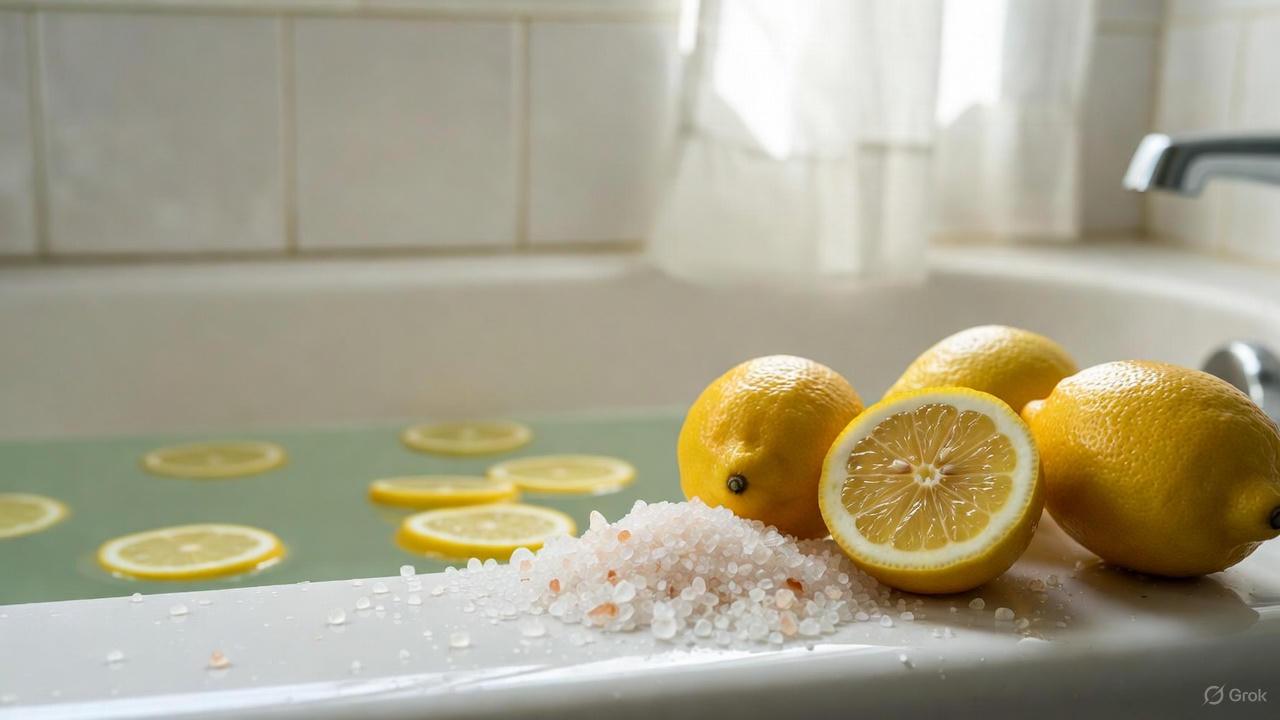
- Slice the lemons in half, squeeze the juice into the water, and toss in the peels for extra aroma.
- Soak for 15-20 minutes. Breathe deeply and relax.
- Rinse off lightly with fresh water afterward, then pat dry and apply moisturizer.
Pro tip: Do this in the evening for maximum unwinding. Start with shorter soaks if you’re new to it.
Tips for the Best Experience and Safety
To keep things enjoyable:
- Use fresh lemons to avoid any irritation—citric acid can be strong for sensitive skin.
- Patch test if you have allergies or very dry skin.
- Avoid if you have open cuts, as salt or lemon might sting.
- Stay hydrated by drinking water before and after.
- Don’t make the water too hot to prevent dryness.
Many incorporate this once or twice a week without issues.
Here’s a simple comparison of salt types:
| Salt Type | Common Use | Notes |
|---|---|---|
| Epsom Salt | Muscle relaxation | Magnesium sulfate; dissolves easily |
| Sea Salt | Skin exfoliation | Natural minerals; coarser texture |
| Himalayan Salt | Aesthetic and aroma | Pink color; similar benefits |
Why This Ritual Feels So Refreshing Overall
Combining the mineral-rich salt with lemon’s vibrant scent creates a multi-sensory experience. Warm baths have long been recommended for promoting relaxation, and adding these natural elements enhances that.
People often report feeling more balanced and ready for the next day. It’s a low-cost way to prioritize self-care.
And here’s that open loop closer: The real “magic” comes from consistency—try it weekly, and you might notice subtle shifts in how you feel energized and calm.
Conclusion
Adding salt and lemon to your bath water is a timeless, simple ritual that many find deeply refreshing. It supports skin care through gentle exfoliation, promotes relaxation via warmth and aroma, and offers a moment of peace in a busy world.
Give it a go and see how it fits into your routine—you deserve that extra bit of comfort.
Frequently Asked Questions
How often should I take a salt and lemon bath?
Once or twice a week is common. Listen to your body and adjust as needed.
Can I use lemon essential oil instead of fresh lemons?
Yes, a few drops can provide similar aroma benefits, but fresh lemons add natural juice and peels.
Is this safe for everyone?
Generally yes for most adults, but consult a doctor if you have skin conditions, are pregnant, or have health concerns.
Disclaimer: This article is for informational purposes only and is not intended to diagnose, treat, or cure any condition. Always consult a healthcare professional before trying new wellness practices, especially if you have underlying health issues. Individual experiences may vary.