Feeling like your focus isn’t as sharp as it used to be? Maybe you walk into a room and forget why, or finding the right word takes a little longer than before. These small moments can be frustrating, especially when they start adding up and make everyday tasks feel harder.
The good news is that simple changes to what you eat might make a real difference in how clear and energized your mind feels. Research in nutrition and brain health points to certain foods that provide key nutrients for cognitive function. And here’s the encouraging part: many people notice positive shifts in just a few weeks when they include these foods regularly.
But which ones stand out the most, and how can you add them without overhauling your entire diet? Keep reading—I’ll share the top five, backed by science, plus easy ways to get started.

Why Food Choices Matter for Brain Health
Your brain uses about 20% of your body’s energy, even though it only makes up 2% of your weight. It needs a steady supply of nutrients to maintain healthy blood flow, protect cells from oxidative stress, and support communication between neurons.
Studies show that diets rich in antioxidants, healthy fats, and anti-inflammatory compounds are linked to better memory, attention, and overall cognitive performance over time. The beauty is that you don’t need expensive supplements—just consistent, nutrient-dense whole foods.
Here’s the interesting part: improvements can happen faster than you might think. Many observational studies and clinical trials report noticeable differences in mental clarity within 4–8 weeks of dietary changes.
The Top 5 Foods Experts Often Recommend for Brain Support
1. Blueberries and Other Dark Berries
Blueberries are packed with anthocyanins—plant compounds that act as powerful antioxidants. Research, including studies published in the Journal of Agricultural and Food Chemistry, suggests these compounds can cross the blood-brain barrier and help protect brain cells.
Regular berry eaters tend to show slower rates of age-related cognitive decline in large population studies like the Nurses’ Health Study.
Easy ways to include them:
- Add a handful to morning oatmeal or yogurt
- Blend frozen berries into a smoothie
- Enjoy as a simple afternoon snack
Aim for about 1 cup most days—fresh or frozen both work great.
2. Fatty Fish Rich in Omega-3s
Wild salmon, sardines, mackerel, and anchovies are excellent sources of EPA and DHA, the long-chain omega-3 fatty acids your brain needs for cell membrane health and reducing inflammation.
Higher blood levels of these omega-3s are associated with larger brain volume in key memory areas, according to research in Neurology.
Simple serving ideas:
- Bake or grill salmon with herbs and lemon
- Use canned sardines on whole-grain crackers
- Add smoked salmon to salads or eggs
Try for 2–3 servings (about 3–4 ounces each) per week.
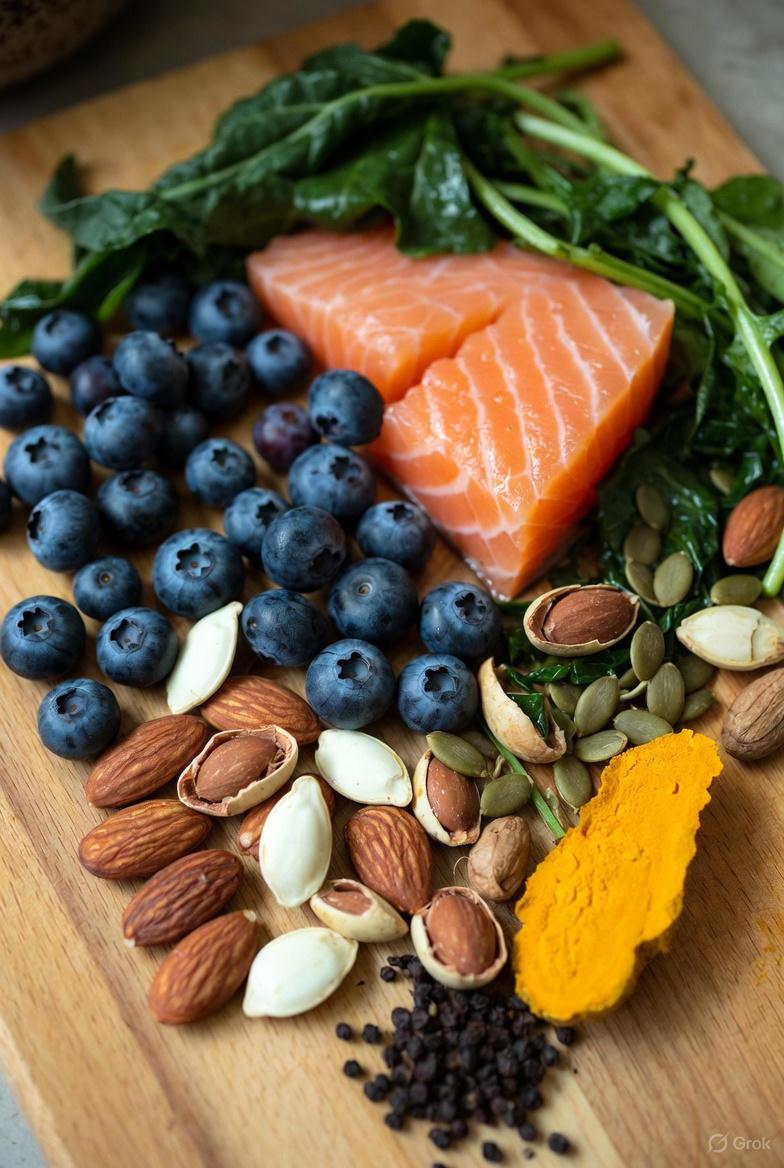
3. Leafy Green Vegetables
Spinach, kale, Swiss chard, and romaine lettuce are loaded with folate, vitamin K, lutein, and beta-carotene—nutrients linked to healthier brain aging.
The landmark MIND diet research found that people eating leafy greens daily performed better on cognitive tests, equivalent to being 11 years younger mentally.
Quick tips to eat more:
- Start lunch or dinner with a big green salad
- Toss a handful into smoothies (you won’t taste it)
- Sauté with garlic as a fast side dish
Target at least 1–2 cups raw or ½ cup cooked daily.
4. Nuts and Seeds
Walnuts, almonds, flaxseeds, chia seeds, and pumpkin seeds provide vitamin E, healthy fats, and polyphenols that support brain cell protection.
Walnuts, in particular, have been highlighted in studies for their potential benefits to memory and learning performance.
Convenient options:
- Keep a small container of mixed nuts for snacks
- Sprinkle seeds on yogurt, salads, or soups
- Add ground flax or chia to baked goods
A small handful (about 1 ounce) most days is plenty.
5. Turmeric with a Pinch of Black Pepper
The active compound curcumin gives turmeric its bright color and strong anti-inflammatory properties. When paired with black pepper, absorption increases significantly.
Emerging research suggests curcumin may support BDNF levels—a protein important for neuron growth and survival.
Tasty ways to use it:
- Make warm “golden milk” with turmeric, milk (or plant milk), and black pepper
- Add to scrambled eggs, rice, or soups
- Stir into roasted vegetables
½–1 teaspoon of ground turmeric plus a pinch of black pepper daily is a good target.
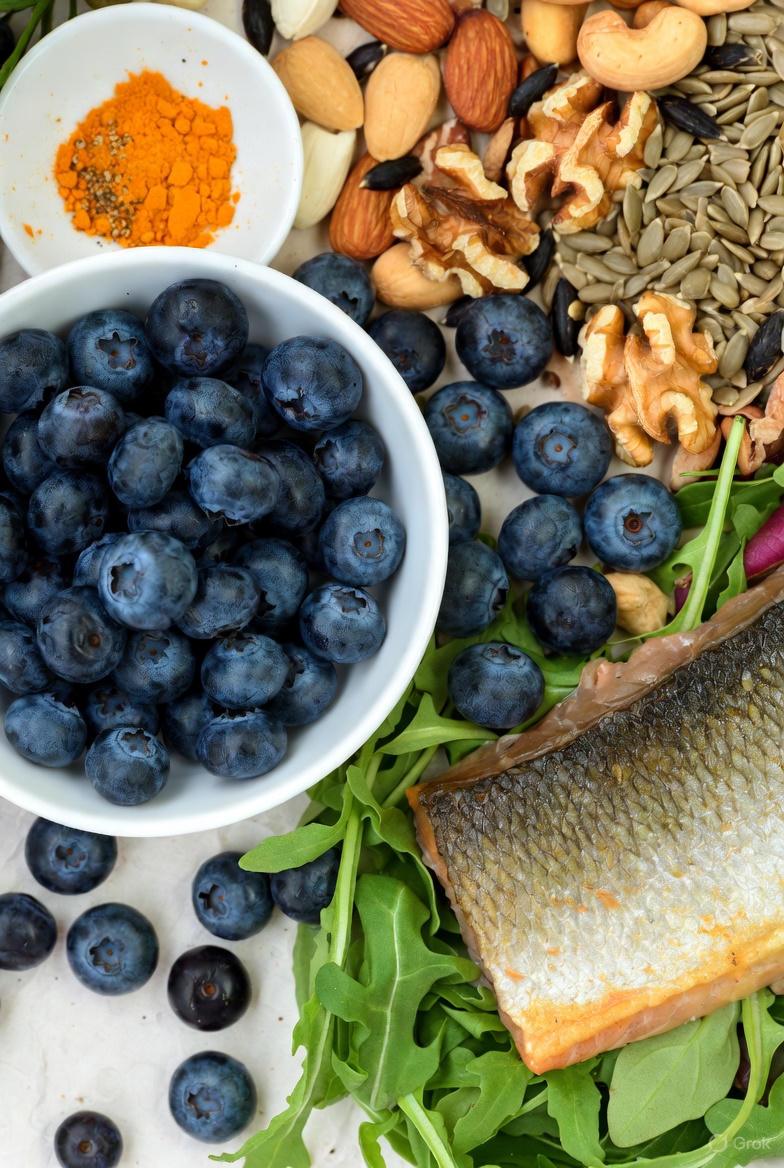
Quick Comparison Table: Your Daily Brain-Support Checklist
| Food | Key Nutrients | Suggested Amount | Easiest Way to Add |
|---|---|---|---|
| Blueberries/berries | Anthocyanins, vitamin C | 1 cup most days | Smoothie or snack |
| Fatty fish | EPA & DHA omega-3s | 2–3 servings per week | Baked salmon or canned sardines |
| Leafy greens | Folate, vitamin K, lutein | 1–2 cups raw daily | Salads or sautéed sides |
| Nuts & seeds | Vitamin E, healthy fats, polyphenols | 1 small handful daily | Yogurt topping or portable snack |
| Turmeric + pepper | Curcumin | ½–1 tsp + pinch pepper daily | Golden milk or seasoning |
How to Get Started Without Feeling Overwhelmed
You don’t have to change everything at once. Small steps add up quickly.
Week 1–2: Focus on adding berries to breakfast and a big serving of leafy greens to one meal each day.
Week 3–4: Include a handful of nuts or seeds as a daily snack and plan fatty fish twice during the week.
Week 5 onward: Experiment with turmeric—try golden milk in the evening or sprinkle it on dinner dishes.
Consistency matters more than perfection. Even adding just three of these foods regularly can make a difference over time.
Many people who make these gradual changes report feeling sharper, more focused, and emotionally steadier after 6–10 weeks. Your results will depend on your overall lifestyle, including sleep, exercise, and stress management.
A Few Important Notes Before You Start
These foods are generally safe and beneficial for most people. However, consider talking to your doctor first if you:
- Have allergies to fish or nuts
- Take blood-thinning medications
- Have gallbladder concerns (high amounts of turmeric can be stimulating)
Everyone’s needs are different, so personalized guidance is always best.
Frequently Asked Questions
How soon might I notice any difference in focus or memory? Individual experiences vary, but many studies and anecdotal reports suggest positive changes in mental clarity can appear within 4–8 weeks of consistent inclusion.
Do I need to eat all five foods every single day? No—aim for variety and regularity. Including most of them several times a week is a realistic and effective goal.
Can I get similar benefits from supplements instead of food? Whole foods provide a complex mix of nutrients that work together. Most experts recommend food-first approaches for the best overall support.
This article is for informational purposes only and is not medical advice. Please consult your healthcare provider before making significant dietary changes, especially if you have existing health conditions.