
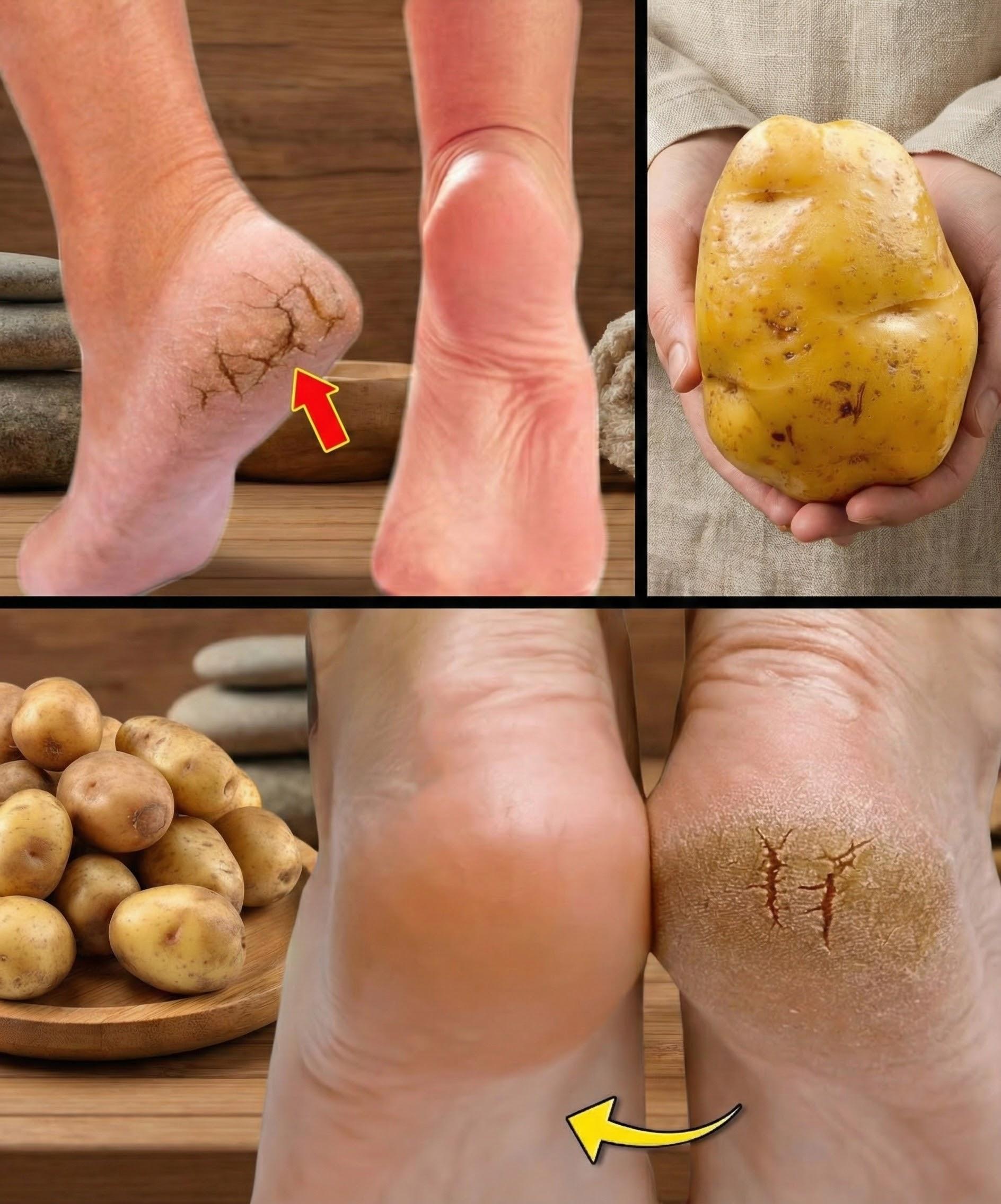
Dry, cracked heels can make every step uncomfortable and leave you feeling self-conscious about showing your feet. The thick skin builds up over time, leading to painful splits that sting and flake, especially after a long day on your feet or in harsh weather. Many people try various moisturizers without much relief, wondering if there’s an easier way to soften that rough skin.
But here’s something interesting: a common kitchen staple might offer a gentle, natural approach to supporting softer heels. Keep reading to discover this surprising option and how others have incorporated it into their routine.
Understanding What Causes Cracked Heels
Cracked heels often develop when the skin on your feet becomes excessively dry and loses its flexibility. Pressure from walking or standing then causes the thickened areas to split.
Here are some common factors that contribute:
- Prolonged standing on hard surfaces
- Wearing open-back shoes or going barefoot frequently
- Low humidity or cold, dry air
- Dehydrated skin from not drinking enough water
- Lack of regular moisture and gentle exfoliation
The good news? Many of these are lifestyle-related and can be addressed with simple habits.
But that’s not all—understanding the natural properties of certain ingredients can help you explore supportive home options.
Why Raw Potato Is a Popular Choice in Traditional Foot Care
Potatoes have been used in folk remedies for generations, particularly for dry skin issues. While not a miracle ingredient, people turn to them for their natural components.
Research and traditional use suggest potatoes contain:
- Starch that may help retain moisture on the skin’s surface
- Vitamin C, known for supporting overall skin health
- Mild enzymes, like catecholase, that could assist in gently breaking down dead cells
Studies on potato extracts show potential for hydration and soothing effects, though more research is needed specifically for heels. For instance, potato starch is recognized in skincare for its emollient properties, helping to create a protective barrier.
This is the part that’s intriguing—many report noticing softer skin after consistent use of raw potato applications.
Step-by-Step Guide: Trying the Potato Paste Method at Home
If you’re curious about this natural approach, here’s a straightforward way to prepare and apply it. Always patch-test first to ensure no irritation.
What you’ll need:
- 1 medium raw potato
- Clean cotton socks
- Warm water for soaking
Instructions:
- Wash your feet thoroughly and soak them in warm water for 10-15 minutes to soften the skin. Pat dry gently.
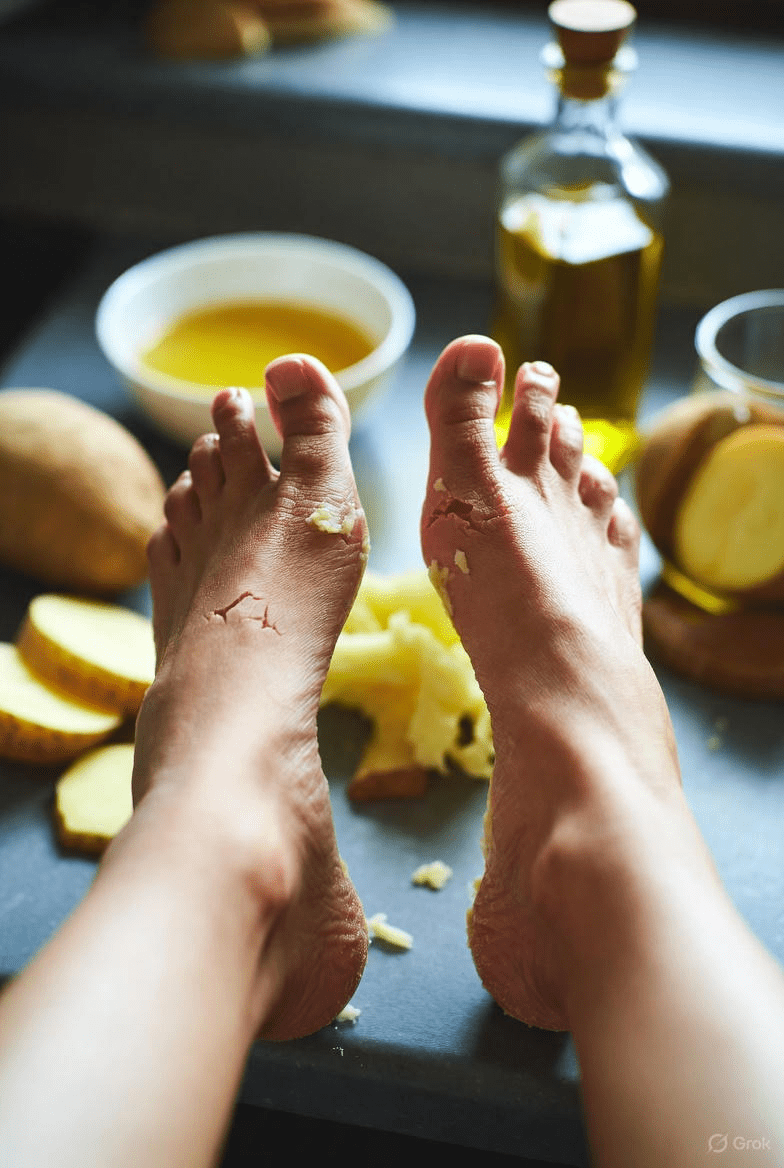
- Peel and grate the raw potato finely, or blend it into a smooth paste.
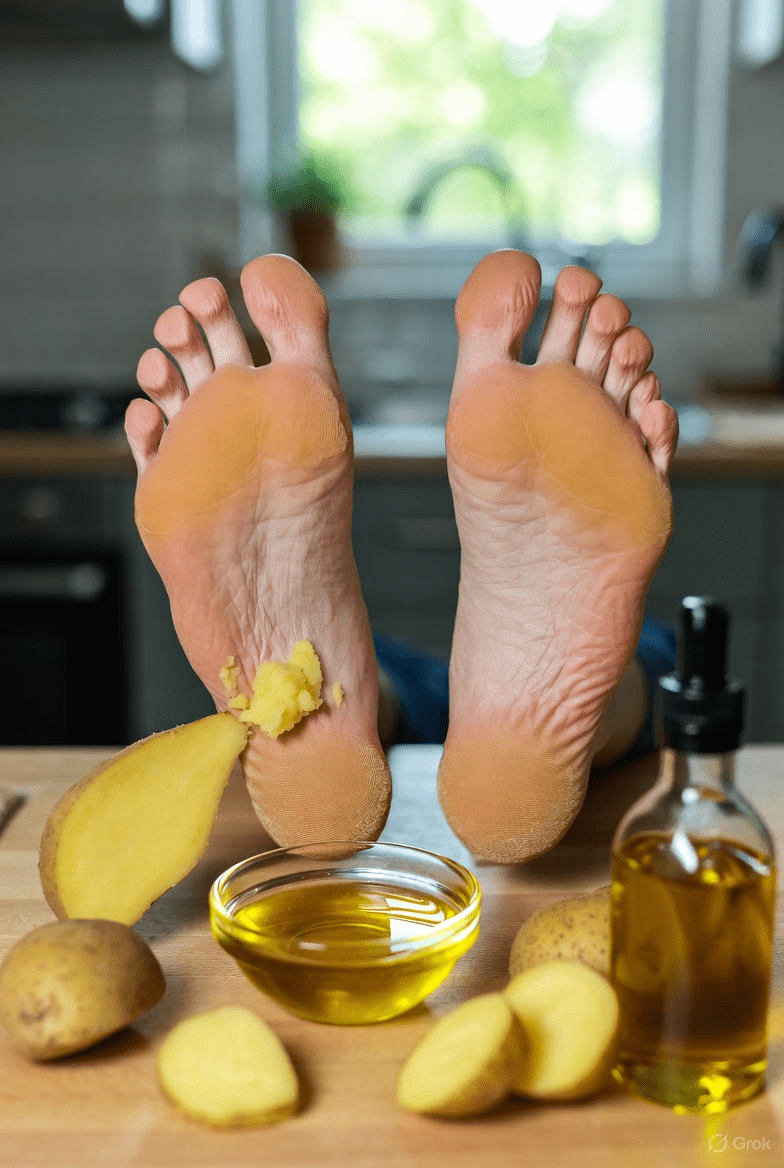
- Apply the paste generously to your heels, focusing on dry or cracked areas.
- Cover with clean socks to hold it in place and allow absorption.
- Leave on for 20-30 minutes, then rinse with lukewarm water and pat dry.
- Follow up with a gentle moisturizer if desired.
Repeat this 3-4 times per week. Consistency seems to make a difference for those who try it.
Ways to Enhance the Potato Application for Better Comfort
You can combine potato paste with other natural ingredients for added soothing.
Try mixing in:
- A teaspoon of honey for its humectant properties
- A few drops of olive oil to support moisture retention
- Fresh aloe vera gel for a cooling effect
These additions are popular in home routines and may help the paste feel more nourishing.
Here’s a quick comparison of common add-ins:
| Add-In | Potential Benefit | How to Use |
|---|---|---|
| Honey | Draws in moisture | Mix 1 tsp into potato paste |
| Olive Oil | Softens rough areas | Add 1-2 tsp for smoother texture |
| Aloe Vera | Calms irritation | Blend equal parts with potato |
Experiment to see what feels best for your skin.
Long-Term Habits to Help Maintain Smoother Heels
Prevention plays a big role in keeping heels comfortable. Incorporate these daily practices:
- Apply a thick moisturizer to feet every night
- Wear supportive, closed shoes when possible
- Stay hydrated by drinking plenty of water
- Gently exfoliate with a pumice stone after soaking (1-2 times weekly)
- Avoid hot showers that strip natural oils
Small changes like these can support healthier foot skin over time.
The truth is, combining natural remedies with good habits often yields the best results.
What Many People Notice with Consistent Use
Those who incorporate potato-based routines often share:
- Initial softening after a few applications
- Less visible flaking within a week or two
- Gradual improvement in overall heel texture
Results vary, and this works best for mild to moderate dryness. Deeper fissures or pain warrant professional advice.
Frequently Asked Questions
How often should I try the potato paste?
Most people apply it 3-4 times weekly for a few weeks to notice changes.
Is raw potato safe for all skin types?
It’s generally gentle, but discontinue if irritation occurs. Avoid open wounds.
Can this replace medical treatment for severe cracks?
No—this is a supportive home option. See a doctor for deep, painful, or infected cracks.
Final Thoughts
Exploring natural ingredients like raw potato can be a gentle, affordable way to support softer, more comfortable heels. Paired with daily moisture and good foot care, it might become a helpful part of your routine.
Remember, everyone’s skin is different, so listen to yours and adjust as needed.
Disclaimer: This article is for informational purposes only and shares traditional home care ideas. It is not medical advice. Consult a healthcare professional for persistent foot issues or before trying new remedies, especially if you have diabetes or circulatory concerns. Results are not guaranteed and vary by individual.
(Word count: approximately 1280)


