
Many women experience occasional changes in their breasts due to hormonal fluctuations, stress, or everyday life. It’s easy to dismiss these subtle shifts as nothing serious, hoping they’ll simply fade away on their own. But sometimes, these changes can point to something more concerning, like the early stages of breast cancer, where paying attention early can make a real difference in outcomes. And here’s the encouraging part: spotting these signs sooner rather than later opens the door to more options and better results. But that’s not all—there’s one key insight about listening to your body that many overlook, and we’ll get to that toward the end.
Breast cancer affects both women and men, though it’s far more common in women. According to the American Cancer Society’s estimates for 2025, around 316,950 new cases of invasive breast cancer are expected in women in the United States, along with about 2,800 cases in men. The good news? When found early, while still localized to the breast, the 5-year relative survival rate is nearly 100%, based on data from the National Cancer Institute’s SEER program.
Research consistently shows that being aware of your body’s normal state and noticing unusual changes leads to earlier detection. Yet many people wait, assuming symptoms will resolve. Knowledge empowers you to take action without delay.
Why Paying Attention to Breast Changes Matters
Breast cancer often develops quietly at first. Many cases are found through routine screenings before any noticeable signs appear. That’s why combining self-awareness with regular check-ups is so powerful.
But when changes do occur, recognizing them promptly can be lifesaving. Studies from organizations like the American Cancer Society highlight that early-stage detection dramatically improves long-term outcomes compared to later stages.
Men can develop breast cancer too, though it’s rare. The signs are similar, so awareness applies to everyone.
Here’s the reality: most breast changes are not cancer. They can stem from benign conditions like cysts or infections. Still, it’s always better to have them checked by a healthcare professional.
10 Warning Signs to Watch For
Here are some common changes that warrant attention. Remember, these can have other causes, but persistence or combination of signs deserves evaluation.
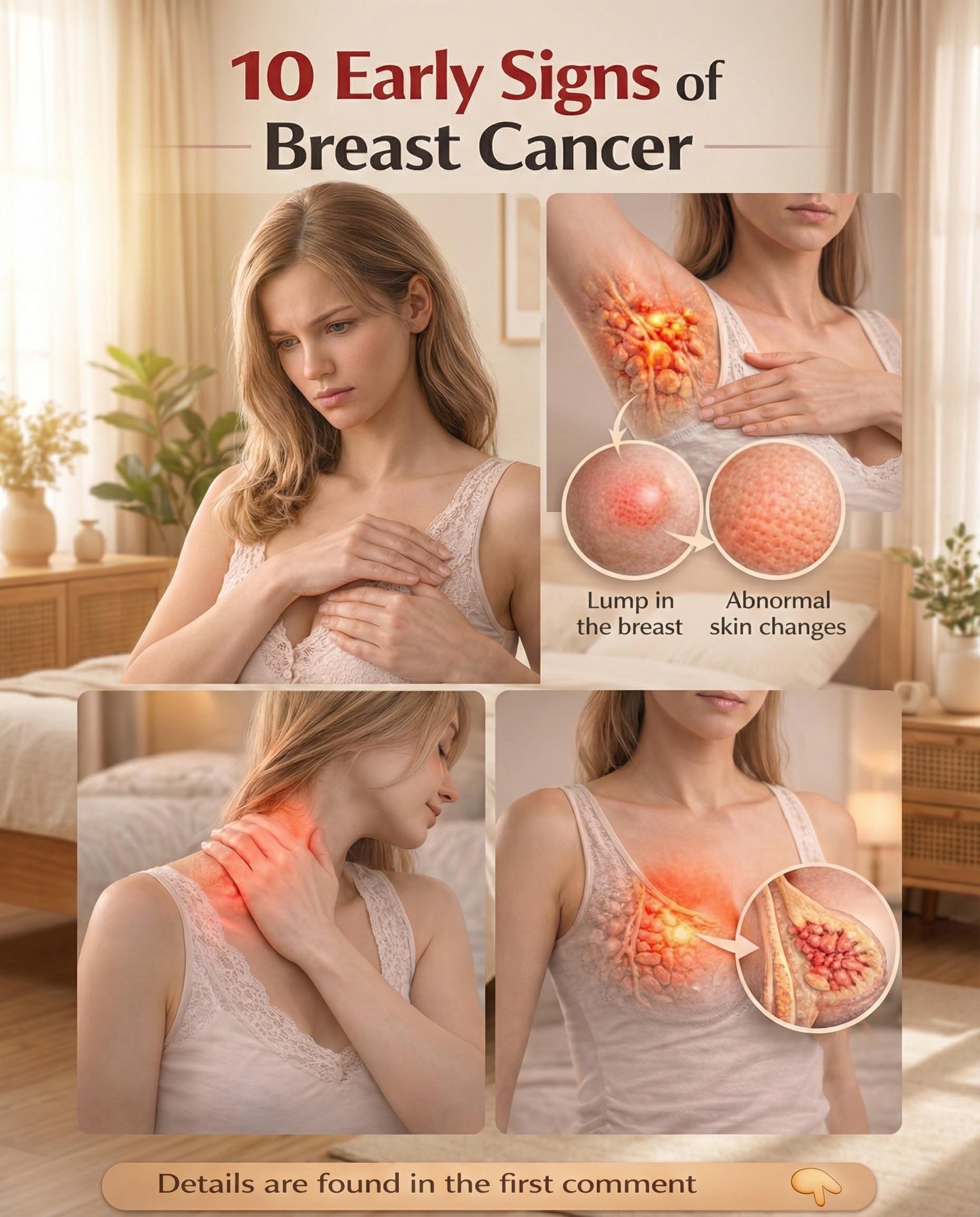
1. A New Lump or Thickened Area in the Breast or Underarm
A hard, irregular lump that feels different from surrounding tissue is one of the most recognized signs. It might be painless and fixed in place.
But not all lumps are hard—some can feel soft or tender. Any new lump lasting beyond a few weeks should be examined.
Tip: Familiarize yourself with how your breasts normally feel through monthly self-checks.
2. Changes in Breast Size, Shape, or Contour
Unexplained swelling or shrinkage in one breast, without links to weight changes or cycles, can be noteworthy.
This might include a feeling of heaviness or asymmetry that’s new.
3. Skin Changes Like Dimpling, Puckering, or Orange-Peel Texture
The skin may appear indented or textured like an orange peel (known as peau d’orange).
This happens when underlying changes affect the skin’s appearance.
How to spot it:
- Look in a mirror with arms at sides, then raised.
- Flex chest muscles by pressing hands on hips.
4. Nipple Inversion or Retraction
A nipple that suddenly turns inward when it used to point outward.
This change can develop gradually.
5. Redness, Scaling, or Thickening of the Nipple or Areola
Flaky, crusty, or reddened skin around the nipple, sometimes with itching or burning.
This could signal a rarer form like Paget’s disease of the breast, often linked to underlying changes.
6. Unusual Nipple Discharge
Clear, bloody, or other discharge from one nipple, especially if spontaneous (not squeezed).
Discharge during breastfeeding is normal, but otherwise, it’s worth checking.
7. Persistent Redness, Warmth, or Swelling of the Breast
Rapid onset of redness and swelling across much of the breast, sometimes without a distinct lump.
This may indicate inflammatory breast cancer, a less common but aggressive type that can mimic an infection.
8. Ongoing Itching, Irritation, or Rash on the Breast
Itching that doesn’t resolve, especially with redness or warmth.
Don’t assume it’s just dry skin—persistence matters.
9. Persistent Pain in the Breast or Nipple
While most breast pain is cyclical and benign, constant pain in one area unrelated to your cycle should be noted.
10. Swollen Lymph Nodes in the Armpit or Near the Collarbone
Enlarged, firm nodes that don’t go down after a few weeks.
This can sometimes appear before other breast changes.
But that’s not all—combining these observations with regular screenings creates the strongest approach.
How to Perform a Simple Breast Self-Exam at Home
Taking a few minutes each month can help you become familiar with your normal.
Step-by-step guide:
- Stand in front of a mirror with shoulders straight and arms at sides. Look for visible changes in shape, skin, or nipples.
- Raise your arms overhead and check again.
- Press hands on hips to tense chest muscles and observe.
- Lie down and use your opposite hand to feel each breast in circular motions, from outer to inner areas. Use light, medium, and firm pressure.
- Repeat while standing or sitting (like in the shower).
- Gently squeeze nipples to check for discharge.
Do this about a week after your period ends, or pick a consistent date if postmenopausal.
Common Risk Factors to Be Aware Of
While anyone can develop breast cancer, certain factors increase likelihood:
- Age (most cases after 50)
- Family history or genetic mutations like BRCA
- Dense breast tissue
- Previous radiation to the chest
- Lifestyle aspects like limited physical activity or alcohol use
Discuss your personal risks with a doctor for tailored advice.
When to See a Healthcare Professional
Don’t wait if you notice:
- A lump with other changes
- Bloody discharge
- Rapid breast redness and swelling
- Persistent skin or nipple alterations
Early conversation leads to peace of mind or timely next steps.
Conclusion: Taking Charge of Your Breast Health
Being attuned to these 10 warning signs puts knowledge in your hands. Combined with screenings like mammograms (recommended starting at age 40 or earlier based on risk), it forms a proactive plan.
Share this awareness with loved ones—early attention truly supports better journeys.
And that key insight? Your body often gives gentle hints first. Listening to them isn’t about fear; it’s about empowerment.
Frequently Asked Questions
How often should I get screened for breast cancer?
Guidelines from the American Cancer Society suggest women at average risk start yearly mammograms at age 40-44 if they choose, then annually from 45-54, and every 1-2 years after 55. Talk to your doctor about what’s right for you.
Can men really get breast cancer?
Yes, though rare. About 2,800 cases expected in men in 2025. Signs are similar, so self-awareness matters for everyone.
Are all breast lumps cancerous?
No, most are benign like cysts or fibroadenomas. But any new lump should be evaluated to rule out concerns.
Important Note: This information is for educational purposes only and is not a substitute for professional medical advice, diagnosis, or treatment. Always consult a qualified healthcare provider if you have concerns about breast changes or your health. Early detection through screenings and awareness is key, but individual cases vary.


