
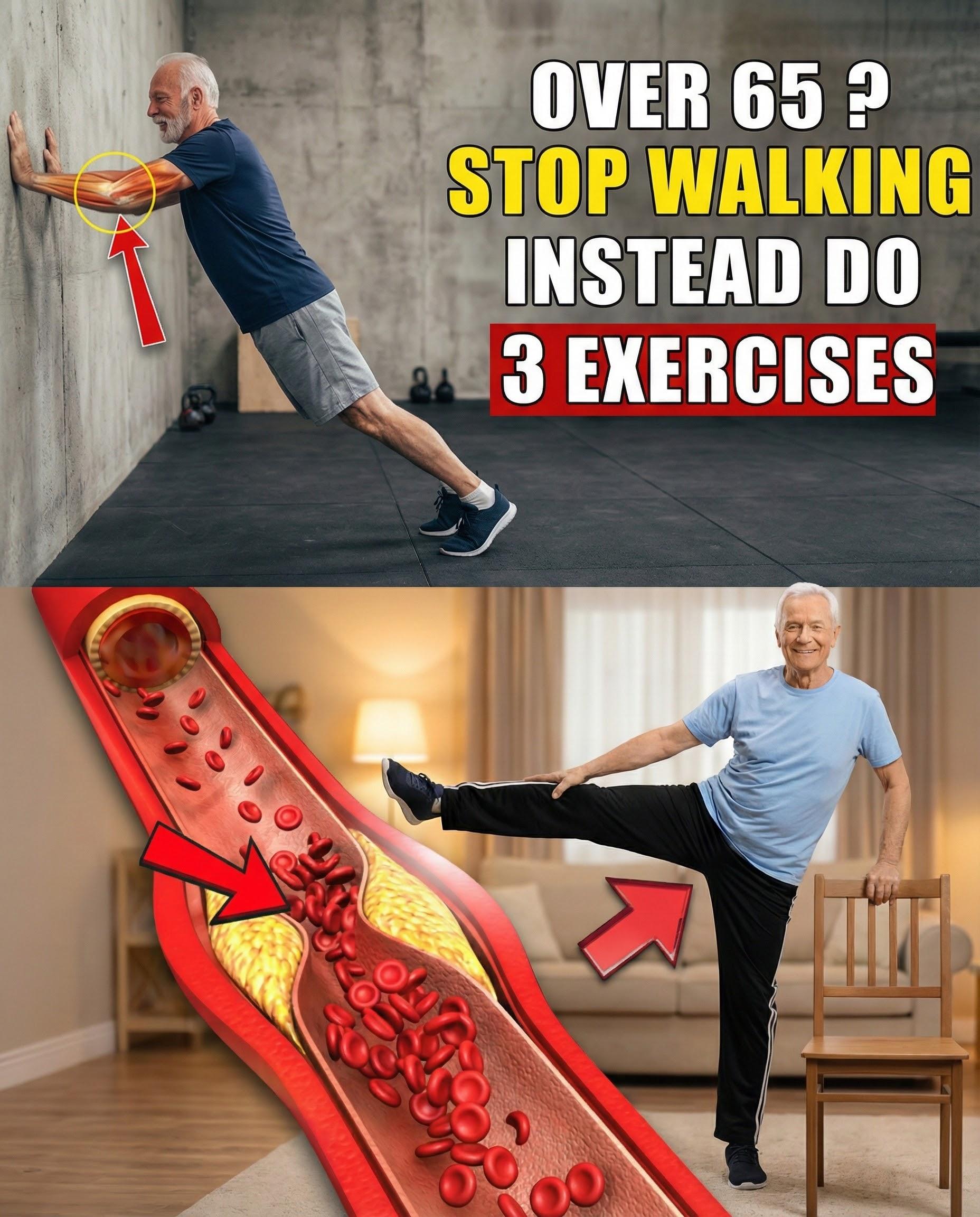
As we age past 65, everyday tasks like standing up from a chair or reaching for something on a shelf can start to feel harder than they used to. Muscle strength naturally declines over time, and balance can become less reliable, making simple movements a little more challenging. Many people turn to walking for health, which is wonderful for the heart and mood, but it may not fully address strength and stability needs. What if adding just a few targeted exercises could make a meaningful difference in how you move through your day?
The good news is that experts, including orthopedic specialists, often point to three types of movements that complement walking beautifully. Keep reading to discover what they are and why they matter.
Why Walking Is Great, But May Not Be Enough After 65
Walking is one of the best habits anyone can have. It supports cardiovascular health, helps manage weight, and lifts your spirits on tough days.
That said, research shows that walking alone provides limited resistance to build or maintain muscle mass. After age 65, we can lose 3-8% of muscle per decade in a process called sarcopenia. Without targeted strength work, this loss can make daily activities feel heavier.
Balance also tends to decline gradually. Studies indicate that falls become more common with age, often linked to reduced lower body strength and slower reaction times.
The truth is, many active walkers still notice these changes. Adding variety could help fill those gaps.
The Three Types of Exercises Experts Often Recommend for Seniors
Orthopedic surgeons and physical therapists frequently suggest focusing on three key areas: strength training, balance practice, and functional movements (often using a chair for support).
These can be done at home with no special equipment. Research published in journals like the Journal of Gerontology suggests that combining them may support better mobility and lower fall risk compared to aerobic exercise alone.
Here’s why each one matters.
1. Strength Exercises to Help Maintain Muscle
Simple resistance moves, like wall push-ups or seated leg lifts, target major muscle groups in the legs, arms, and core.
Studies show that regular strength training twice a week can help slow muscle loss and improve the ability to rise from chairs or carry groceries.
Many seniors report feeling more capable in daily tasks after a few weeks of consistent practice.
2. Balance Exercises for Greater Stability
Standing on one foot (while holding a counter) or heel-to-toe walking are classic examples.
Research from the Centers for Disease Control and Prevention highlights that balance training can significantly reduce the chance of falling.
Even short daily sessions may improve confidence when navigating uneven surfaces or turning quickly.
3. Chair-Based Functional Movements
Exercises like sit-to-stand repetitions or seated marches mimic real-life actions.
They strengthen the exact muscles used for getting up, sitting down, and stepping.
Trials have found these movements lead to faster improvements in everyday function compared to walking alone.
How These Exercises Compare to Walking Alone
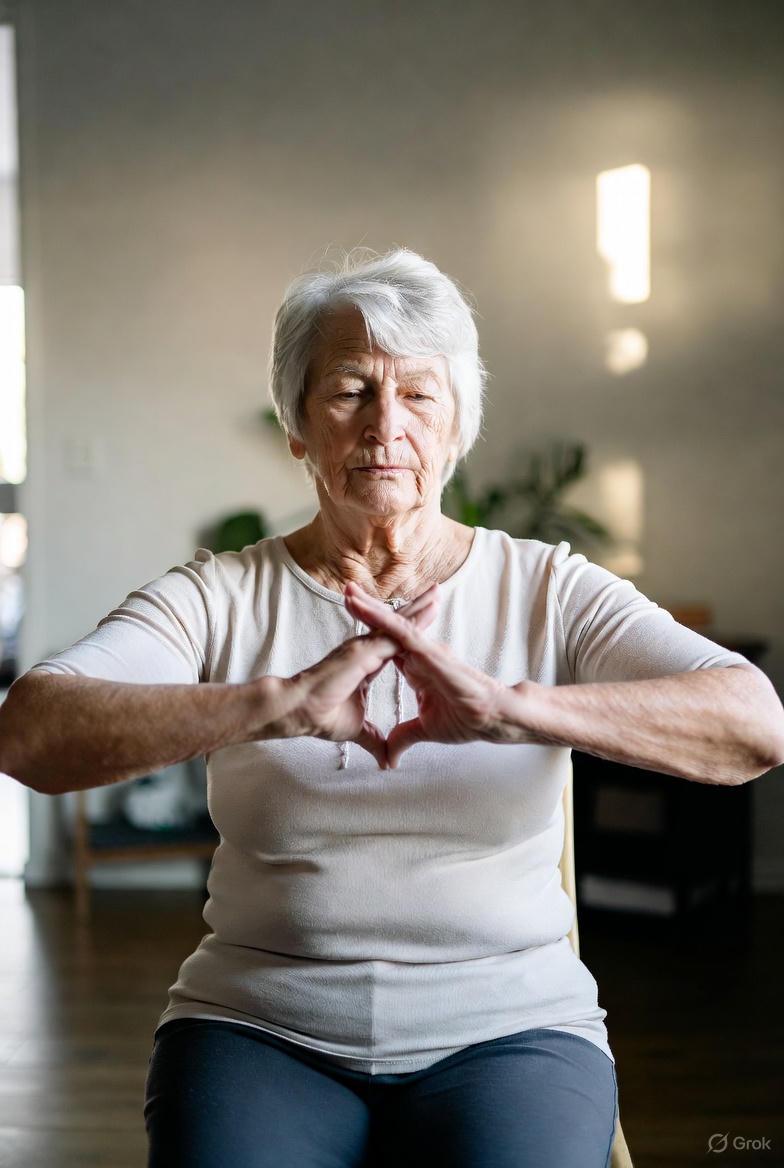
Here’s a simple comparison to make it clearer:
| Aspect | Strength, Balance & Chair Exercises | Walking Alone |
|---|---|---|
| Muscle maintenance | Directly targets major groups with resistance | Limited muscle-building effect |
| Fall risk reduction | Often shows stronger results in studies | Helps endurance, less direct on balance |
| Bone health support | Weight-bearing moves may help maintain density | Provides moderate benefit |
| Everyday tasks | Improves rising, carrying, and turning | Boosts stamina and circulation |
| Time needed | 10-20 minutes, 2-3 times per week | 30+ minutes most days |
Both approaches have value. Many experts view them as perfect partners.
Easy Ways to Get Started Safely at Home
The beauty of these exercises is their simplicity. You can begin today with these beginner-friendly options.
Strength Exercise Example: Sit-to-Stand
Sit in a sturdy chair with feet flat on the floor.
Lean forward slightly and stand up using your legs.
Slowly sit back down without using your hands if possible.
Aim for 8-12 repetitions.
Balance Exercise Example: Single-Leg Stand
Hold onto a counter or chair back.
Lift one foot slightly off the ground.
Hold for 10-20 seconds, then switch sides.
Repeat 3 times per side.
Functional Movement Example: Seated Leg Lift
Sit tall in a chair.
Extend one leg straight out and hold for 3 seconds.
Lower slowly.
Do 10 lifts per leg.
Start with 2 sessions per week. Warm up with gentle marching in place. Breathe steadily throughout.
Research emphasizes starting slowly to build confidence and avoid strain.
What Studies Actually Say About Results
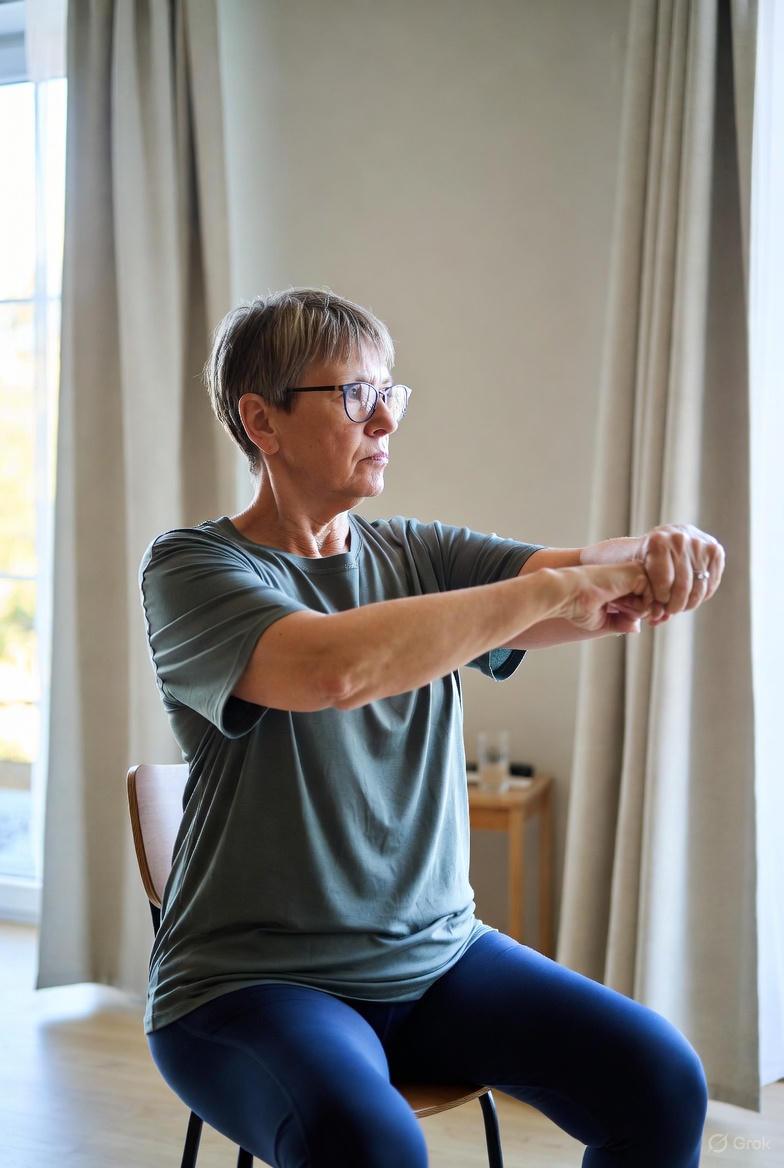
Multiple trials, including those reviewed by the Cochrane Database, suggest that programs combining strength and balance work can reduce fall rates by 20-40% in older adults.
Another study in the New England Journal of Medicine found that participants over 70 improved mobility scores noticeably after 12 weeks.
Long-term research also points to better preservation of independence when these habits continue.
Of course, individual results vary based on consistency and starting point.
Real-Life Inspiration from Everyday Seniors
Janet, 68, used to hesitate before stairs. After adding chair stands and balance holds, she now climbs them with ease.
Mike, 72, felt tired chasing his grandchildren. Simple leg strength moves helped him keep up longer and enjoy those moments more.
Stories like these remind us that small changes can add up.
Tips to Make These Exercises Stick
Choose a regular time, perhaps after breakfast or your favorite show.
Track progress in a notebook – even small wins motivate.
Invite a friend or family member to join virtually.
Listen to your body and rest when needed.
Consistency beats perfection every time.
Conclusion: Small Moves, Meaningful Difference
Walking remains a fantastic foundation for health after 65. Adding targeted strength, balance, and functional exercises may help you feel stronger, steadier, and more confident in daily life.
These three simple categories offer an approachable way to support long-term mobility. Talk to your healthcare provider about what fits your situation best, and consider starting gently today.
Your future self might thank you for it.
Frequently Asked Questions
Can I do these exercises if I have arthritis?
Many people with mild arthritis benefit from gentle strength and balance work. Start with seated versions and stop if you feel joint pain beyond mild discomfort. Always check with your doctor first.
How soon might I notice changes?
Some people feel small improvements in 2-4 weeks with consistent practice twice weekly. Strength and balance gains often become more noticeable after 8-12 weeks.
Do I need any equipment?
No. Body weight and a sturdy chair are enough to begin. Light resistance bands can be added later if desired.
This article is for informational purposes only and is not a substitute for professional medical advice. Please consult your healthcare provider before starting any new exercise routine.


