
Millions of people take atorvastatin every day, trusting it as part of their long term heart health routine. Yet over time, some notice subtle changes in how their body feels, sleeps, or responds to daily life, and they are not always sure why. Understanding these experiences and learning how to discuss them thoughtfully with your healthcare provider can make a surprising difference by the end of this article.

Why Atorvastatin Is So Commonly Prescribed
Atorvastatin belongs to a group of medications known as statins and is widely used to help manage cholesterol levels. By lowering LDL cholesterol, it supports cardiovascular risk reduction, especially for people with factors such as family history, high blood pressure, or metabolic concerns.
That said, like many long term medications, its effects can extend beyond a single number on a lab report.
And this is where things get interesting.
Understanding Side Effects vs Body Signals
Not every physical or mental change means something is wrong. Sometimes the body is simply adjusting. Other times it may be signaling that something deserves attention.
Research and patient reports suggest that some atorvastatin users notice patterns that are easy to overlook or misattribute to stress, aging, or lifestyle factors.
Let us break them down clearly and calmly.
Commonly Reported Atorvastatin Side Effects
Muscle Related Sensations
This is one of the most frequently discussed topics around statins. Some users report muscle soreness or stiffness, a heavy or tired feeling after mild activity, and longer recovery times after exercise.
Studies suggest muscle related symptoms can occur in a portion of users, particularly at higher doses or during the first months of use.
But that is not the whole story.
Changes in Energy Levels
Some people describe feeling more fatigued than usual even when they believe they are sleeping enough. This does not mean the medication is draining energy. Cholesterol pathways are also involved in cellular energy production, which may help explain why a subset of users notice changes.
It is important to remember that fatigue can have many causes including sleep quality, nutrition, stress, or other medications.

Sleep and Rest Patterns
Sleep experiences vary widely among individuals. Some reported changes include difficulty falling asleep, lighter or fragmented sleep, and more vivid dreams.
Research on sleep and statins is mixed, but sleep quality remains essential for overall health, making it worth monitoring.
And yes, there is more.
Memory and Focus Concerns
Some users mention moments of forgetfulness or mental fog. Regulatory agencies have acknowledged that such reports exist while also noting that these effects appear to be reversible and not linked to long term cognitive decline.
Even so, awareness matters.
Digestive Comfort
The digestive system can be sensitive to many medications. Some users report bloating, mild nausea, or changes in bowel habits.
These effects are usually temporary, but persistent symptoms should always be discussed with a clinician.
Less Discussed but Noticed by Some Users
Blood Sugar Trends
Large studies show that statins may slightly increase blood sugar levels in certain individuals. This does not mean diabetes is inevitable, but monitoring becomes especially important for those already at risk.
Mood and Emotional Changes
Cholesterol plays a role in hormone and neurotransmitter balance. Some people notice mood changes such as irritability or reduced motivation, though this does not happen to everyone.
Skin Hair and Sensory Changes
Occasionally reported experiences include skin sensitivity or rashes, hair thinning, and ringing in the ears. These are uncommon, but awareness supports earlier and more productive conversations with healthcare providers.

Why These Experiences Are Often Missed
Here is the truth many people do not hear upfront. Appointments are short. Symptoms develop gradually. Many changes overlap with normal aging or everyday stress.
As a result, people often do not connect the dots.
Understanding patterns over time can be empowering.
What Research Actually Shows
What is often assumed is that side effects are rare, only affect older adults, that higher doses always lead to better results, and that symptoms are permanent. What studies suggest instead is that real world experiences vary widely, active middle aged adults also report changes, benefits may plateau at higher doses while side effects increase, and many symptoms improve after dose adjustment.
Actionable Tips for Smarter Atorvastatin Use
This is where practical steps matter.
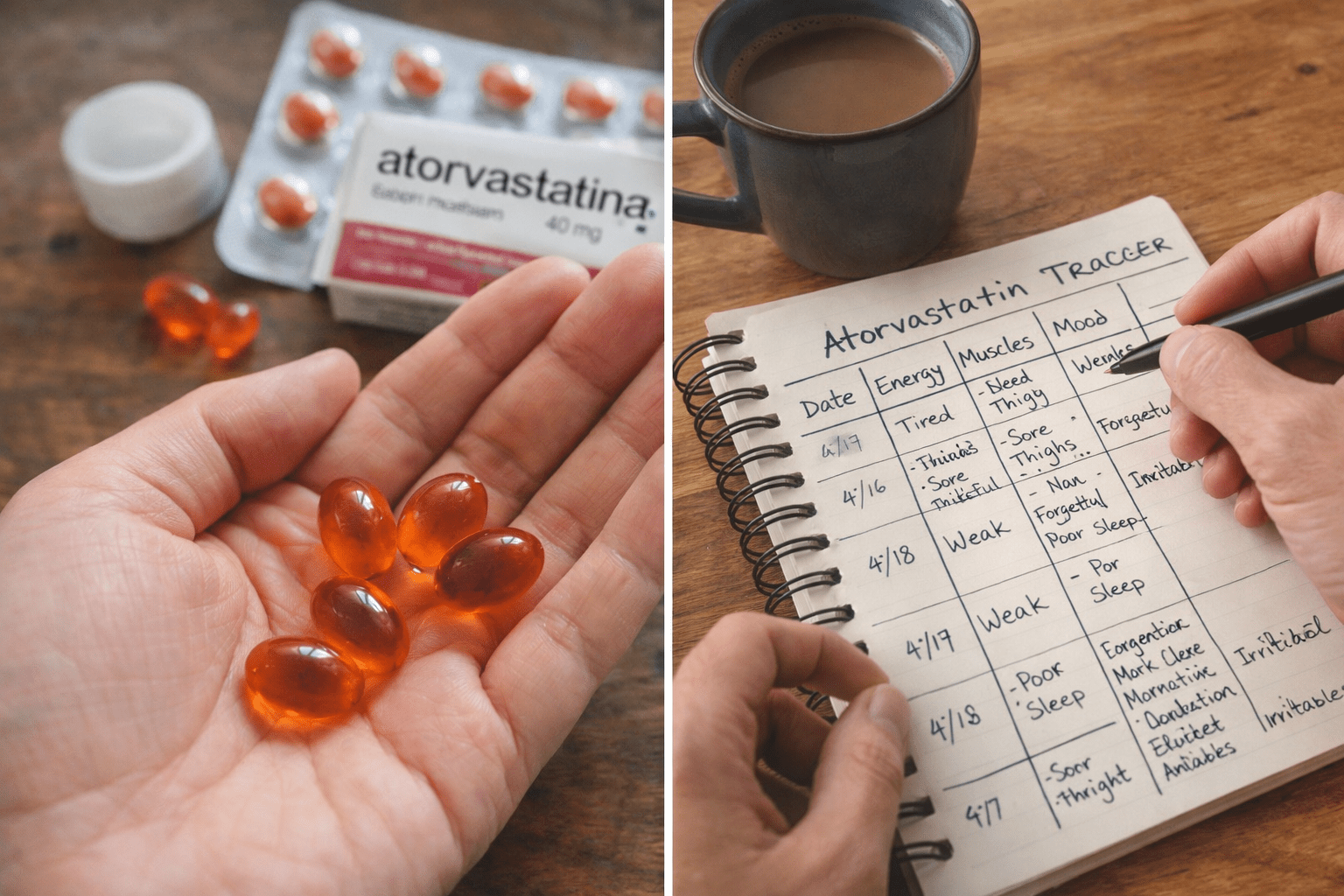
First, track rather than guess. Keeping a simple journal of energy levels, muscle comfort, sleep quality, and mood changes helps reveal patterns that isolated days cannot show.
Second, review dosage thoughtfully. Research indicates that much of atorvastatin’s benefit occurs at lower doses. It is reasonable to ask your healthcare provider whether your current dose aligns with your individual risk profile.
Third, ask about routine monitoring. Periodic checks may include liver enzymes, blood sugar markers, and muscle related enzymes if symptoms appear.
Fourth, support overall metabolism. Many clinicians recommend lifestyle strategies alongside medication, including strength training, consistent sleep schedules, and balanced nutrition.
Finally, discuss nutrient support. Some patients ask about CoQ10 supplementation since statins affect that pathway. Any supplement should be discussed with a healthcare professional first.
Lifestyle Still Matters More Than Most People Think
Medication is only one piece of the picture. Studies consistently show that regular physical activity, stress management, and whole food dietary patterns can meaningfully support cardiovascular health and may allow for simpler medication strategies in some individuals.
Here is the unexpected insight many people overlook. For individuals without prior cardiovascular events, lifestyle improvements combined with moderate medication use may offer similar protection to higher dose strategies, according to several large analyses.
Key Takeaways
Atorvastatin plays an important role in modern preventive care, but long term users benefit from awareness rather than fear. Listening to your body, staying informed, and maintaining open communication with your healthcare provider can help balance benefits with daily comfort.
You do not need to suffer quietly or make changes alone.
Frequently Asked Questions
Are atorvastatin side effects permanent
Most reported effects are temporary and may improve with time, dose adjustments, or supportive strategies under medical guidance.
Should I stop atorvastatin if I notice symptoms
You should never stop a prescribed medication without consulting your healthcare provider. Many symptoms have multiple causes and safe adjustments are often possible.
Can lifestyle changes reduce the need for higher doses
For some individuals, yes. Diet, exercise, and sleep can significantly influence cardiovascular risk markers when practiced consistently.
Medical Disclaimer
This article is for informational purposes only and does not replace professional medical advice. Always consult a qualified healthcare provider before making changes to medications, supplements, or health routines.


