
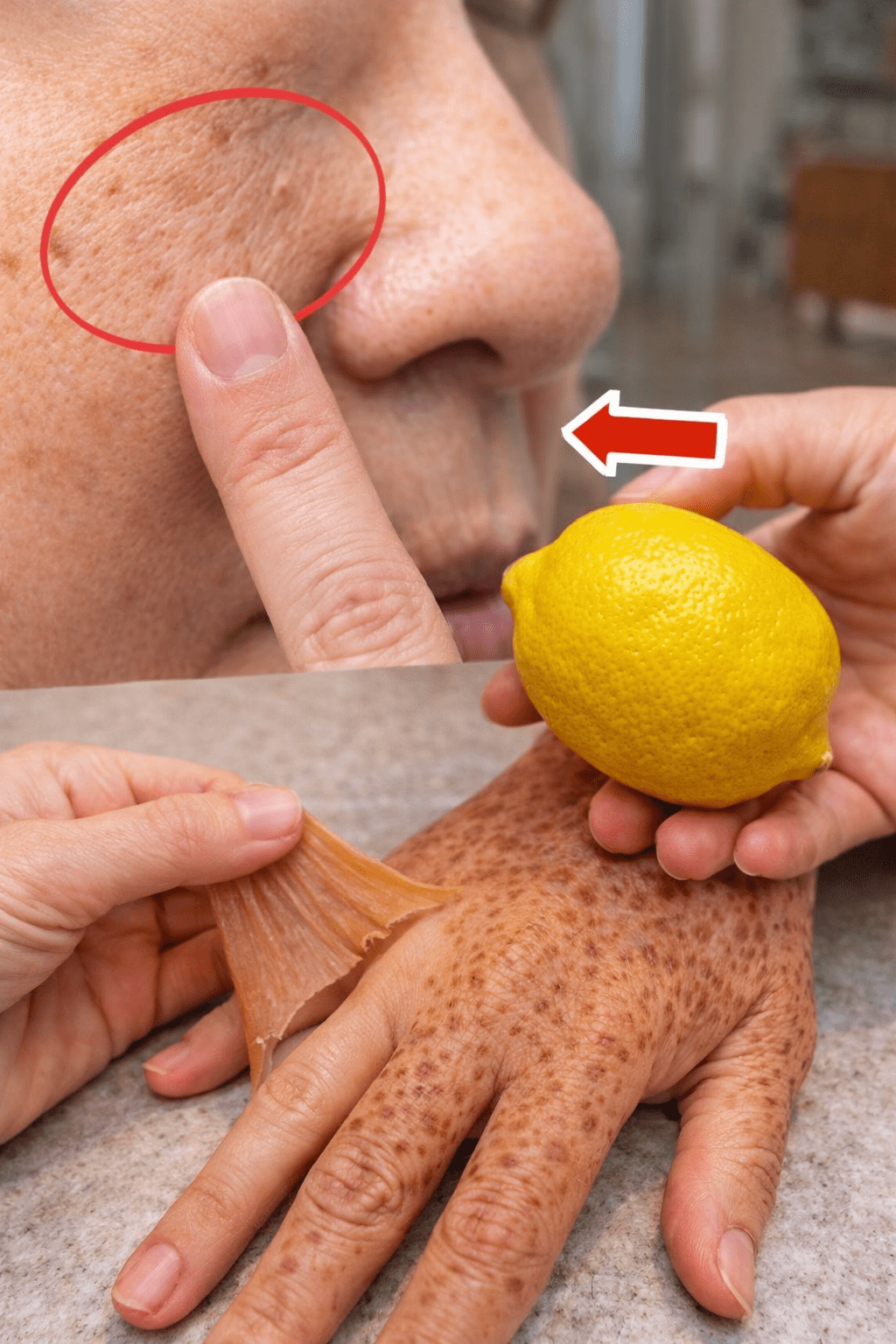
Many people notice small flat spots on their skin as they age, often called age spots or sun spots. These appear mostly on areas like the face, hands, and arms after years of sun exposure. They can make the skin look uneven and older than it feels, leading to frustration when trying to maintain a fresh, even complexion. While professional skincare options exist, some prefer exploring gentle, kitchen-based ideas for daily care.
But here’s something interesting: a common household item like fresh lemon juice has gained attention in natural beauty discussions for its potential role in supporting brighter-looking skin. In the sections ahead, we’ll look at why people try this approach, how to use it carefully, and important safety steps. Stick around until the end for a surprising tip on combining it with everyday ingredients for better results.
What Are Age Spots and Why Do They Appear?
Age spots, also known as liver spots or solar lentigines, are small, darkened patches of skin. They develop when melanin (the pigment that gives skin its color) builds up in certain areas.
The main trigger is long-term exposure to ultraviolet (UV) rays from the sun. Other factors like getting older, genetics, or even past skin inflammation can play a part. Research shows that melanin production increases as a protective response to sun damage, leading to these visible spots over time.
These spots are harmless and don’t require medical treatment, but many seek ways to make their skin look more uniform.
Why Lemon Juice Comes Up in Natural Skin Discussions
Fresh lemon juice contains vitamin C and citric acid, two natural compounds often mentioned in skincare conversations.
Vitamin C is a well-known antioxidant that may help support skin’s natural brightness by countering free radical damage from daily life. Citric acid, a mild alpha hydroxy acid (AHA), can gently encourage the removal of surface dead skin cells, which some believe contributes to a smoother, more even appearance.
Studies on vitamin C (in stable forms) suggest it can support a brighter complexion when used consistently. While lemon provides a natural source of these elements, results vary widely between individuals, and scientific evidence specifically for direct lemon juice application remains limited and mostly anecdotal.
But that’s not the full picture… The high acidity and other natural compounds in lemon require careful handling to avoid unwanted effects.

Important Safety Considerations Before Trying Lemon Juice on Skin
Lemon juice is quite acidic (pH around 2-3), much lower than the skin’s natural pH (around 4.5-5.5). Applying it directly can disrupt the skin barrier, leading to dryness, redness, or irritation — especially for sensitive skin types.
A major concern is photosensitivity. Lemon contains compounds like psoralens (furocoumarins) that can make skin more reactive to sunlight. This increases the risk of sunburn, redness, or even temporary worsening of pigmentation if you go outside soon after use.
Dermatologists often advise against undiluted lemon juice on the face due to these risks. Always prioritize safety.
Here are key precautions many sources recommend:
- Always dilute — Mix fresh lemon juice with water or a soothing carrier like honey.
- Patch test first — Apply a small amount to your inner arm and wait 24-48 hours.
- Use at night only — Avoid sun exposure for several hours after application.
- Apply sunscreen daily — Broad-spectrum SPF 30+ is essential year-round.
- Limit frequency — Start with 2-3 times per week, not daily.
- Stop if irritation occurs — Rinse immediately and discontinue if you notice discomfort.
If you have very sensitive skin, eczema, or other conditions, it’s best to skip this entirely and consult a skincare professional.
How to Use Lemon Juice Carefully: Step-by-Step Gentle Methods
If you’ve done a patch test and feel comfortable, here are simple, diluted ways people incorporate fresh lemon juice into their routine. These focus on gentle application rather than strong effects.
Basic Diluted Lemon Juice Application
- Squeeze fresh juice from half a lemon.
- Mix equal parts lemon juice and water (or more water for extra gentleness).
- Dip a clean cotton pad into the mixture.
- Gently dab (don’t rub) onto specific spots.
- Leave on for 5-10 minutes max.
- Rinse thoroughly with cool water.
- Moisturize immediately.
Lemon + Honey Soothing Blend (Honey adds moisture and calming properties)
- 1 teaspoon fresh lemon juice
- 1 tablespoon raw honey
- Mix into a paste
- Apply to spots or full face
- Leave for 10-15 minutes
- Rinse gently
Lemon + Yogurt Mild Exfoliating Mix (Yogurt’s lactic acid complements gently)
- 1 teaspoon lemon juice
- 2 tablespoons plain yogurt
- Combine and apply thinly
- Leave for 10 minutes
- Rinse and follow with moisturizer
Quick Comparison of Gentle Combinations
- Diluted Lemon Alone — Simple, but can feel drying.
- With Honey — Adds hydration and soothing; great for beginners.
- With Yogurt — Mild exfoliation plus probiotics for balance.
- With Aloe Vera — Cooling and calming; ideal after sun exposure.
Always use fresh lemons for the best quality. Bottle lemon juice often contains preservatives that may irritate more.
Additional Tips for Supporting Even-Looking Skin Naturally
Beyond lemon, here are supportive habits many find helpful:
- Daily sun protection — Wear SPF even indoors or on cloudy days.
- Gentle exfoliation — Use mild AHAs from trusted products.
- Antioxidant-rich foods — Eat citrus, berries, and greens for internal support.
- Stay hydrated — Drink water and use a good moisturizer.
- Consistent routine — Patience is key; skin changes take weeks or months.
These habits often make the biggest difference in maintaining skin’s appearance over time.
Frequently Asked Questions
Is lemon juice safe for all skin types? No — it’s often too harsh for sensitive or dry skin. Always patch test and dilute heavily.
How long might it take to notice any changes in skin appearance? Results, if any, vary greatly and can take weeks to months with consistent, careful use. Many factors influence outcomes.
What should I do if my skin gets irritated? Stop immediately, rinse, moisturize, and avoid sun. See a dermatologist if irritation persists.
Final Thoughts
Exploring natural ingredients like lemon juice can be a fun way to care for your skin, but safety always comes first. Focus on gentle, diluted methods and strong sun protection to support your skin’s natural health.
This article is for informational purposes only and not a substitute for professional medical advice. Consult a dermatologist or qualified healthcare provider before trying new skincare routines, especially if you have skin concerns or conditions.


