
Have you ever noticed how your skin seems to “talk” back to you with unexpected pimples, unusual redness, or tension in certain spots? These subtle changes can feel frustrating, especially when your skincare routine stays the same but your complexion doesn’t cooperate. Many people overlook how daily stress, diet, and lifestyle might show up right on the face, creating an ongoing cycle of concern about appearance and inner balance. The good news is that exploring facial reflexology offers a gentle, mindful way to tune in and pay closer attention to these signals.
In this guide, you’ll uncover the fascinating facial reflexology map that links different areas of your face to various organs and systems. By the end, you’ll gain fresh insights that might just surprise you and inspire small, everyday habits for better self-care.
What Is Facial Reflexology?
Facial reflexology is an ancient-inspired practice that views the face as a micro-map reflecting the entire body. Specific zones on the forehead, cheeks, nose, chin, and other areas are believed to correspond to internal organs and systems, much like how foot reflexology connects points to distant body parts.
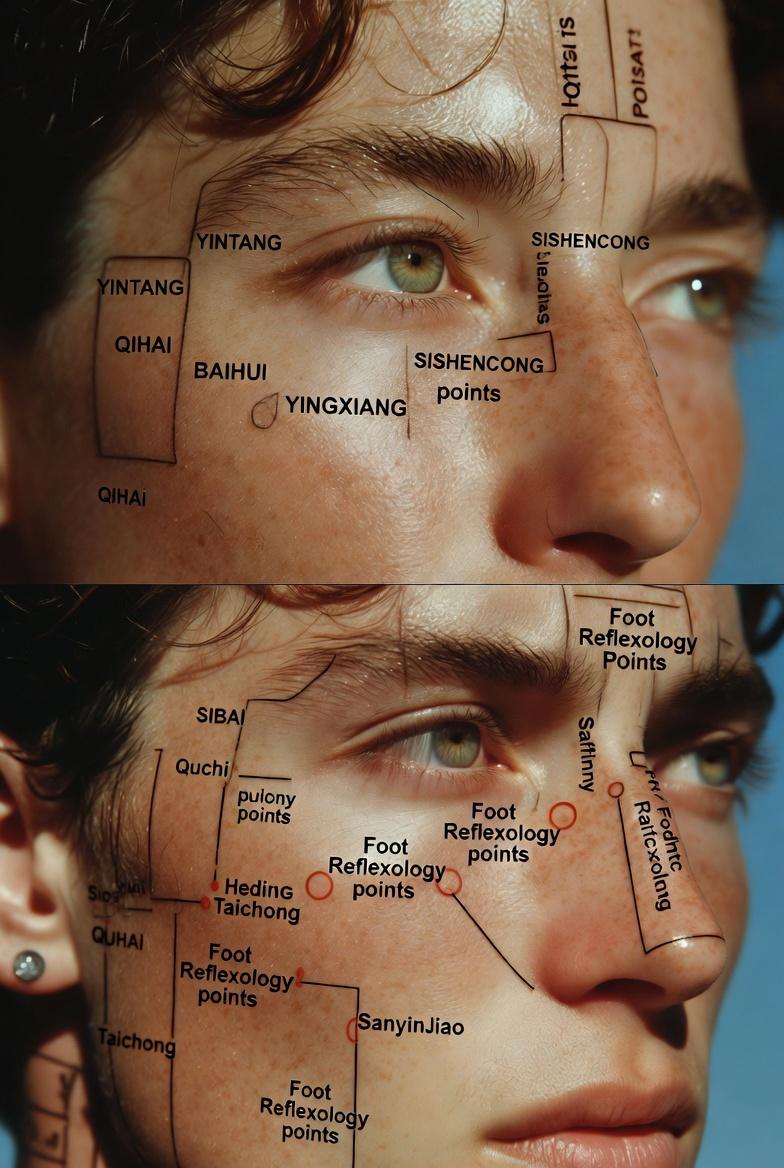
This approach draws from traditions including Vietnamese Dien Chan (developed in the 1980s by Professor Bùi Quốc Châu) and elements of Chinese face reading (mien shiang), where practitioners observe skin changes as clues to energetic flow. While it’s not a medical tool, many find it helpful for promoting relaxation and self-awareness.
Research on reflexology in general, including facial techniques, suggests potential benefits like improved circulation and stress reduction through gentle massage. For example, studies on face massage have shown it may enhance blood flow to the skin, leaving you feeling refreshed.
But that’s just the beginning…
Why Your Face Might Be Sending Signals
Your skin is the body’s largest organ, and it reacts quickly to internal shifts. Things like poor sleep, digestive discomfort, or emotional stress can appear as:
- Dryness or dullness
- Breakouts in specific zones
- Tension or puffiness
These aren’t random. In facial reflexology, they invite you to pause and consider what’s happening inside. It’s empowering to realize your face can serve as a gentle reminder to nurture your overall wellbeing.
Here’s the exciting part: understanding the map lets you respond with simple self-care steps.
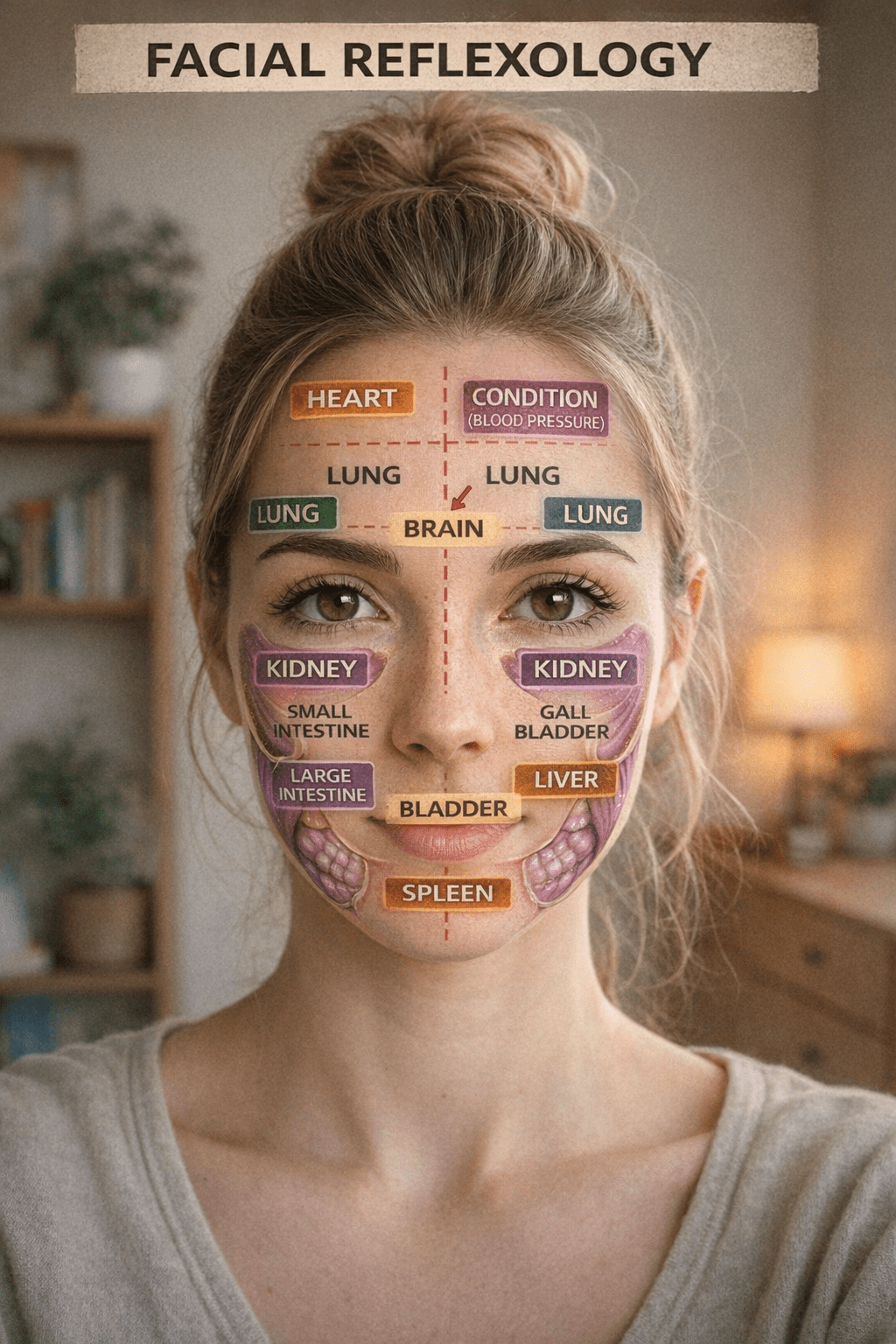
Exploring the Facial Reflexology Map: Key Zones and Their Connections
Traditional facial reflexology charts divide the face into zones. Here’s a breakdown based on common maps (note that slight variations exist across traditions):
- Forehead Area: Often linked to the nervous system, brain, and overall condition (including factors like blood pressure regulation). Horizontal lines or tension here might relate to mental fatigue.
- Between the Eyebrows and Upper Forehead: Connected to the heart and circulatory wellbeing.
- Cheeks (Upper and Mid): Frequently associated with lungs and respiration. The left and right cheeks may mirror bilateral organs like lungs or liver.
- Under-Eye and Cheek Zones: Commonly tied to kidneys and bladder. Puffiness or darkness here prompts thoughts about hydration and rest.
- Nose and Central Face: Linked to digestive organs, such as small and large intestine, spleen, and stomach.
- Chin and Lower Face: Often corresponds to the reproductive system and hormonal balance, plus spleen and liver support.
Many charts also highlight:
- Liver zones around the temples and sides of the cheeks.
- Gallbladder near the outer cheeks.
- Brain along the central forehead line.
These mappings come from years of observation in holistic traditions, and while not scientifically proven to diagnose conditions, they encourage proactive self-reflection.
Quick Reference: Common Facial Zones at a Glance
- Forehead → Brain & nervous system
- Temples & upper cheeks → Liver
- Mid-cheeks → Lungs
- Under eyes → Kidneys
- Nose bridge → Digestive balance
- Chin → Reproductive & hormonal systems
- Central vertical line → Overall balance (heart, bladder, etc.)
This simple overview makes it easier to start noticing patterns without overwhelm.
How to Gently Explore Facial Reflexology at Home
You don’t need fancy tools to begin. Facial reflexology focuses on light touch, relaxation, and awareness. Try this beginner-friendly routine:
- Prepare your space — Find a quiet spot, wash your hands and face, and apply a gentle moisturizer for smooth gliding.
- Start with breathing — Take 5 deep breaths to relax.
- Use light pressure — With clean fingertips, gently massage in small circles or hold points for 10-30 seconds.
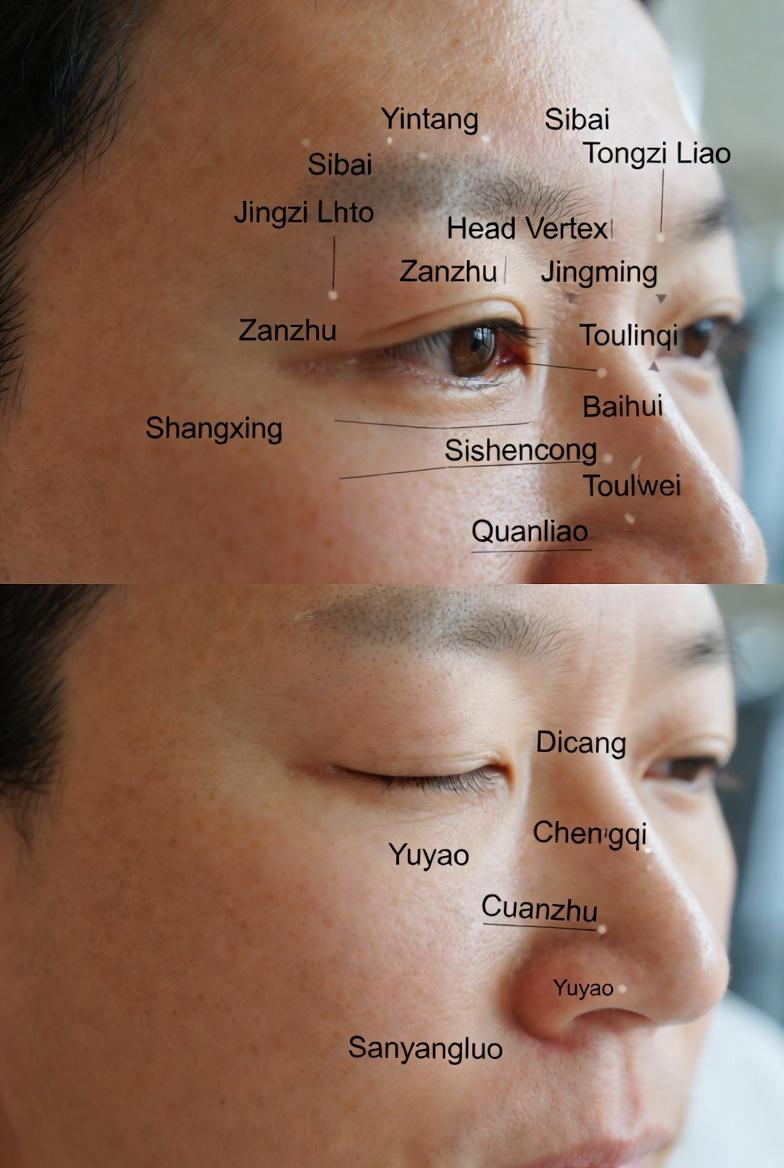
- Follow the map — Begin at the forehead, move to cheeks, then down to chin. Focus on any tense spots.
- Finish mindfully — End with light strokes upward to promote circulation.
Do this 5-10 minutes daily, ideally in the morning or evening. Many people report feeling calmer and more in tune afterward.
But wait — there’s more you can add for even better results…
Bonus Tips to Support Your Facial Reflexology Practice
- Stay hydrated — Water helps all systems flow smoothly.
- Eat mindfully — Include liver-supporting foods like greens.
- Manage stress — Gentle practices like walking or meditation complement the work.
- Be consistent — Small daily habits often bring the most noticeable shifts.
Remember, this is about self-care, not replacing professional advice.
Wrapping It Up: Listen to Your Skin with Kindness
Facial reflexology gives you a unique lens to view your wellbeing. By understanding how different face zones connect to organs and systems, you can approach skin changes with curiosity instead of frustration. It’s a reminder that small, conscious actions add up to better balance over time.
Give the map a try and notice what your face reveals. You might discover valuable clues that guide you toward healthier habits.
FAQ
What is the main idea behind facial reflexology?
It’s an approach that sees the face as a reflection of internal balance, using gentle stimulation to promote relaxation and awareness.
Is facial reflexology the same as Chinese face mapping?
They share similarities, but facial reflexology often includes Vietnamese Dien Chan methods with detailed points, while Chinese mapping focuses more on observation and energy flow.
How often should I practice facial reflexology at home?
Start with 5-10 minutes a day or a few times a week. Consistency matters more than duration.
Disclaimer: This article is for informational purposes only and is not intended as medical advice, diagnosis, or treatment. Always consult a qualified healthcare professional for any health concerns or before starting new wellness practices. Individual results may vary.


