
Many people with chronic kidney disease (CKD) don’t notice early signs until things progress. Everyday choices like certain vegetables, grains, or beverages can add extra work for kidneys already under strain, especially when it comes to minerals like potassium, phosphorus, or oxalates. Research from organizations like the National Kidney Foundation shows that limiting high-potassium, high-phosphorus, and high-oxalate foods may help manage symptoms and support overall kidney care. The good news? Small, simple changes in your daily routine can make a real difference without feeling overwhelming.
But here’s the surprising part: some of the most common “healthy” foods might be contributing more than you think. Stick around to discover 10 everyday items worth watching, along with practical alternatives that keep meals enjoyable and balanced.

Understanding the Hidden Strain on Kidneys
Kidneys filter waste, balance fluids, and regulate minerals like potassium and phosphorus. When function declines, excess amounts can build up, leading to issues like fatigue, swelling, or irregular heart rhythms. According to the CDC, over 1 in 7 adults in the US live with CKD, often without early awareness.
High potassium (hyperkalemia) stresses the heart, while excess phosphorus affects bones and blood vessels. Oxalates may contribute to stone formation in susceptible people. The key is moderation and preparation—many foods can stay in your diet with tweaks.
But wait, let’s look at where these concerns show up most often in daily meals…
1. Leafy Greens Like Spinach: Nutrient-Rich but High in Oxalates and Potassium
Spinach is packed with vitamins, yet it’s one of the highest sources of oxalates, which can bind with calcium and form crystals. Cooked spinach also concentrates potassium.
Studies highlight that high-oxalate greens like spinach may increase stone risk for some. If you enjoy salads or smoothies, consider how often these appear on your plate.
Smart swap: Opt for lower-oxalate options like cabbage, cauliflower, or lettuce. Boil and drain greens to help reduce potassium.
Here’s a quick comparison of leafy greens:
- High concern: Spinach, Swiss chard, beet greens
- Lower concern: Kale (in moderation), arugula, romaine
2. Sweet Potatoes: A Comforting Favorite Loaded with Potassium
That warm, roasted sweet potato is a go-to for many, but it’s a potassium powerhouse. For those with reduced kidney function, excess potassium from foods like this can build up.
Preparation matters—leaching (soaking and boiling) removes some potassium.
Practical tip: Try butternut squash or white potatoes (leached) as alternatives. Double-boil slices for even better reduction.
3. Rice: A Staple with Potential Arsenic Concerns
Rice is a daily essential worldwide, but it absorbs arsenic from soil and water more than other grains. Long-term exposure links to various health risks, including kidney strain in some research.
Brown rice often contains more arsenic than white.
Everyday adjustment: Choose white basmati or jasmine varieties (especially from California or India). Rinse thoroughly and cook in excess water, then drain.

4. Butter and Processed Spreads: Sodium and Saturated Fats Add Up
Butter adds flavor, but its sodium and saturated fats can raise blood pressure—a major factor in kidney stress.
Better choice: Use small amounts of olive oil or unsalted versions. Herbs and spices boost taste without extra sodium.
5. Dark-Colored Sodas: Phosphorus Additives Are Common
Many sodas, especially dark colas, contain phosphorus additives that kidneys struggle to filter.
Research from the National Kidney Foundation notes these can contribute to imbalances.
Refreshing alternative: Switch to sparkling water with a splash of lemon or cucumber. Hydration supports kidney function without extras.
Rate your soda intake—if it’s a daily habit, this swap could be impactful.
6. Dried Fruits: Concentrated Potassium in Every Bite
Raisins, apricots, and prunes offer quick energy, but drying concentrates potassium and sugar.
Simple switch: Enjoy fresh berries, apples, or grapes in moderation. They’re naturally lower and hydrating.
7. High-Dose Vitamin D Supplements: When More Isn’t Better
Vitamin D supports bone health, but excess in CKD can lead to calcium buildup.
Guidelines suggest getting levels checked first.
Guided approach: Focus on moderate sun exposure and food sources; use prescribed forms if needed.
8. Certain Forms of Vitamin B12 Supplements: Choose Wisely
Some forms like cyanocobalamin may leave byproducts that stressed kidneys handle less efficiently.
Safer option: Methylcobalamin is often better tolerated—discuss with your doctor.
9. High-Dose Vitamin C: Risk of Oxalate Buildup
Large doses convert to oxalates, potentially increasing stone formation.
Balanced way: Stick to food sources like bell peppers or strawberries for immune support.
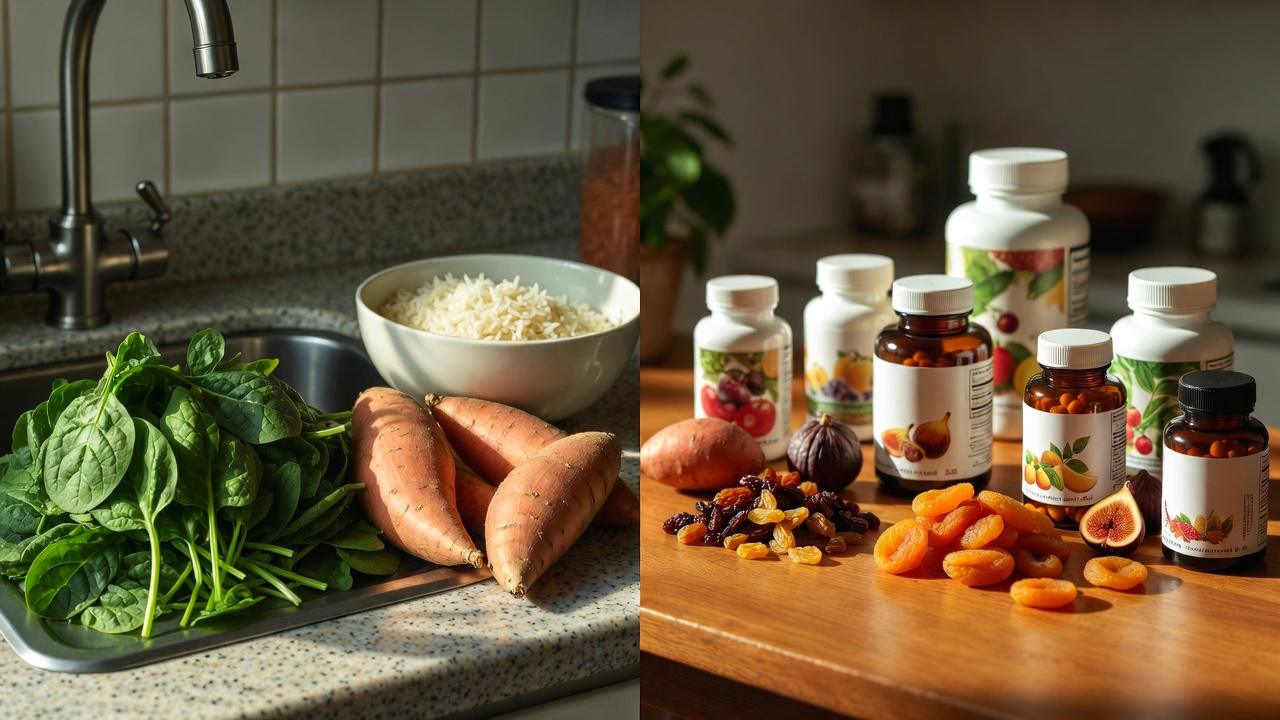
10. General Oversupplementation: The Cumulative Effect
Taking multiple vitamins without guidance can overload filtering kidneys.
Pro tip: Always review labels and consult a professional to match needs only.
Here’s a handy table of swaps:
| Food/Supplement | Main Concern | Kidney-Friendly Alternative |
|---|---|---|
| Spinach | Oxalates & Potassium | Cabbage, cauliflower |
| Sweet Potatoes | High Potassium | Butternut squash, leached potatoes |
| Rice (brown) | Arsenic | White basmati, well-rinsed |
| Butter | Sodium & Saturated Fats | Olive oil, herbs |
| Dark Soda | Phosphorus Additives | Sparkling water with lemon |
| Dried Fruits | Concentrated Potassium | Fresh berries, apples |
| High-Dose Vit D | Calcium Buildup | Tested & prescribed amounts |
| Cyanocobalamin B12 | Byproduct Stress | Methylcobalamin |
| High-Dose Vit C | Oxalate Risk | Food sources |
Your Daily Kidney-Support Checklist
- Rinse and boil high-potassium veggies (reduces up to 50%).
- Stay hydrated with plain water.
- Read labels for phosphorus additives.
- Get regular check-ups and urine tests.
These steps empower better choices every day.
FAQ
What are the first signs that diet might be affecting kidney health? Common indicators include foamy urine, leg swelling, or unusual fatigue—mention these to your doctor promptly.
Can I still eat healthy foods if I have kidney concerns? Yes! Focus on portion control, preparation methods, and variety. A dietitian can tailor a plan.
How do I know if supplements are safe for me? Always get blood tests first and consult your healthcare team—personalized advice prevents risks.
This article is for informational purposes only and is not a substitute for professional medical advice. Please consult your healthcare provider or a registered dietitian for guidance tailored to your health needs.


