
As we get older, many people notice subtle changes like occasional low energy, joint discomfort, or just not feeling as vibrant as before. These shifts often stem from everyday factors such as oxidative stress and mild inflammation that build up over time. The good news is that small, consistent dietary choices can make a meaningful difference in supporting overall health and vitality.
What if a handful of everyday seeds could provide natural nutrients to help your body feel more balanced and energized? Keep reading to learn about six accessible seeds backed by research, and discover easy ways to incorporate them into your day—you might be surprised how simple it can be to start feeling the benefits.
Why Seeds Are a Smart Addition to Your Daily Diet
Seeds are packed with essential nutrients like healthy fats, fiber, vitamins, minerals, and plant compounds that act as antioxidants. Research shows these elements can help combat oxidative stress, support healthy inflammation responses, and contribute to heart, immune, and cellular health.
Studies, including reviews from sources like Healthline and Cleveland Clinic, highlight how seeds such as flax, chia, and pumpkin provide omega-3 fatty acids, zinc, and lignans that promote wellness. Adding a variety daily creates a synergistic effect, covering multiple nutritional needs without relying solely on supplements.
But that’s not all—let’s explore each one and what makes them stand out.
Flaxseeds: A Source of Plant-Based Omega-3s and Lignans
Flaxseeds are one of the richest plant sources of alpha-linolenic acid (ALA), a type of omega-3 fatty acid. They also contain lignans, polyphenols with antioxidant properties.
Research suggests lignans and omega-3s in flaxseeds support heart health and help maintain balanced inflammation levels. To get the most benefit, grind them fresh—whole seeds may pass through undigested.
Easy ways to enjoy:
- Stir 1 tablespoon ground flaxseeds into oatmeal or yogurt.
- Add to smoothies or baked goods.
Chia Seeds: Fiber-Rich Support for Steady Energy
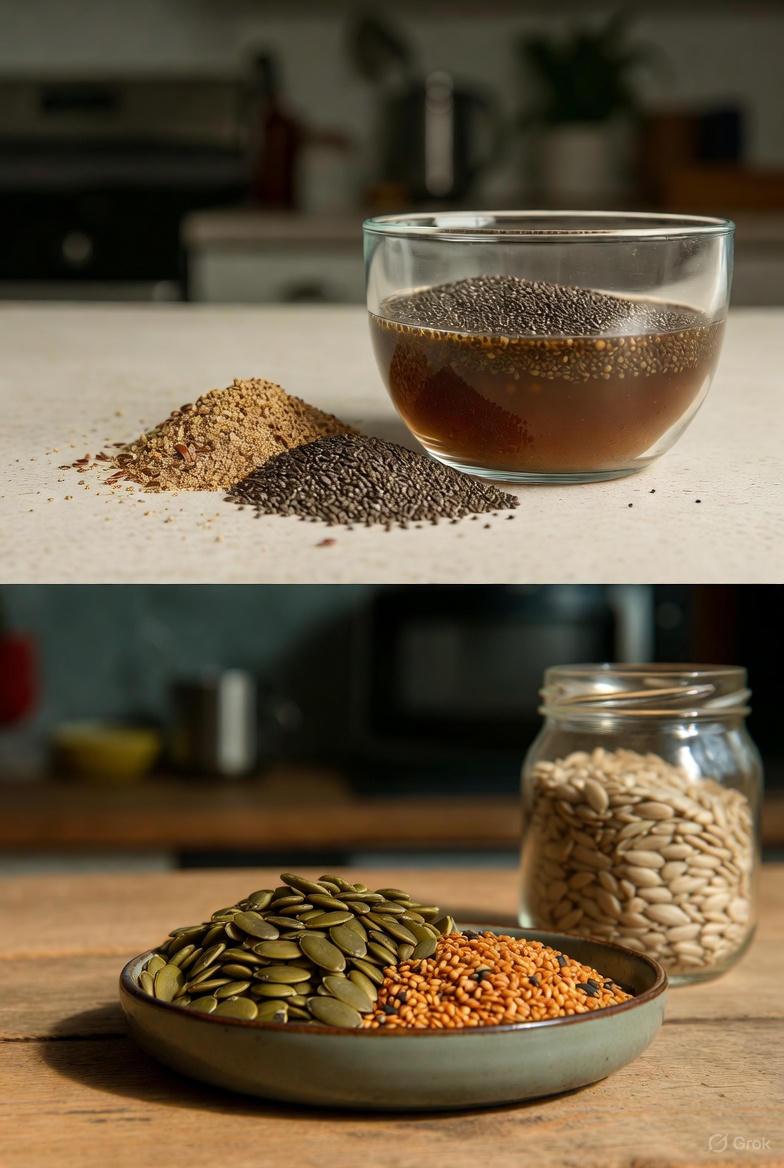
Chia seeds swell when soaked, forming a gel thanks to their high soluble fiber content. They’re also loaded with ALA omega-3s and antioxidants.
Studies indicate chia seeds may help stabilize blood sugar and support digestive health due to their fiber. Their omega-3s contribute to reducing inflammation markers.
Easy ways to enjoy:
- Soak 1-2 tablespoons in water or plant milk for a simple pudding.
- Mix into lemonade for a refreshing drink.
Pumpkin Seeds: Packed with Zinc and Magnesium
Pumpkin seeds (pepitas) stand out for their zinc content, a mineral important for immune function and cell health. They also provide magnesium, which supports muscle relaxation and mood.
Evidence points to zinc’s role in maintaining a strong immune response, and pumpkin seeds offer it in a bioavailable form.
Easy ways to enjoy:
- Roast lightly and snack on a small handful (about ¼ cup).
- Sprinkle over salads or soups for crunch.
Sesame Seeds: Antioxidant Compounds for Everyday Wellness
Sesame seeds contain sesamin and sesamolin, lignans with antioxidant effects. They’re a good source of calcium, iron, and healthy fats.
Research shows these compounds may help protect cells from oxidative damage and support liver health.
Easy ways to enjoy:
- Toast 1 tablespoon and sprinkle on vegetables, stir-fries, or rice.
- Use tahini (sesame paste) in dressings.
Sunflower Seeds: Vitamin E and Selenium for Cellular Protection
Sunflower seeds are rich in vitamin E, a fat-soluble antioxidant, and selenium, which works alongside it.
These nutrients help neutralize free radicals and support immune and thyroid function, according to nutritional studies.
Easy ways to enjoy:
- Keep a ¼ cup portion for snacking.
- Add to trail mix or granola.
Black Cumin Seeds (Nigella Sativa): Thymoquinone for Added Support
Black cumin seeds, known as Nigella sativa, feature thymoquinone, a compound studied for its antioxidant and anti-inflammatory properties.
Preclinical research highlights thymoquinone’s potential in protecting cells and modulating inflammation.
Easy ways to enjoy:
- Mix ½ teaspoon of the oil with honey.
- Add seeds to tea or bread.
Quick Comparison of Key Nutrients in These Seeds
| Seed | Standout Nutrients | Potential Benefits Supported by Research |
|---|---|---|
| Flaxseeds | Lignans, Omega-3 (ALA) | Antioxidant support, heart health |
| Chia Seeds | Fiber, Omega-3 (ALA) | Digestive health, steady energy |
| Pumpkin Seeds | Zinc, Magnesium | Immune function, relaxation |
| Sesame Seeds | Sesamin, Calcium | Cellular protection, bone support |
| Sunflower Seeds | Vitamin E, Selenium | Antioxidant defense, thyroid health |
| Black Cumin | Thymoquinone | Anti-inflammatory effects |
Simple Ways to Add These Seeds to Your Routine
Here are practical tips to make it effortless:
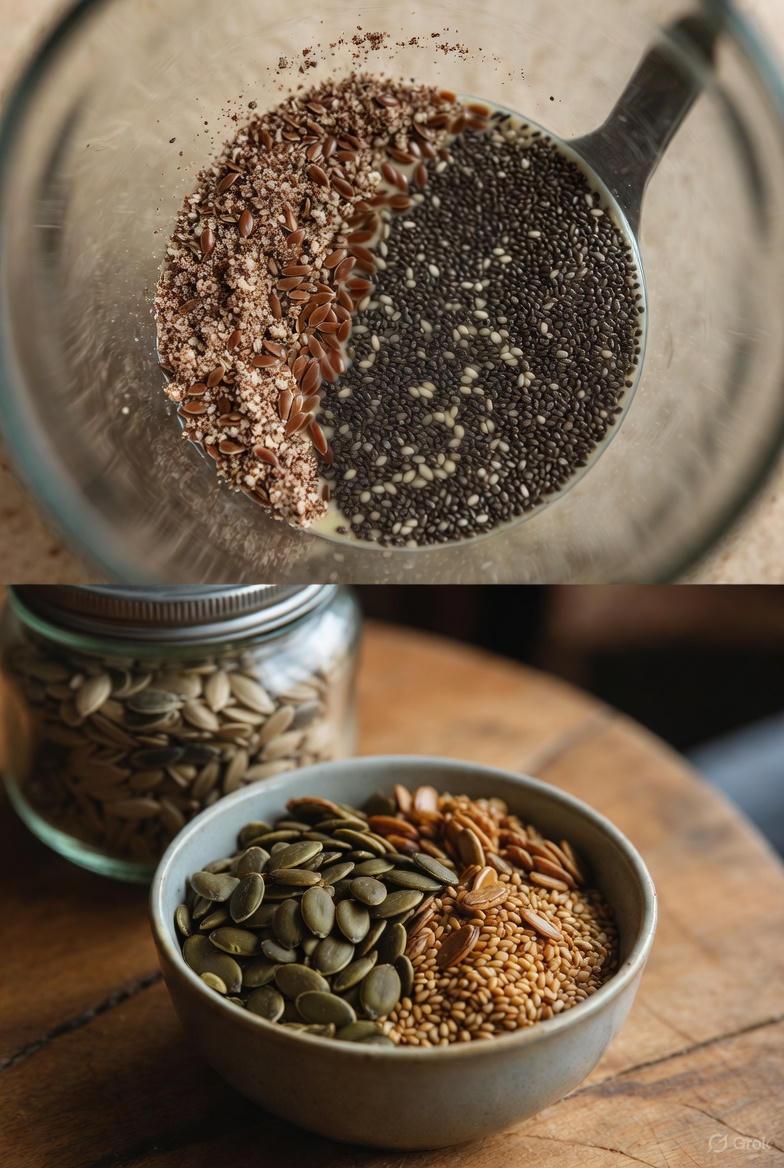
- Morning boost: Grind flaxseeds and soak chia overnight; add to a smoothie with berries.
- Midday snack: Mix roasted pumpkin, sunflower, and sesame seeds for a trail mix.
- Evening touch: Drizzle a bit of black cumin oil on salads or mix with honey.
Start small—try one or two seeds daily and build from there. Aim for 1-2 tablespoons total per day to avoid digestive discomfort.
A sample daily plan:
- Breakfast: Yogurt with ground flax and chia.
- Snack: Handful of pumpkin and sunflower seeds.
- Dinner: Veggies topped with toasted sesame.
- Optional: Black cumin oil in tea.
What to Expect from Consistent Habits
Many people report feeling more energized and comfortable with regular nutrient-rich foods like these seeds. Research supports their role in overall wellness, but results vary.
The key is consistency paired with a balanced diet.
Frequently Asked Questions
How much of these seeds should I eat daily?
Start with 1-2 tablespoons total, spread throughout the day. Listen to your body and adjust as needed.
Do I need to grind or soak them?
Yes for flax and chia—grinding flax improves absorption, and soaking chia aids digestion. Others can be eaten raw or roasted.
Can I combine all six every day?
Absolutely, in moderation. A mixed handful or smoothie works well.
This information is for educational purposes only and is not intended to diagnose, treat, cure, or prevent any disease. Always consult your healthcare provider before making dietary changes, especially if you have a medical condition or take medications.


