Many people over 60 notice their skin becoming drier and less firm as time passes. This can lead to feelings of tightness, discomfort, or frustration when everyday moisturizers don’t seem to provide lasting relief. It’s common to search for gentler, everyday options that support the skin’s natural moisture barrier without relying solely on store-bought products.
But here’s the interesting part: two common kitchen oils—virgin coconut oil and castor oil—have been used for generations in various cultures for skin hydration, and some research suggests they may offer supportive benefits. Keep reading to discover what studies show and how you might try a simple blend yourself.

Why Mature Skin Often Feels Dry and Less Supple
As we age, skin naturally produces less oil and loses some of its ability to retain moisture. Factors like environmental exposure, daily cleansing, and changes in hydration levels can make this more noticeable.
Research indicates that well-hydrated skin tends to appear smoother and more comfortable. For instance, studies have found that virgin coconut oil can help improve skin hydration levels, sometimes as effectively as certain mineral oils.
Castor oil, rich in ricinoleic acid, is known for its emollient properties, which may help lock in moisture and soothe dryness.
But that’s not all—combining these oils could create a simple routine many find helpful for daily nourishment.
The Potential Benefits of Coconut Oil for Skin Hydration
Virgin coconut oil contains medium-chain fatty acids, like lauric acid, that research suggests can support the skin’s barrier function.
- A clinical study showed it significantly improved hydration in dry skin conditions.
- Another review noted its ability to enhance moisture retention without irritation for most users.
- It’s often praised for feeling lightweight yet nourishing on mature skin.
Many people report their skin feels softer after consistent use. Curious how it pairs with another oil? Let’s explore castor next.
What Makes Castor Oil a Popular Choice for Skin Care
Castor oil stands out due to its high ricinoleic acid content, which studies link to moisturizing and soothing effects.
- Research has shown it can increase skin hydration when applied topically.
- Its thick texture acts as an occlusive, helping prevent moisture loss.
- Limited studies suggest it may support a calmer skin appearance.
When used sparingly, it’s gentle for many, though always patch test first.
Here’s the exciting synergy: blending coconut and castor oils may combine their strengths for better absorption and comfort.

Why a Coconut and Castor Oil Blend Might Work Well Together
Alone, each oil has merits, but together?
- Coconut oil’s lighter feel helps thin castor oil for easier application.
- The mix may penetrate better, providing deeper hydration.
- Anecdotal reports and some preliminary research highlight improved suppleness with blends.
A common ratio shared by enthusiasts is 60% coconut to 40% castor—simple and customizable.
Step-by-Step Guide to Making and Using a Basic Oil Blend
Ready to try? Here’s an actionable way to create your own:
- Choose quality: Opt for cold-pressed, virgin coconut oil and pure castor oil.
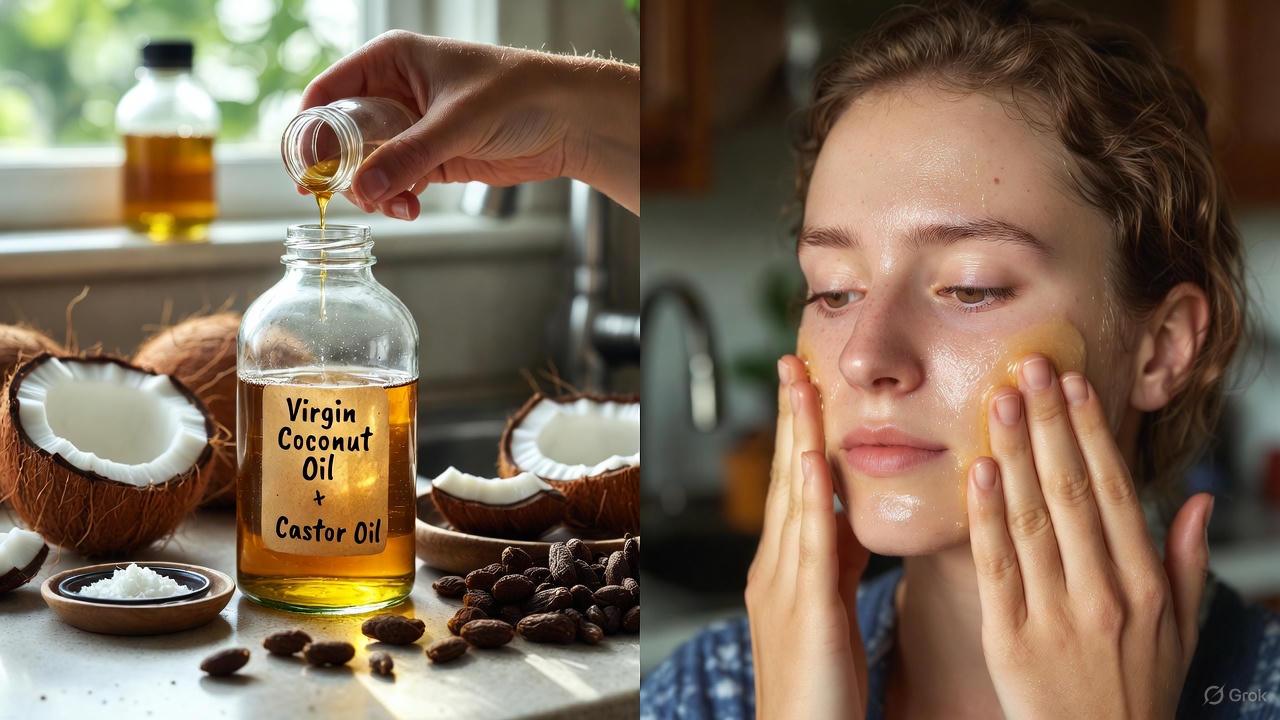
- Mix gently: In a clean glass bottle, combine 3 parts coconut oil with 2 parts castor oil (e.g., 30ml coconut + 20ml castor).
- Warm slightly: Rub a few drops between palms to liquefy.
- Apply mindfully: After cleansing, on slightly damp skin, press and massage upward—focus on dry areas.
- Use sparingly: 3-5 drops for the face; start with mornings or evenings.
Tip: Apply to damp skin for potentially better absorption, as moisture helps oils spread.
Comparison: Natural Oil Blend vs. Common Moisturizers
| Aspect | Typical Creams | Coconut-Castor Blend |
|---|---|---|
| Key Ingredients | Synthetic emollients, preservatives | Natural fatty acids |
| Hydration Approach | Surface-level moisture | Potential deeper penetration |
| Cost | Often higher, recurring purchases | Affordable, pantry staples |
| Customization | Fixed formula | Easy to adjust ratio |
| Common Feedback | Temporary feel for some | Long-lasting comfort reported by users |
Research supports natural oils like these for barrier support, but results vary.
Tips for Getting the Most from Your Routine
Consistency matters—many notice changes over weeks.
- Store in a cool, dark place to maintain freshness.
- Patch test on your inner arm for 24 hours first.
- Avoid eyes and broken skin.
- If dryness persists, layer under your usual moisturizer.
Optional boosters: A drop of vitamin E oil for added antioxidant support, as studies suggest it aids preservation.
Common Questions About Using Coconut and Castor Oils on Skin
Is this blend suitable for all skin types?
It’s often well-tolerated for dry or mature skin, but those with oily or acne-prone skin may prefer lighter options. Always start small.
How long until I might see hydration improvements?
Studies on individual oils show benefits in 2-4 weeks with daily use, though individual experiences differ.
Can I use it daily?
Yes, many do—morning and/or night. Listen to your skin and adjust.
Final Thoughts
Exploring natural options like a coconut and castor oil blend can be a gentle way to support skin hydration and comfort as we age. Backed by some research on their moisturizing properties, this simple approach feels empowering and affordable.
Start small, stay consistent, and enjoy the process of caring for your skin naturally.
Disclaimer: This information is for educational purposes only and is not intended as medical advice. Results vary, and natural oils may cause irritation in some individuals. Consult a healthcare professional before trying new skincare routines, especially if you have sensitive skin or conditions.