
Many people notice changes in their skin as they age, such as fine lines, dryness, or uneven tone. These shifts can feel frustrating, especially when everyday factors like sun exposure or stress play a role. The good news? Simple kitchen ingredients like ginger and potato have been used in traditional remedies for generations, and emerging research highlights their potential to support healthier-looking skin.
But that’s not all. These everyday items are packed with natural compounds that may offer gentle benefits when applied topically. Keep reading to discover easy ways to try them at home and see what might work for your routine.
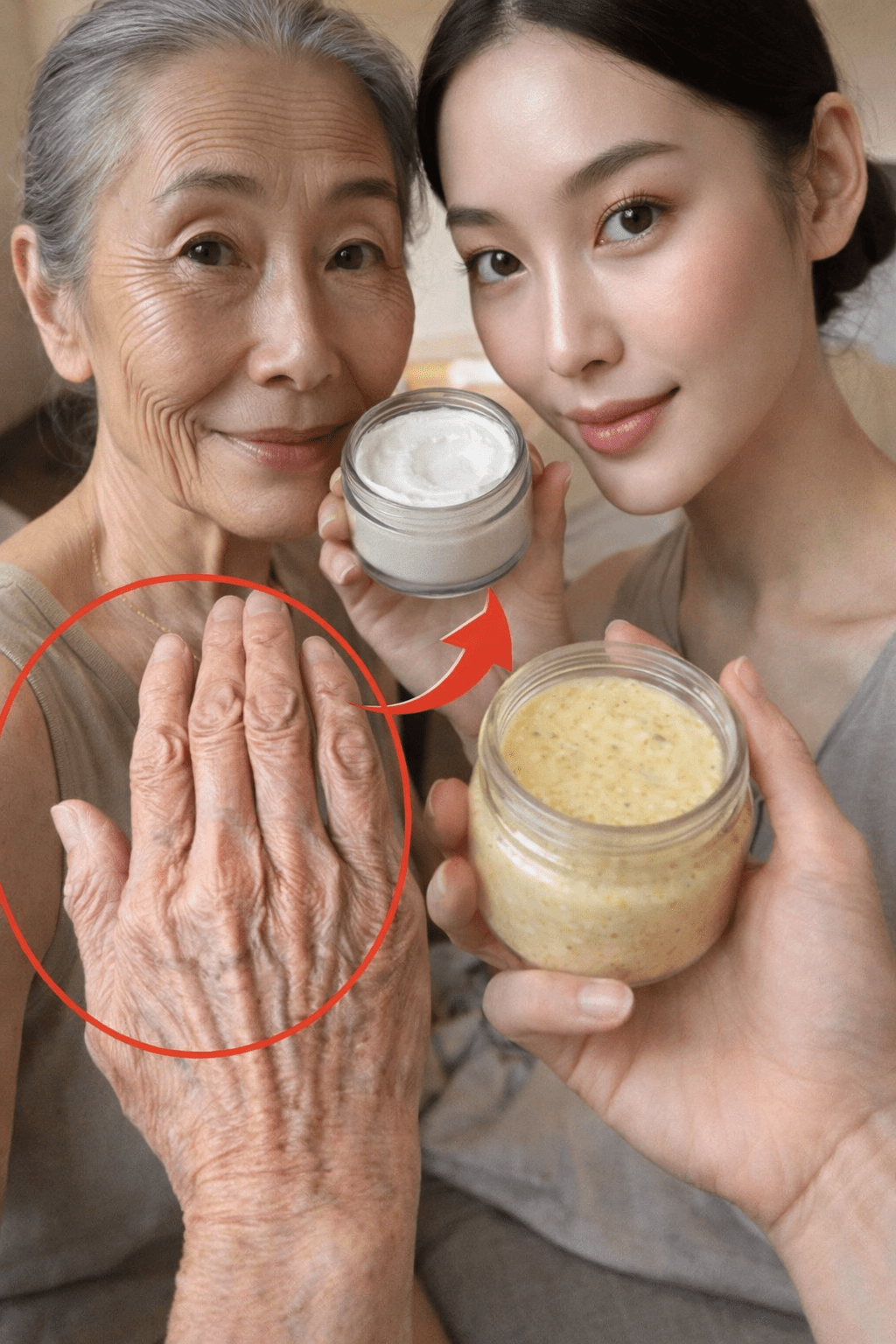
Why Ginger and Potato Are Popular in Natural Skincare
Ginger and potato are affordable, accessible ingredients that have caught attention for their nutrient profiles.
Fresh ginger contains antioxidants like gingerol, which studies suggest may help protect skin from environmental stressors. For instance, research on ginger extracts has shown they can inhibit enzymes linked to loss of elasticity in UV-exposed skin models.
Potatoes, on the other hand, provide vitamin C and natural enzymes. Vitamin C is well-known for supporting collagen production and brightening appearance, while potato extracts have demonstrated potential to promote type I collagen synthesis in lab studies on human skin cells.
Together, these ingredients form the basis of many DIY masks shared in beauty communities. While results vary by individual, many appreciate their soothing, cooling feel.
Key Benefits Backed by Research
Here’s a closer look at what science says about these ingredients:
- Antioxidant Support: Ginger’s compounds show anti-inflammatory and antioxidant effects in reviews of studies, potentially helping skin maintain a youthful look.
- Brightening Potential: Potato’s vitamin C and catecholase enzyme are often credited in traditional use for lightening dark spots, though evidence is mostly anecdotal with some lab support.
- Soothing Properties: Both can calm irritated skin—ginger through reduced inflammation markers in animal models, and potato via its cooling starch.
- Hydration and Texture: Masks with these ingredients may leave skin feeling softer due to natural moisturizing elements.
Remember, these are supportive habits, not miracles. Consistent use alongside sunscreen and a balanced routine yields the best outcomes.
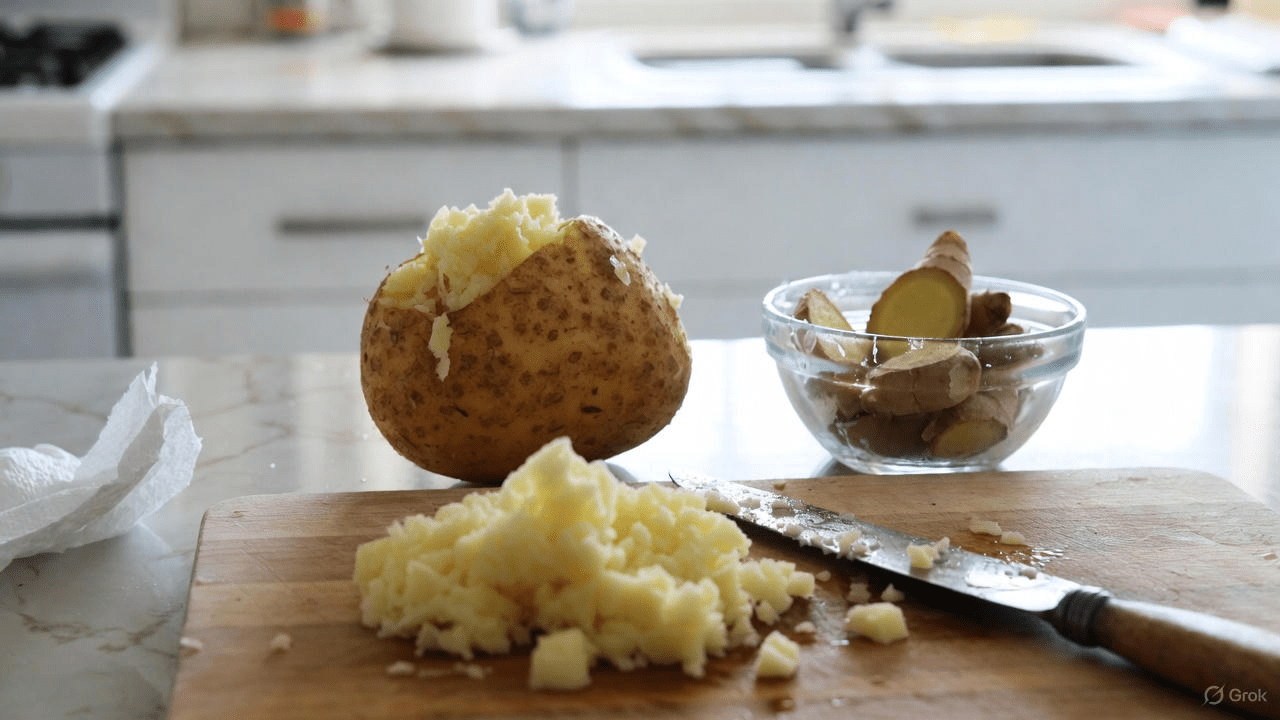
Simple Ginger and Potato Recipes to Try at Home
Ready to experiment? Start with patch-testing on your inner arm for 24 hours to check for sensitivity.
Classic Ginger-Potato Mask
This basic blend combines the two stars.
Ingredients:
- 1 small potato, grated
- ½-inch fresh ginger, grated
- Optional: Splash of milk for creaminess
Steps:
- Mix grated potato and ginger.
- Add milk if desired for easier application.
- Apply to clean face for 15 minutes.
- Rinse with cool water.
Use 1-2 times weekly. Many report a refreshed feel afterward.
Honey-Infused Variation for Extra Soothing
Honey adds natural hydration.
Ingredients:
- Classic mask base
- 1 teaspoon raw honey
Steps:
Follow the classic recipe, stirring in honey. Ideal for dry or sensitive skin—honey’s humectant properties draw in moisture.
Overnight Serum Version
For minimal effort:
Steps:
- Blend potato and ginger.
- Strain the liquid.
- Store in fridge; apply 2 drops before moisturizer at night.
This lightweight option suits daily use.
Eye Patches for Morning Refresh
Target under-eye area.
Ingredients:
- Thin potato slices
- Cooled ginger tea (brewed and chilled)
Steps:
- Soak slices in ginger tea.
- Chill, then place under eyes for 10 minutes.
Great for reducing puffiness with a cooling sensation.
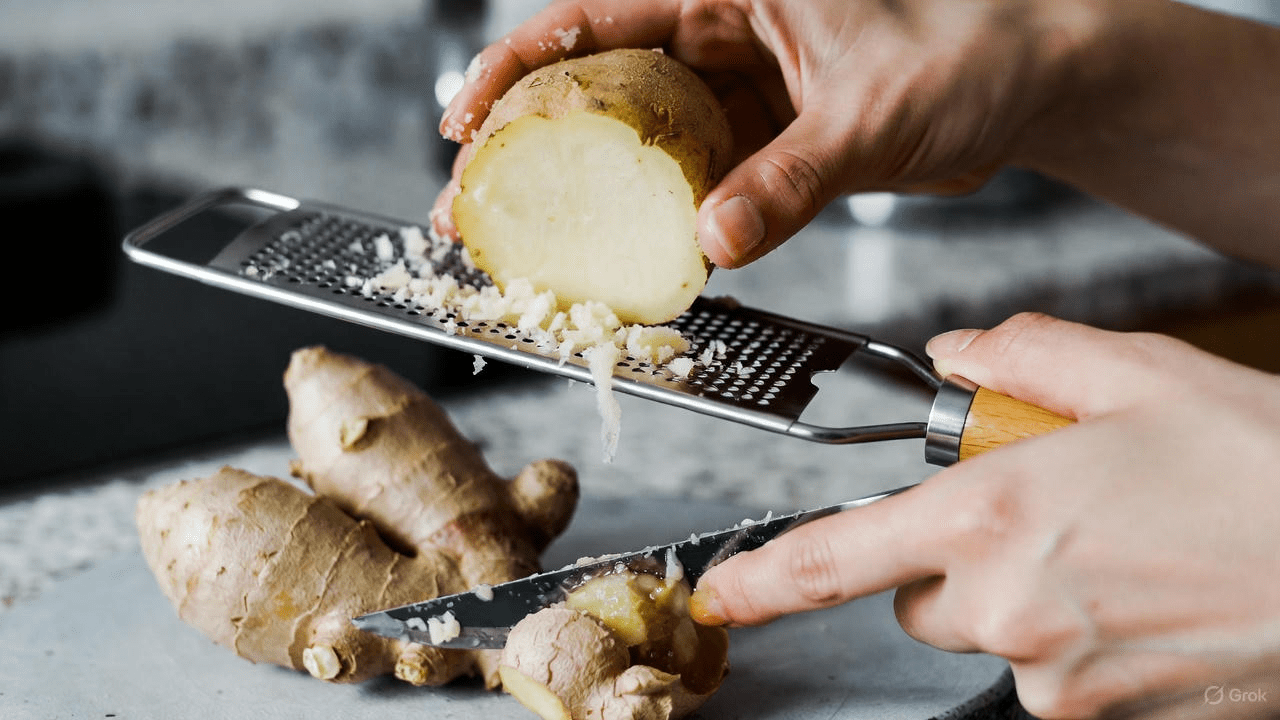
Comparison of Popular Mask Types
| Mask Type | Main Focus | Scent/Profile | Time Required | Best For |
|---|---|---|---|---|
| Classic | General refresh | Earthy | 15 minutes | All skin types |
| Honey Version | Added hydration | Sweet spice | 20 minutes | Dry or sensitive |
| Overnight Serum | Convenient daily use | Light ginger | 2 minutes | Busy routines |
| Eye Patches | Under-eye brightness | Cool | 10 minutes | Puffiness |
Choose based on your needs and available time.
Tips for Safe and Effective Use
- Use fresh, organic ingredients when possible.
- Always cleanse skin first.
- Follow with moisturizer and daily sunscreen—vitamin C can increase sun sensitivity.
- Start slowly: 1-2 applications per week.
- Avoid broken skin or if irritation occurs—rinse immediately.
Research notes ginger’s warming sensation is normal for most, but dilute if needed.
A Gentle 7-Day Plan to Get Started
Ease in with this simple schedule:
- Day 1: Classic mask
- Day 2: Honey version
- Day 3: Overnight serum
- Day 4: Eye patches
- Day 5: Your favorite so far
- Day 6: Rest or repeat a gentle one
- Day 7: Note any changes in skin feel
Pair with healthy habits like hydration and sleep for better results.
Frequently Asked Questions
Can these masks replace professional skincare?
No—they complement a routine but aren’t substitutes for dermatologist-recommended products.
How soon might I notice changes?
Individual results vary; some feel softer skin after a few uses, while brighter tone may take weeks of consistency.
Are there risks for sensitive skin?
Ginger can cause warmth or tingling. Always patch-test and consult a doctor if you have conditions like rosacea.
This article is for informational purposes only and is not a substitute for professional medical advice. Results vary, and these remedies may not work for everyone. Please consult your healthcare provider or dermatologist before trying new skincare ingredients, especially if you have sensitive skin or underlying conditions.


