Many adults notice their hair becoming thinner or growing more slowly as they age, especially after 40. This can feel frustrating when favorite styles lose volume or shedding becomes more obvious in the brush. The good news is that simple, natural routines using everyday ingredients may help nourish the scalp and support stronger strands over time. Keep reading to discover an easy home recipe that has gained attention for its gentle approach—and a small twist at the end that makes it even more effective.
Why Hair Changes Happen With Age
Hair follicles naturally go through cycles, but factors like stress, hormonal shifts, diet, and reduced scalp circulation can slow things down. Research shows that blood flow to the scalp plays an important role in delivering nutrients to hair roots. When circulation is less optimal, strands may appear finer or take longer to grow.
It’s completely normal to feel concerned when you spot these changes. Many people share the same experience, yet feel unsure where to start. The truth is, supporting scalp health doesn’t always require expensive products.
Traditional Wisdom Behind Herbal Hair Oils
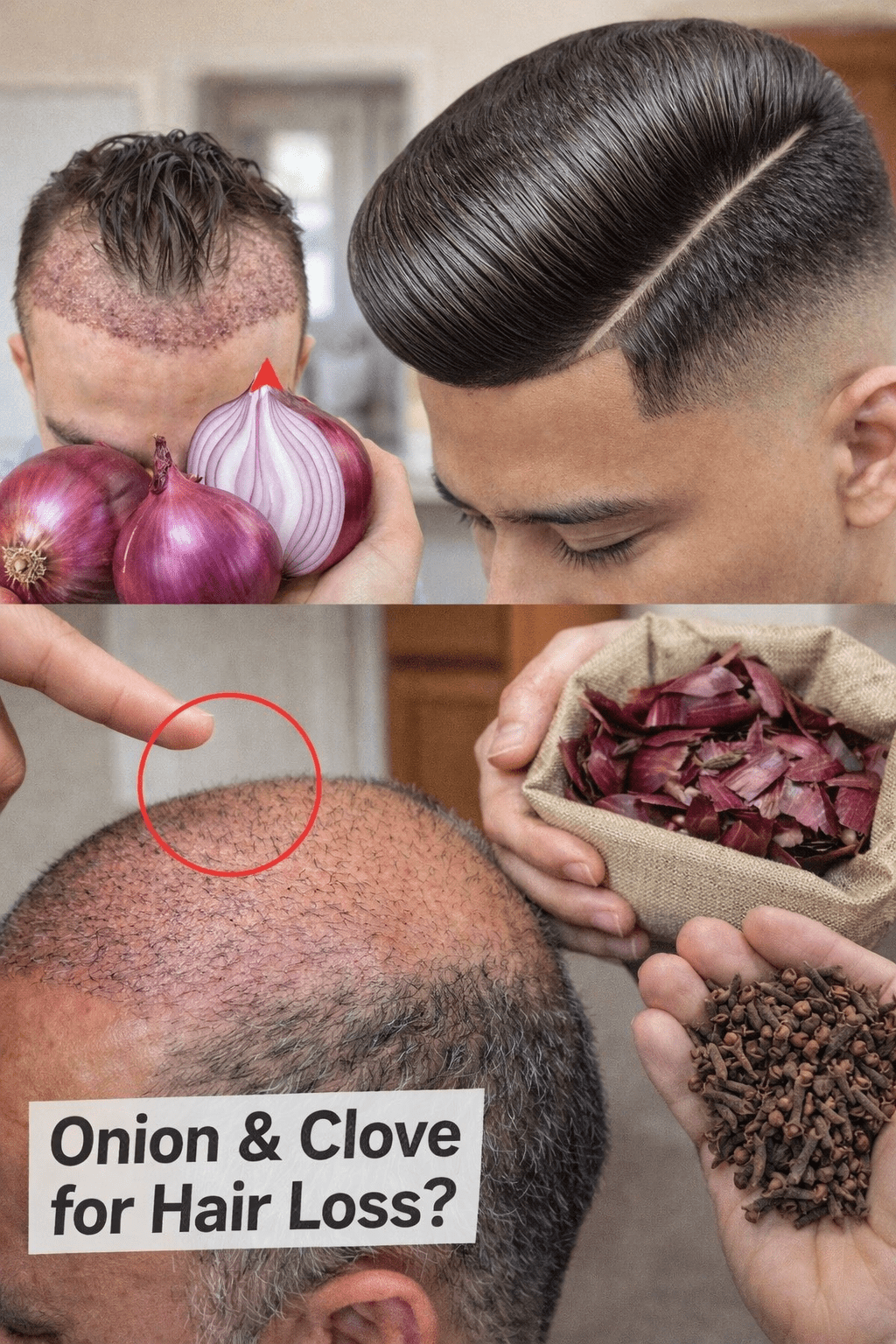
For centuries, Ayurvedic practices have used plant-based oils to massage the scalp and promote hair vitality. These traditions focus on warming herbs that encourage circulation and nourishing oils that help ingredients penetrate deeper.
Modern interest in these methods has grown because they use accessible kitchen items. Studies on individual ingredients, such as rosemary and ginger, suggest they may support better scalp conditions. But that’s just the beginning…
Key Ingredients and What Research Suggests
Certain herbs and seeds stand out for their nutrient profiles. Here’s a closer look at some popular ones:
- Ginger: Contains compounds like gingerol that may improve blood flow. A small study published in Natural Product Communications noted its warming effect on skin circulation.
- Onion: Rich in sulfur, a mineral important for keratin production. Preliminary research indicates sulfur compounds could support follicle strength.
- Flaxseeds: Provide omega-3 fatty acids and vitamin E, both linked to scalp moisture and antioxidant protection.
- Cloves: Offer eugenol, known for its soothing properties in traditional use.
- Rosemary: One of the most studied herbs— a 2015 study in Skinmed compared rosemary oil favorably to minoxidil for hair count in certain cases.
These ingredients work together gently when infused properly.
Here’s a quick comparison of common carrier oils:
| Carrier Oil | Main Benefit | Best For |
|---|---|---|
| Coconut | Deep penetration, lightweight | All hair types |
| Olive | Rich in antioxidants | Dry or damaged hair |
| Sweet Almond | Vitamin E and easy absorption | Sensitive scalps |
Choosing one or combining them can customize the blend to your needs.
Step-by-Step Guide to Making Your Own Herbal Hair Oil
This recipe uses simple ingredients you likely have or can easily find. Always patch-test first to check for sensitivity.
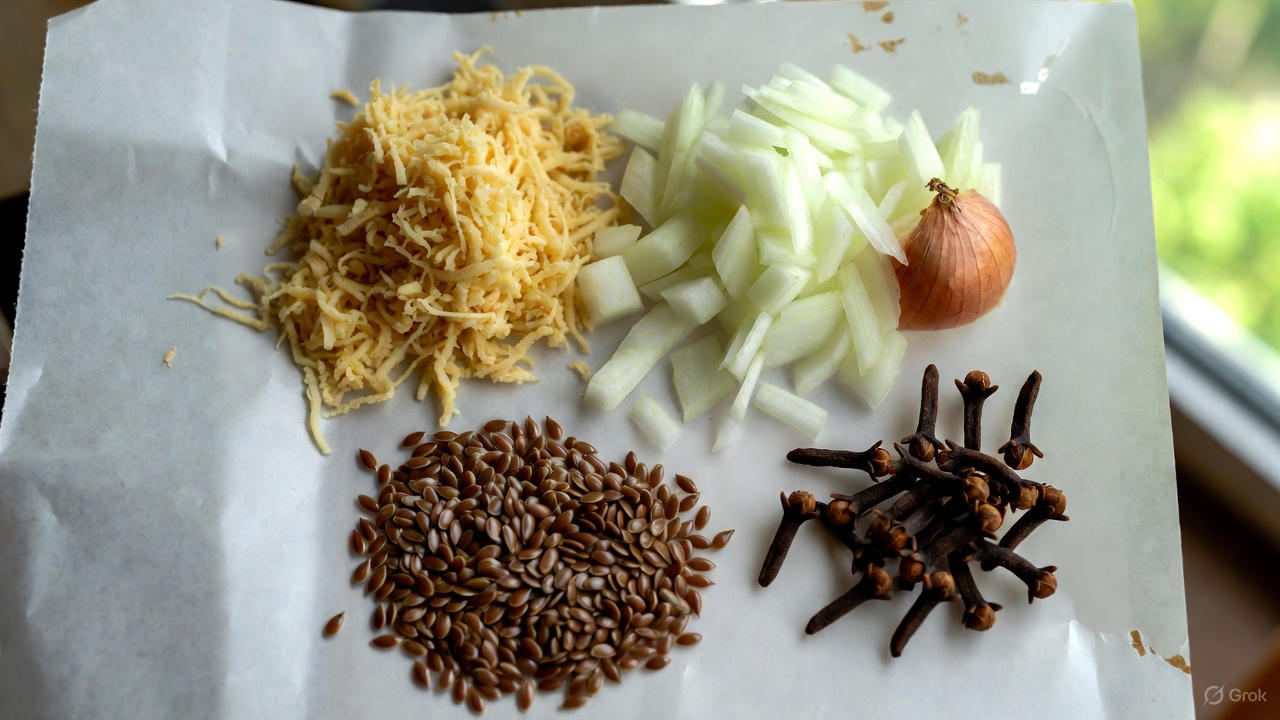
Ingredients (for about 200ml):
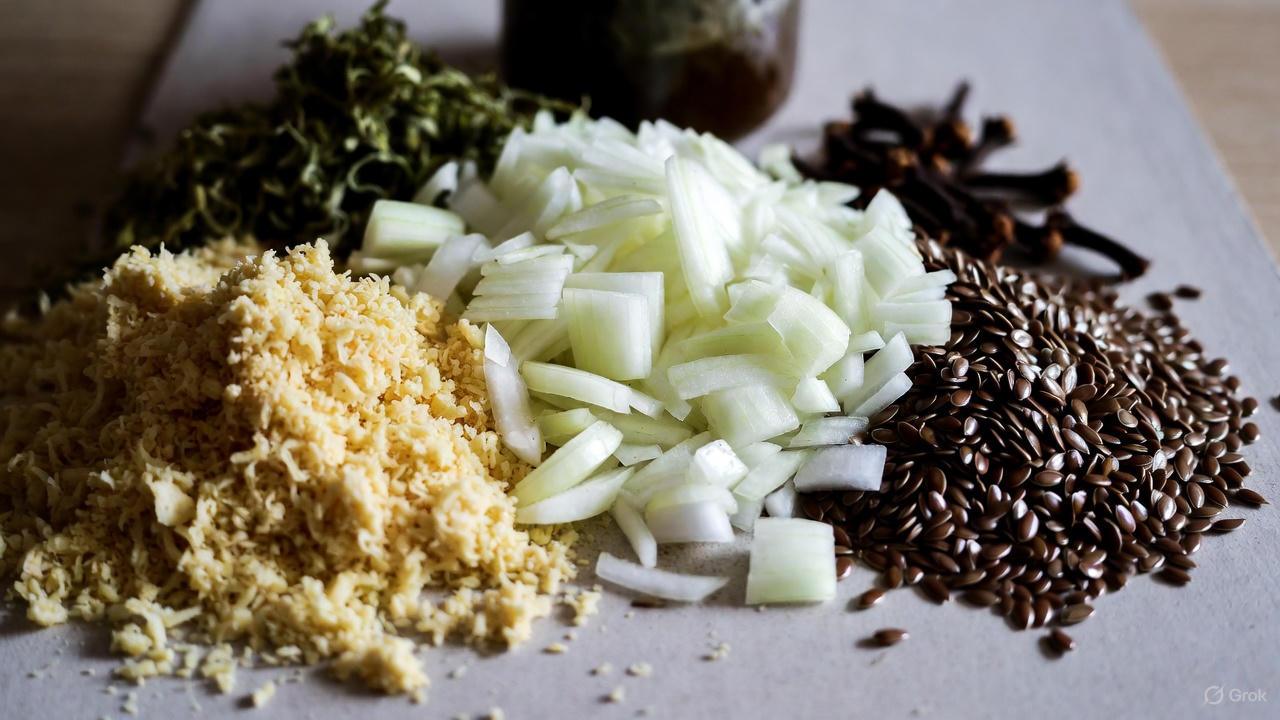
- 1 medium fresh ginger root (about 100g), grated
- 1 medium red onion, finely chopped
- 2 tablespoons flaxseeds
- 8–10 whole cloves
- 150ml carrier oil (coconut, olive, or a mix)
- Optional: 5–10 drops lavender or chamomile essential oil for fragrance and extra calm
Instructions:
- Wash and prepare the ginger and onion. Grate the ginger and finely chop the onion (wear gloves if sensitive to onion smell).
- In a double boiler or heavy-bottom pan, gently heat the carrier oil on very low heat.
- Add the grated ginger, chopped onion, flaxseeds, and cloves.
- Let everything infuse on low heat for 10–15 minutes—do not let it boil or fry.
- Remove from heat and let it cool completely.
- Strain through a fine mesh or cheesecloth into a clean glass bottle. Squeeze gently to extract maximum oil.
- Once cooled, add essential oils if desired. Shake well.
- Store in a cool, dark place. It keeps for 2–4 weeks.
How to Use:
- Warm a small amount (1–2 tablespoons) slightly.
- Section hair and massage into scalp using circular motions for 5–10 minutes.
- Leave on for at least 1 hour (or overnight with a shower cap).
- Wash out with a gentle shampoo. Use 1–2 times per week.
This ritual feels relaxing and leaves a subtle herbal scent.
Complementary Herbal Rinse for Extra Refresh
After oiling, many people follow with a simple rinse to remove residue and add stimulation.
Simple Rosemary-Bay Rinse:
- Boil 2 cups water with a handful of fresh or dried rosemary sprigs, 4–5 bay leaves, and optional orange peels.
- Simmer 10 minutes, cool, then strain.
- Use as final rinse after shampooing. No need to rinse out.
Research on rosemary essential oil shows promising results for scalp circulation, making it a popular addition.
Tips to Get the Most From Your Routine
Consistency matters more than perfection. Here are practical ways to make it stick:
- Set a weekly reminder—pair it with a favorite podcast or show.
- Start with small batches to test what your hair likes best.
- Keep a simple journal: note how your scalp feels after 4–6 weeks.
- Combine with a balanced diet rich in protein, iron, and healthy fats for overall support.
- Protect hair from heat styling and tight hairstyles when possible.
The small twist mentioned earlier? Adding a quick 2-minute scalp massage daily—even without oil—can enhance benefits by encouraging circulation on its own.
Final Thoughts
Creating your own herbal hair oil is an affordable, enjoyable way to care for your scalp using time-tested ingredients. While individual results vary, many people report softer, shinier hair and a healthier-feeling scalp after regular use.
The key is patience and listening to your body. Small, consistent habits often bring the most noticeable changes over time.
Ready to try this gentle routine? Gather a few ingredients this week and see how it feels.
Frequently Asked Questions
How long before I might notice changes?
Most people who stick with weekly applications report subtle improvements in texture and shine after 4–8 weeks, though everyone is different.
Is this safe for colored or treated hair?
Yes, the natural ingredients are generally gentle. Still, do a patch test and avoid if you have known allergies.
Can I use this if I have a sensitive scalp?
Start with a very small amount and shorter leave-in time. Skip essential oils if irritation occurs.
This article is for informational purposes only and is not intended to diagnose, treat, or cure any condition. Always consult your healthcare provider before starting new routines, especially if you have underlying health concerns.