
You step out on a sunny day, roll up your sleeves, and there they are—small, flat white dots scattered across your forearms or shins like faint confetti. They don’t itch or hurt, yet they catch your eye and make you wonder if something’s wrong, especially as you’ve noticed more of them over the years. Many people in their 40s, 50s, and beyond feel the same quiet frustration, avoiding short sleeves or feeling a bit self-conscious about their skin’s changing texture.
But here’s the reassuring part: these spots are incredibly common and completely harmless. Keep reading, because understanding their story can empower you with simple daily habits that may help slow new ones from forming—and there’s one surprisingly effective starting point most people overlook until it’s shared.
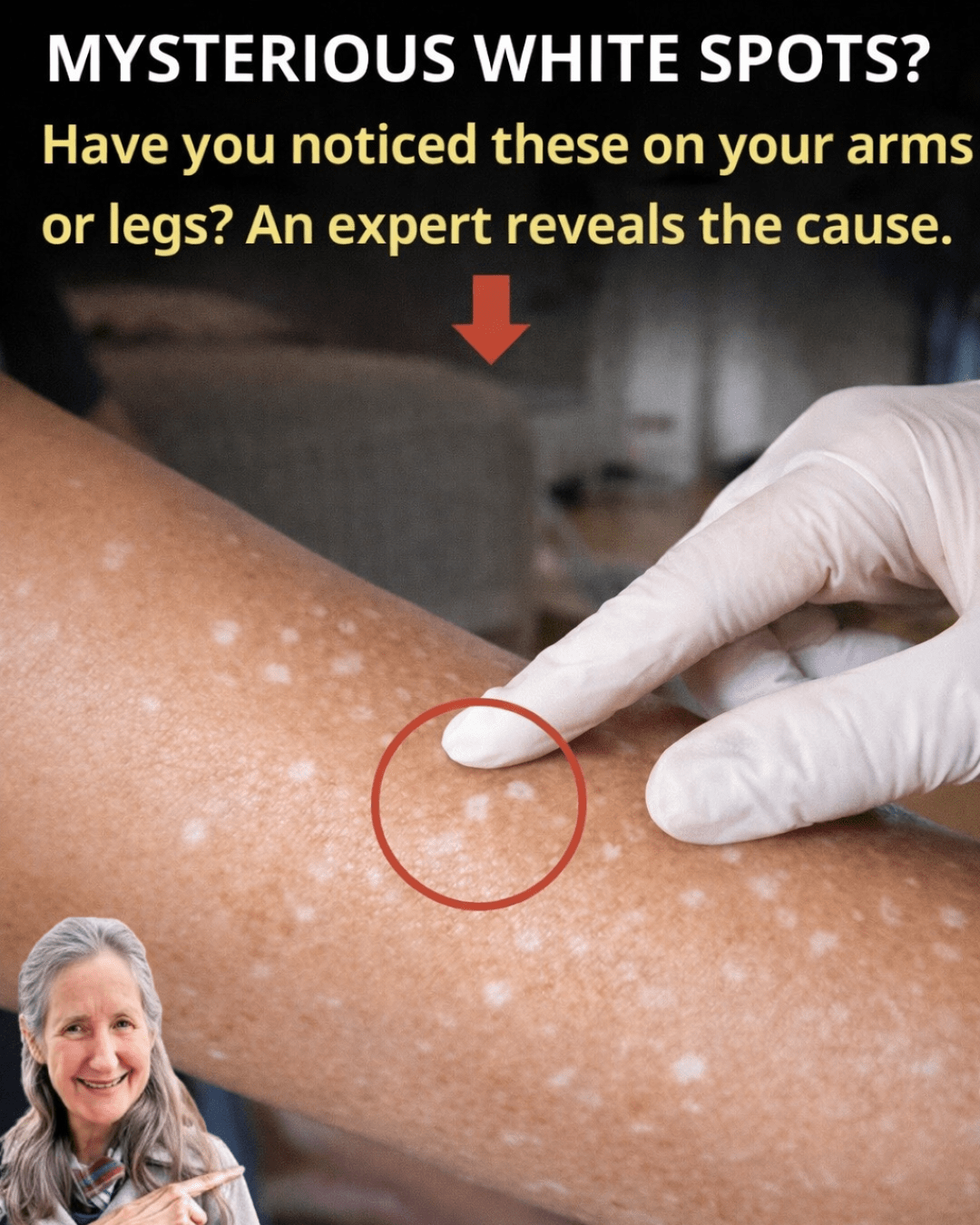
What Are These Small White Spots Exactly?
These little white dots go by the name idiopathic guttate hypomelanosis (often shortened to IGH). They’re small, round or oval pale patches, usually 2–5 mm across, with smooth surfaces.
They tend to show up on sun-exposed areas like the forearms, shins, shoulders, and sometimes the upper back or chest. Research shows they’re especially common in fair-skinned individuals, but they can appear in all skin types.
The good news? Studies consistently describe IGH as a benign condition—meaning it’s not linked to any serious health issues and doesn’t progress into anything concerning.
Why Do These White Spots Often Appear After Age 40?
Every beach day, outdoor walk, or drive with the windows down adds up over time. Ultraviolet (UV) rays from the sun can gradually affect the cells that produce melanin, your skin’s natural pigment.
As we age, the skin naturally thins and renews more slowly, making these changes more noticeable. Dermatology experts note that IGH becomes more prevalent with advancing years: it affects fewer than 50% of people in their 30s, but 50–80% over age 40, and over 90% in those 80 and older.
But that’s not the full picture…
Chronic sun exposure plays a key role, as the spots almost always appear on areas that get the most rays. Genetic factors may influence who notices them more prominently.
The result? Tiny clusters where pigment production has decreased, leaving permanent pale dots that don’t tan like the surrounding skin.
The Reassuring Truth About These Spots
IGH spots are not a sign of infection, allergy, or anything contagious. They’re not precancerous, and they don’t increase risks for other skin concerns.
Many dermatologists emphasize that no treatment is medically necessary—reassurance alone helps most people feel better.
That said, if the appearance bothers you, there are practical steps backed by research that focus on supporting overall skin health and potentially minimizing visibility.
Everyday Habits to Help Protect Your Skin and Manage Existing Spots
The foundation of any approach is consistent sun protection, which studies highlight as key for preventing further changes from cumulative exposure.
Here are some evidence-based habits many people find helpful:
- Prioritize daily sun protection: Apply broad-spectrum SPF 30+ sunscreen to exposed arms and legs, even on cloudy days. Seek shade during peak hours and wear protective clothing.
- Incorporate gentle retinoids: Over-the-counter retinol products (starting low-strength) can support skin cell turnover. Some observations note gradual improvements in texture over months.
- Use antioxidant serums: Vitamin C applied in the morning acts as a daily shield against environmental stressors and supports collagen.
- Add barrier-strengthening ingredients: Niacinamide (5–10%) is gentle and helps maintain skin’s moisture and even tone over time.
- Consider mild exfoliation: Twice-weekly use of lactic or mandelic acid can smooth surface texture without harshness.
- Explore professional options if desired: Procedures like fractional lasers or cryotherapy have shown promise in small studies for cosmetic improvement, but results vary.
Sun avoidance remains the most accessible habit—many report fewer new developments with consistent coverage.

7 Practical Habits to Consider Adding to Your Routine
Here’s a ranked list of approachable steps, starting with the simplest:
- Sun-protective clothing and hats: Long sleeves with UPF fabric block rays comfortably without reapplication.
- Daily niacinamide serum: Easy to layer, no irritation for most.
- Morning vitamin C serum: Pairs perfectly under moisturizer and sunscreen.
- Consistent broad-spectrum sunscreen: The habit with the strongest link to preventing progression.
- Gentle weekly exfoliation: Helps reveal fresher-looking skin.
- Nighttime low-dose retinol: Build tolerance slowly for best results.
- Professional consultations: For personalized options like light-based therapies.
Quick Comparison: Habits and What to Expect
| Habit | Time to Notice Changes | Effort Level | Cost Range | Focuses on Prevention? |
|---|---|---|---|---|
| Daily sunscreen + clothing | 6–12 months or longer | Low | Low | Yes |
| Vitamin C + niacinamide | 3–6 months | Very low | Low–Moderate | Yes |
| Gentle retinol | 6–12 months | Moderate | Moderate | Yes |
| Mild exfoliation | Weeks to months | Low | Low | Supportive |
| Professional procedures | 1–4 months | Low (sessions) | Higher | Cosmetic mainly |
Individual experiences vary—patience and consistency matter most.
A Simple Daily Routine Many People Swear By
Morning: Cleanse gently → Vitamin C serum → Moisturizer → SPF 50 on arms/legs → UPF sleeves if outdoors.
Evening: Cleanse → Wait 20 minutes → Retinol (a few times weekly) → Rich moisturizer.
That’s often all it takes to feel proactive.
Bonus tip: Foods rich in antioxidants, like berries or citrus, support overall skin resilience from within.

You Can Take Control of Your Skin’s Future Appearance
These small white spots are simply a reminder of time spent in the sun—a common chapter in many people’s stories. By focusing on protective habits today, you give your remaining skin the best chance to stay even and healthy-looking for years ahead.
Which habit feels easiest to start with—daily sunscreen, a new serum, or protective clothing? Share in the comments; I’d love to hear your thoughts.
Frequently Asked Questions
Are these white spots permanent?
Once they appear, the pale areas typically remain, as the pigment change is long-term. However, consistent sun protection can help prevent new ones.
Do these spots mean I have skin cancer?
No—IGH is benign and not associated with cancer. Still, regular skin checks are wise for overall health.
Can they appear on the face or other areas?
They’re most common on arms and legs, but can occasionally show on other sun-exposed spots. The face is less typical.
This article is for informational purposes only and is not a substitute for professional medical advice. If you notice new or changing skin spots, consult a board-certified dermatologist for personalized guidance.


