Your hands face constant exposure to water, soaps, cleaners, and dry air every day, silently building up damage to the skin’s natural barrier. What starts as mild dryness or slight redness can turn into persistent itching, cracks, and pain that disrupts simple tasks like gripping a cup or typing on your phone. Ignoring these early signals often leads to widespread flare-ups, making everyday routines uncomfortable and even affecting sleep or work.
The good news is that simple, evidence-based habits—like targeted moisturizing and smart protection—can help maintain your skin’s health and interrupt this cycle before it worsens. But here’s the open loop: at the end, discover the one unexpected daily routine tweak backed by recent studies that could change how your hands feel in just weeks.
What Is Hand Dermatitis and Why Does It Matter for Everyday Life?
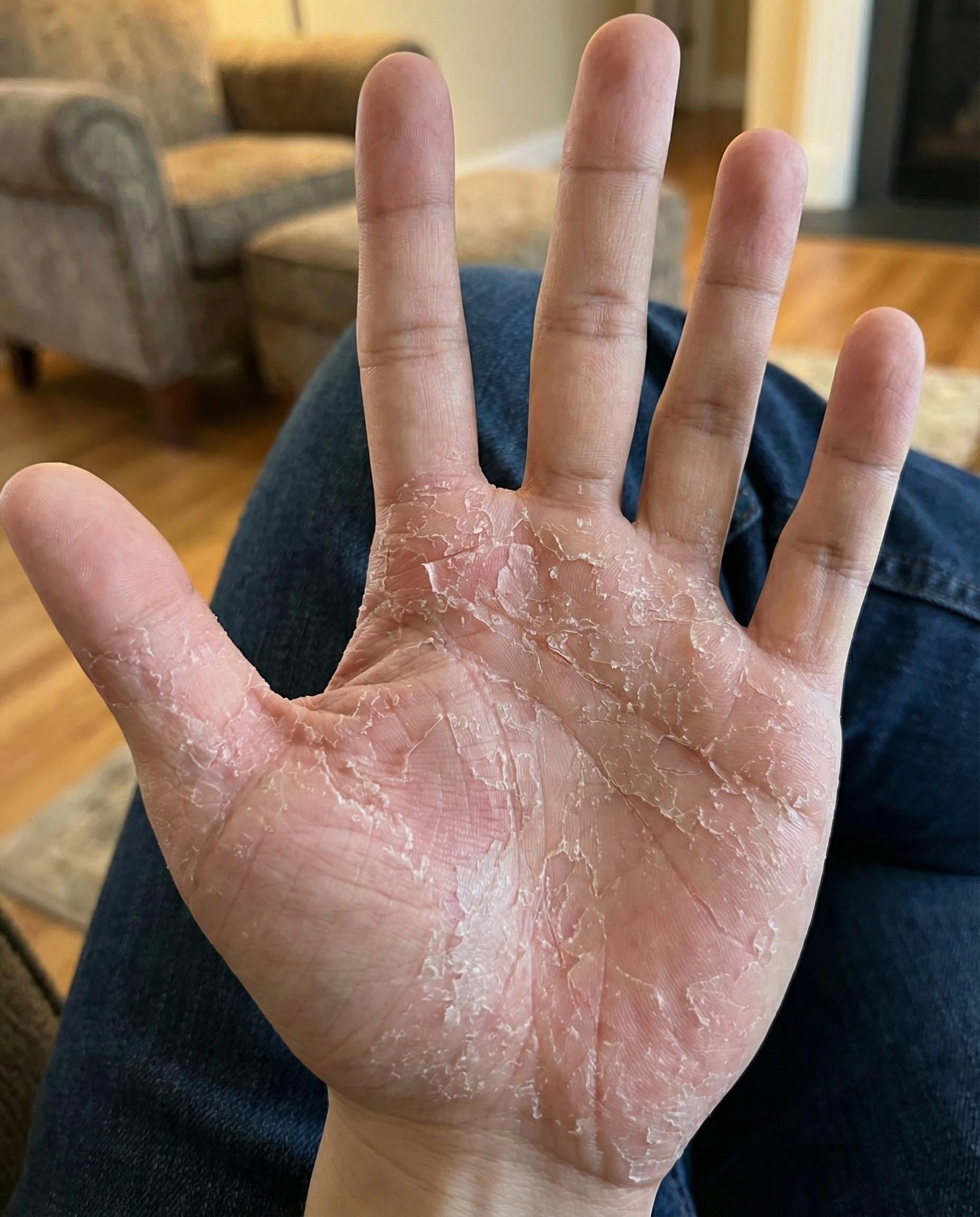
Hand dermatitis, also called hand eczema, is an inflammatory skin condition primarily affecting the hands and wrists. It impacts up to 10% of the general population, with point prevalence around 4-7% and one-year prevalence near 10%, according to systematic reviews from sources like the National Institutes of Health (NIH) and studies in Contact Dermatitis journal.
Research shows it’s especially common in women (prevalence 10.6% vs. 5.2% in men) and those with jobs involving “wet work,” like frequent hand washing. Globally, occupational skin diseases, with hand dermatitis making up 80-90%, rank as the second most common work-related illness, per U.S. Bureau of Labor Statistics data (1.8 cases per 10,000 workers in 2020).
But that’s not all. Studies from the Lancet highlight how it often becomes chronic in up to two-thirds of cases, leading to itch, pain, and reduced quality of life—think struggling with buttons or shaking hands confidently. Early recognition keeps it manageable.
Common Triggers Behind Hand Dermatitis: What Research Reveals
Hand dermatitis rarely strikes without reason. It’s often a mix of irritants weakening the skin barrier, allergens sparking reactions, and personal factors like genetics.
Irritant Contact Dermatitis: The Most Frequent Culprit
This non-allergic type accounts for 70-80% of occupational cases, per NIH reviews. Harsh soaps, detergents, and frequent water exposure strip natural oils, causing cumulative damage.
- Wet work: Washing hands >10 times daily or prolonged water contact raises risk 2-4 times, especially in healthcare (prevalence up to 30% in nurses), food handlers, cleaners, and hairdressers.
- Alcohol sanitizers: Dry skin further during pandemics, as seen in COVID-19 studies where HCW prevalence spiked to 20-70%.
- Environmental factors: Cold, low humidity dries skin; a Danish study linked filaggrin gene mutations (common in atopics) to vulnerability.
Allergic and Atopic Factors: Hidden Sensitivities
About 20% involve allergens like nickel, fragrances, latex, or preservatives, per StatPearls and AAAAI guidelines. Atopic dermatitis history triples risk—a meta-analysis showed 3-4x higher hand eczema prevalence.
Here’s a quick comparison of triggers:
| Trigger Type | Examples | High-Risk Jobs | Research Note |
|---|---|---|---|
| Irritants | Soaps, water, sanitizers | Nurses, cooks, cleaners | 80% of occupational cases (PMC studies) |
| Allergens | Nickel, fragrances, latex | Hairdressers, metalworkers | Patch tests positive in 19% (Lancet) |
| Atopic/Genetic | Eczema history, filaggrin mutations | Any wet work + family history | 22% of chronic cases (NIH) |
Sự thật là, multiple factors overlap—wet work plus atopy predicts persistence.

Early Warning Signs of Hand Dermatitis: Spot Them Before They Spread
Symptoms evolve from subtle to severe. Mild cases mimic “dry skin,” but key red flags distinguish them.
- Persistent itching unresponsive to basic lotions
- Redness with burning/stinging on palms, fingers, or backs of hands
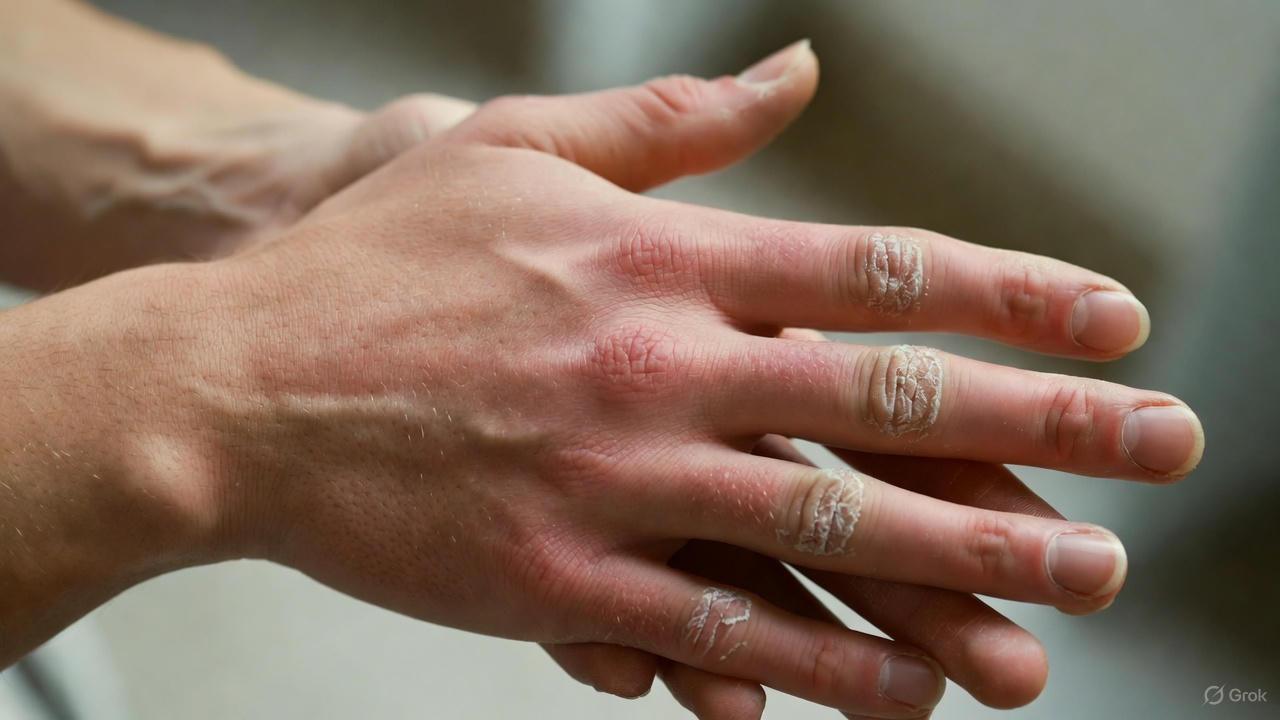
- Dry, peeling, or scaling skin, especially between fingers
- Cracks or fissures, painful on contact
- Small blisters (dyshidrotic type), thickening over time
A Lancet review notes acute phases show vesicles/edema; chronic brings lichenification (thick, rough skin). Hands are hit first in 80% of cases, per DermNetNZ.
This is the interesting part: Early dryness signals barrier breakdown—studies show transepidermal water loss (TEWL) rises before visible rash, measurable via tools like those in HCW trials.
Daily Habits to Build a Stronger Skin Barrier and Prevent Flare-Ups
Prevention focuses on barrier support, per Cochrane reviews and ESCD guidelines. Moisturizers with barrier creams show protective effects, though evidence varies.
Step-by-Step Moisturizing Routine
- Choose right products: Thick, fragrance-free emollients (e.g., ceramide-rich or petrolatum-based). Studies confirm they repair stratum corneum lipids faster than thin lotions.
- Apply frequently: After every wash, before bed. A cluster RCT (Healthy Hands Project) found skin care programs cut dermatitis risk in HCWs.
- Overnight boost: Apply thick layer + cotton gloves. Pilot studies show fabric gloves enhance hydration, reducing severity (OHSI scores improved).
Glove and Washing Smarts
- Protective gloves: Cotton liners under vinyl/nitrile for wet tasks. Limit occlusive wear to avoid maceration; semi-permeable (Sympatex) options aid recovery in trials vs. cotton alone.
- Gentle cleansing: pH-neutral, soap-free. Rinse fully, pat dry (no rubbing). Use alcohol gels when hands aren’t soiled—less irritating than soap/water cycles.
- Avoid extremes: Shorten sanitizer use; no hot water.
Bucket brigade: But read on for when home steps fall short.
High-risk pros: Reduce wet work via dose-response—less exposure clears symptoms faster (PMC study).
When to Consult a Dermatologist: Don’t Wait for Complications
Home care works for mild cases, but see a pro if:
- Symptoms persist >2 weeks despite moisturizers
- Cracks ooze, swell, or show pus (infection risk)
- Pain disrupts work/sleep/typing
- Spreads beyond hands
Guidelines (Thyssen et al., Contact Dermatitis) recommend patch testing for allergies if chronic. Early intervention cuts long-term damage—tertiary programs drop severity scores significantly.
Dermatologists may suggest barrier therapies or phototherapy for stubborn cases.
Your Hands’ Simple Protection Plan: Start Today
Hand dermatitis thrives on ignored irritants, but consistent habits restore balance. Key takeaways:
- Moisturize religiously: Fragrance-free, multiple times daily—proven to protect per Cochrane.
- Glove wisely: Liners for comfort, limit time.
- Track triggers: Log washing/exposures; allergy testing if needed.
- Watch early: Itch + redness = act fast.
Now, the promised tweak: “Cotton glove overnight moisturizing.” A pilot in HCWs cut symptoms dramatically after 4 weeks, improving barrier (TEWL) and microbiome vs. no gloves. Patients preferred it for comfort/dexterity—game-changer for recovery. Try it: Apply emollient, don cotton gloves, wake smoother.
Small steps build resilience, letting hands handle life comfortably.
FAQ: Common Questions on Hand Dermatitis Prevention
How often should I moisturize to prevent hand dermatitis?
Apply after every hand wash and at least 4-5 times daily, especially post-wet work. Studies show regular emollients reduce incident cases by supporting barrier repair.
Can gloves actually help or worsen hand dermatitis?
Yes—cotton liners under protective ones prevent irritation; avoid prolonged occlusion. Research favors semi-permeable for better outcomes in wet jobs.
Is hand dermatitis linked to atopic eczema?
Strongly—history raises risk 3-4x. If you have childhood eczema, prioritize gentle habits and monitor wet exposure.
Disclaimer: This article provides general information based on research and is not a substitute for professional medical advice. Consult a healthcare provider for personalized diagnosis or treatment, especially if symptoms persist or worsen. Always patch-test new products and seek evaluation for suspected allergies or infections.
(Word count: 1428)