You open your mouth in the mirror, cough a little, and suddenly a tiny, hard, yellowish-white chunk falls onto the sink. It looks like a little stone — and the moment you accidentally get too close… the smell hits you like a wall. It’s foul, rotten, and embarrassing. Even if you brush twice a day and floss religiously, that stubborn bad breath just won’t go away. Sound familiar? Keep reading, because by the end of this article you’ll finally understand exactly what these mysterious “stones” are — and the surprisingly simple daily habits that help most people get rid of them for good.
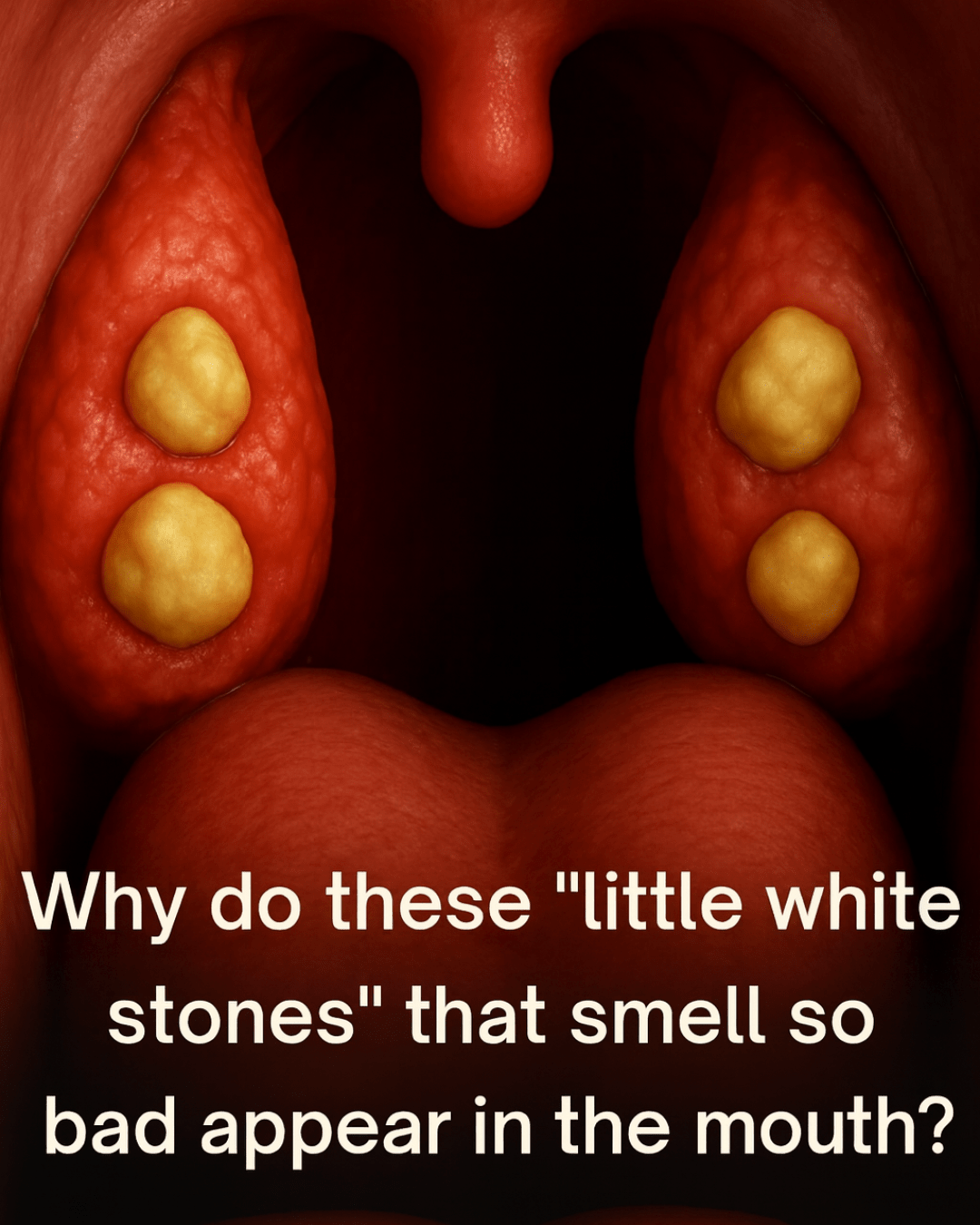
What Exactly Are These White Chunks?
Those little smelly stones are called tonsil stones (or tonsilloliths). They form in the natural crevices and craters (called crypts) of your tonsils — the two oval-shaped tissues at the back of your throat.
Here’s what they’re actually made of:
- Trapped food particles
- Dead cells from the lining of your mouth
- Bacteria and other microbes
- Calcium and other minerals that harden over time
When everything gets stuck in the tonsil crypts, bacteria feed on it and produce sulfur compounds — the same nasty gases that make rotten eggs smell. That’s why tonsil stones can make your breath smell terrible even if the rest of your mouth is clean.
Research published in the journal Otolaryngology–Head and Neck Surgery shows that up to 10% of people regularly form visible tonsil stones, and many more have microscopic ones they never notice.
Why Do Some People Get Tonsil Stones and Others Don’t?
Not everyone forms them because it depends on a few key factors:
- Tonsil anatomy – People with deeper crypts or “bumpy” tonsils are more prone.
- Chronic inflammation – Ongoing allergies, post-nasal drip, or frequent throat irritation increase mucus and debris.
- Oral hygiene habits – Less-than-perfect cleaning lets more debris accumulate.
- Dry mouth – Saliva naturally washes away particles; less saliva = more stones.
- Age – They’re most common in teens and young adults when tonsils are largest.
The good news? You can usually manage them at home without surgery.

Common Signs You Might Have Tonsil Stones
Many people discover them by accident. Here are the most frequent clues:
- Bad breath that doesn’t improve with brushing or mouthwash
- A feeling that something is stuck in the back of your throat
- Mild sore throat or ear pain (referred pain)
- Metallic taste in the mouth
- Visible white or yellow spots when you shine a light at the back of your throat
- Coughing up small hard chunks
If you only notice bad breath and nothing else, tonsil stones are one of the top hidden causes.
How to Safely Remove Tonsil Stones at Home (Step-by-Step)
Most stones come out easily with gentle techniques. Here’s the method doctors usually recommend first:
- Gargle vigorously with warm salt water (½ tsp salt in 8 oz water) for 30–60 seconds — it helps dislodge them.
- Use a cotton swab (moistened) or the back of your toothbrush to very gently press around the stone — never force it.
- Try a low-pressure water flosser (water pick) on the lowest setting aimed at the tonsil area.
- Cough strongly a few times — many stones pop out on their own.
Important: Stop immediately if you feel sharp pain or bleeding. That’s the signal to see a doctor.
Daily Habits That Help Prevent Tonsil Stones From Coming Back
Prevention is easier than removal. Try adding these simple routines:
- Gargle with salt water or non-alcoholic mouthwash every night
- Stay well hydrated (aim for 8–10 glasses of water daily)
- Use a tongue scraper to remove bacteria from the back of the tongue
- Treat allergies or post-nasal drip quickly so less mucus drips onto the tonsils
- Chew sugar-free gum after meals to boost saliva flow
- Brush and floss thoroughly — especially before bed
Studies show that consistent salt-water gargling alone can reduce tonsil stone formation by up to 70% in regular users.

When Should You See a Doctor?
Most of the time tonsil stones are harmless, but make an appointment if you have:
- Stones larger than a pea that won’t come out
- Severe pain or swelling
- Frequent throat infections
- Bleeding when trying to remove them
In rare cases, an ENT specialist can perform a quick office procedure (like laser cryptolysis or tonsillectomy) if they keep coming back and affect your quality of life.
Quick Comparison: Tonsil Stones vs. Other Causes of Bad Breath
| Cause | Smell Type | Visible in Throat? | Comes and Goes? |
|---|---|---|---|
| Tonsil stones | Rotten/egg-like | Yes (white spots) | Yes |
| Gum disease | Persistent bad taste | No | Constant |
| Stomach reflux | Sour or acidic | No | After meals |
| Dry mouth | Stale | No | Worse mornings |
Final Thoughts
Those little white “stones” that smell awful are almost always tonsil stones — completely common and usually nothing to worry about. With the right daily habits and gentle removal techniques, most people notice a dramatic improvement in breath and comfort within days.
Start tonight with a simple warm salt-water gargle and see how much better you feel tomorrow.
Frequently Asked Questions
Q: Are tonsil stones contagious? A: No. They’re made of your own mouth debris and bacteria, so you can’t “catch” them from someone else.
Q: Can tonsil stones go away on their own? A: Yes — many fall out or get swallowed unnoticed when you eat, drink, or cough.
Q: Will removing my tonsils permanently solve the problem? A: Tonsillectomy eliminates tonsil stones 100%, but it’s usually reserved for people with repeated infections or very large stones. Talk to an ENT doctor about your options.
Disclaimer: This article is for informational purposes only and is not a substitute for professional medical advice. Always consult a healthcare provider for personal health concerns.